
[논문 리뷰] A Survey on Causal Discovery Methods for I.I.D. and Time Series Data
본 고찰은 I.I.D.와 시계열 데이터 모두에 대한 인과 발견 방법을 포괄적으로 검토하고, 알고리즘, 가정, 벤치마크, 도구 및 응용을 자세히 설명하며, 도전과제와 향후 방향을 논의한다.
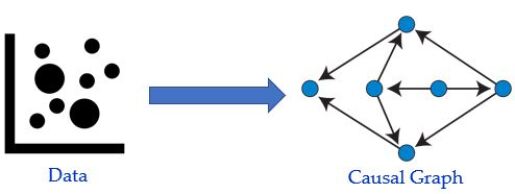
The ability to understand causality from data is one of the major milestones of human-level intelligence. Causal Discovery (CD) algorithms can identify the cause-effect relationships among the variables of a system from related observational data with certain assumptions. Over the years, several methods have been developed primarily based on the statistical properties of data to uncover the underlying causal mechanism. In this study, we present an extensive discussion on the methods designed to perform causal discovery from both independent and identically distributed (I.I.D.) data and time series data. For this purpose, we first introduce the common terminologies used in causal discovery literature and then provide a comprehensive discussion of the algorithms designed to identify causal relations in different settings. We further discuss some of the benchmark datasets available for evaluating the algorithmic performance, off-the-shelf tools or software packages to perform causal discovery readily, and the common metrics used to evaluate these methods. We also evaluate some widely used causal discovery algorithms on multiple benchmark datasets and compare their performances. Finally, we conclude by discussing the research challenges and the applications of causal discovery algorithms in multiple areas of interest.
연구 동기 및 목표
- I.I.D. 데이터와 시계열 데이터에 대한 인과 발견 접근법의 스펙트럼을 요약한다.
- 인과 발견에서 사용되는 용어, 모델 및 기본 가정을 명확히 한다.
- 벤치마크 데이터셋, 평가 지표, 사용 가능한 소프트웨어 도구를 논의한다.
- 표준 데이터셋에서 대표적인 인과 발견 알고리즘을 평가하여 성능을 보여준다.
- 다양한 영역에서의 도전과 잠재적 응용을 식별하고 향후 연구 지침을 제시한다.
제안 방법
- 핵심 전략별로 인과 발견 방법을 분류한다: 제약 기반, 점수 기반, 함수적 인과 모델(FCMs), 그래디언트 기반 및 기타.
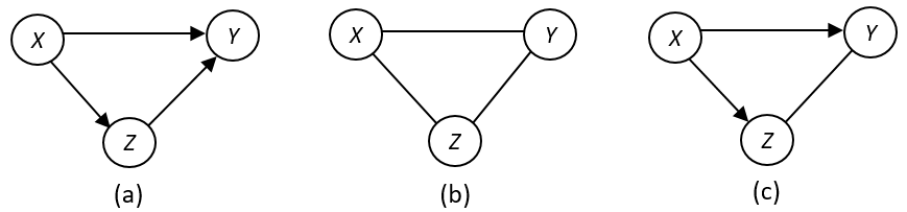
- 주요 그래픽 모델 개념(DAGs, PDAGs, CPDAGs, MAGs, PAGs)과 Markov 등가성을 설명한다.
- 조건부 독립성 검정(CI 테스트)과 d-separation을 기초 도구로 설명한다.
- 비순환성(acyclicity) 및 기타 인과 가정(CMC, CFC, 인과 충분성)을 다양한 방법에서 어떻게 강제하는지 요약한다.
- 시계열 특화 접근법과 구조 회복에서의 사전 지식의 역할을 조사한다.
실험 결과
연구 질문
- RQ1I.I.D. 데이터와 시계열 데이터에서 인과 발견에 사용되는 주요 방법론 군은 무엇인가?
- RQ2가정, 출력 그래프 및 계산 특성 측면에서 이 방법들은 어떻게 비교되는가?
- RQ3인과 발견 방법을 평가하는 데 일반적으로 사용되는 데이터셋, 벤치마크, 지표 및 도구는 무엇인가?
- RQ4다양한 분야에 걸친 인과 발견의 현재 도전과 실제 응용은 무엇인가?
- RQ5사전 지식을 어떻게 통합하여 인과 발견 성능을 향상시킬 수 있는가?
주요 결과
- 본 논문은 I.I.D. 및 시계열 데이터에 대해 제약 기반, 점수 기반, FCM 기반, 그래디언트 기반, 하이브리드, 연속 최적화, 사전 지식 기반 및 기타 접근법을 포함한 광범위한 인과 발견 방법의 분류를 제공합니다.
- DAGs, PDAGs, CPDAGs, MAGs, PAGs, d-separation, 및 Markov 등가성 등 기초 개념을 소개하고 설명하며, CD 출력에 대한 이들의 관련성을 논의합니다.
- 조건부 독립성 검정과 d-separation 프레임워크는 다수의 제약 기반 방법의 중심이며, 광범위한 CI 테스트가 조사됩니다.
- 본 고찰은 일반적인 가정(CMC, CFC, 인과 충분성, 비순환성)을 다루고, 이러한 가정이 실제에서 방법의 적용성 및 성능에 어떤 영향을 미치는지 논의합니다.
- 벤치마크 데이터셋, 지표 및 오픈 소스 도구를 다루어 연구자들이 인과 발견 방법을 평가하고 적용하는 데 도움을 줍니다.
이 논문 읽기
누빈트 뷰어에서 원문을 열고, 읽으면서 궁금한 곳을 바로 물어보세요.
누빈트에서 이 논문 읽기이 리뷰는 AI가 논문 원문을 바탕으로 만들었습니다. 인용하기 전에 원문을 확인해 주세요.