
[논문 리뷰] A Survey on Large Language Models with some Insights on their Capabilities and Limitations
본 조사은 LLM의 기초, 규모의 법칙, 구조 및 emergent 능력을 검토하고, CoT/PoT, RAG 및 도메인 적용에 대해 논의하며, 능력과 한계를 강조한다.
The rapid advancement of artificial intelligence, particularly with the development of Large Language Models (LLMs) built on the transformer architecture, has redefined the capabilities of natural language processing. These models now exhibit remarkable performance across various language-related tasks, such as text generation, question answering, translation, and summarization, often rivaling human-like comprehension. More intriguingly, LLMs have demonstrated emergent abilities extending beyond their core functions, showing proficiency in tasks like commonsense reasoning, code generation, and arithmetic. This survey paper explores the foundational components, scaling mechanisms, and architectural strategies that drive these capabilities. Emphasizing models like GPT and LLaMA, we analyze the impact of exponential data and computational growth on LLM performance, while also addressing the trade-offs associated with scaling. We also examine LLM applications across sectors, such as healthcare, finance, education, and law, highlighting their adaptability and potential to solve domain-specific challenges. Central to this work are the questions of how LLMs generalize across diverse tasks, exhibit planning, and reasoning abilities, and whether these emergent abilities can be systematically elicited or enhanced. In particular, we provide some insights into the CoT (Chain of Thought) and PoT (Plan of Thought) abilities within LLMs, focusing on how pre-training data influences their emergence. Additionally, we investigate LLM-modulo frameworks that integrate external systems, allowing LLMs to handle complex, dynamic tasks. By analyzing these factors, this paper aims to foster the ongoing discussion on the capabilities and limits of LLMs, promoting their responsible development and application in novel and increasingly complex environments.
연구 동기 및 목표
- 대형 언어 모델(LLMs)의 개발과 핵심 구성요소 및 이것이 다양한 분야에 미치는 변혁적 영향을 평가한다.
- 규모의 법칙(KM 및 Chinchilla)과 모델 크기, 데이터, 컴퓨트가 성능에 미치는 영향을 분석한다.
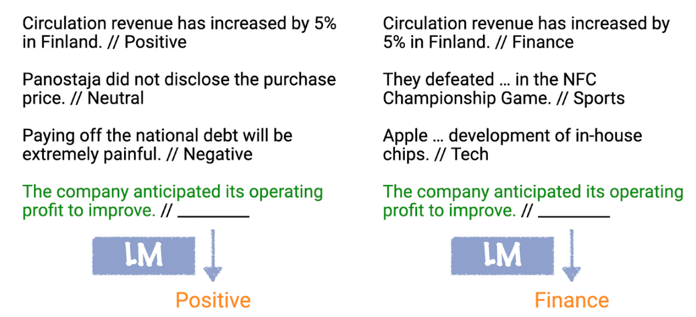
- 맥락 내 학습(in-context learning), 사고의 체인(chain-of-thought), 계획 기반 추론 등의 emergent 능력을 검토하고 이러한 현상이 어떻게 발생하는지 살펴본다.
- 분야 전반에 걸친 LLM의 실용적 응용, 적응 전략 및 윤리적/운영적 한계를 논의한다.
제안 방법
- 기초 LLM 개념과 트랜스포머 기반 아키텍처(BERT, GPT, LLaMA, T5 등)를 조사한다.
- 모델 크기, 데이터 및 컴퓨트에 대한 시사점을 포함한 규모의 법칙을 설명한다.
- 사전 학습, 데이터 소스 및 적응 기법(지시 미세조정, 정렬)을 분석한다.
- 맥락 내 학습, 사고의 체인 프롬프트, 사고의 프로그램, LLM-모듈로 프레임워크를 탐색한다.
- GSM8k 데이터셋에서 Llama 계열 모델을 사용한 실험을 통해 CoT 기원의 실증적 통찰을 제시한다.
- 의료, 금융, 교육, 법 분야의 도메인 적용을 논의하고 윤리적 및 환경적 문제를 고려한다.
실험 결과
연구 질문
- RQ1LLMs가 다양한 작업과 도메인에서 어떻게 일반화하고 계획 및 추론 능력을 보이는가?
- RQ2어떤 요인들(크기, 데이터, 아키텍처)이 emergent 능력을 좌우하며, 그것들을 체계적으로 이끌어내거나 향상시킬 수 있는가?
- RQ3LLM의 확장의 트레이드오프와 한계는 무엇이며, 이를 실제로 어떻게 완화할 수 있는가?
- RQ4외부 시스템(검색, 플러그인)을 어떻게 통합하여 복잡한 작업을 처리할 수 있는가(LLM-모듈로 프레임워크)?
주요 결과
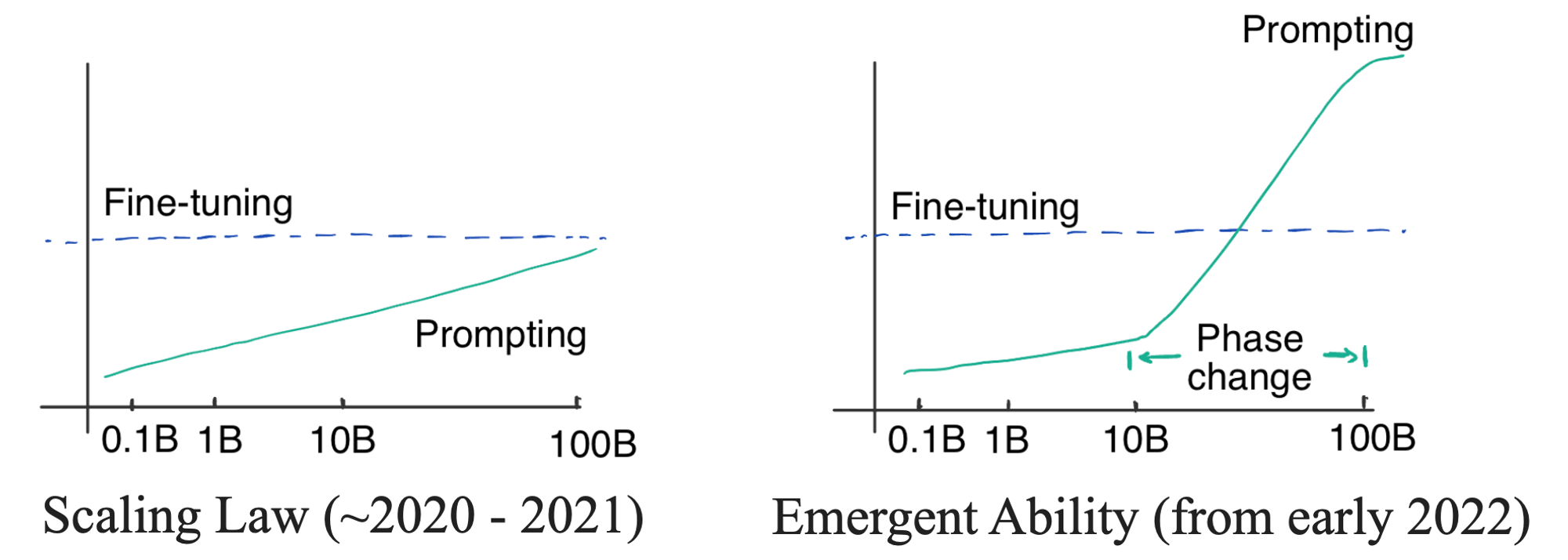
- 맥락 내 학습(in-context learning) 및 사고의 체인 프롬프트와 같은 emergent 능력은 모델 규모가 커질수록 나타나며 작업 및 모델 크기에 따라 다르게 나타난다.
- 지시 미세조정 및 정렬 전략은 더 큰 모델에서 작업 추적 능력을 향상시키며, 성능 향상은 수십억 파라미터대에서 시작된다.
- 규모의 법칙(KM 및 Chinchilla)은 성능 최적화를 위해 모델 크기와 데이터 간 컴퓨트를 배정하는 지침을 제공한다.
- Retrieval-Augmented Generation(RAG) 및 외부 지식 통합은 사실성 및 작업 역량을 향상시킨다.
- LLMs는 의료, 금융, 교육, 법률, 과학 연구 전반에 걸쳐 다재다능한 활용성을 보이지만 윤리적, 환경적, 편향 관련 우려를 제기한다.
이 논문 읽기
누빈트 뷰어에서 원문을 열고, 읽으면서 궁금한 곳을 바로 물어보세요.
누빈트에서 이 논문 읽기이 리뷰는 AI가 논문 원문을 바탕으로 만들었습니다. 인용하기 전에 원문을 확인해 주세요.