
[논문 리뷰] A Survey on Recent Advances in LLM-Based Multi-turn Dialogue Systems
이 설문은 LLM 기반 다회 대화 시스템을 검토하며, LLM 유형 및 적응 방법, 오픈 도메인 및 태스크 지향 대화의 발전, 데이터셋, 지표, 및 미래 과제에 대해 상세히 설명한다.
This survey provides a comprehensive review of research on multi-turn dialogue systems, with a particular focus on multi-turn dialogue systems based on large language models (LLMs). This paper aims to (a) give a summary of existing LLMs and approaches for adapting LLMs to downstream tasks; (b) elaborate recent advances in multi-turn dialogue systems, covering both LLM-based open-domain dialogue (ODD) and task-oriented dialogue (TOD) systems, along with datasets and evaluation metrics; (c) discuss some future emphasis and recent research problems arising from the development of LLMs and the increasing demands on multi-turn dialogue systems.
연구 동기 및 목표
- 다회 대화에서 다운스트림 태스크에 LLM을 적응시키는 기존 LLM과 접근법을 요약한다.
- 오픈 도메인 및 태스크 지향 시스템을 포함하여 다회 대화 시스템의 최근 발전을 데이터셋과 평가 지표와 함께 자세히 설명한다.
- LLM 개발과 증가하는 다회 대화 수요에서 제기되는 미래의 강조점과 연구 문제를 논의한다.
제안 방법
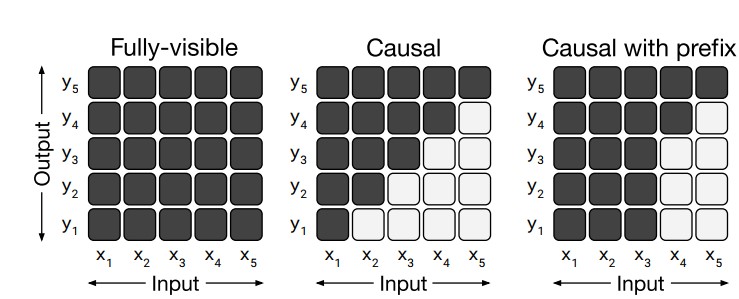
- 디코더 전용, 인코더 전용, 인코더-디코더 트랜스포머 아키텍처를 포함한 LLM의 일반적 방법을 조사한다.
- 전체 미세조정 및 매개변수 효율적 미세조정(PEFT) 기법으로 어댑터, LoRA, 그리고 지시 미세조정을 설명한다.
- 미세조정 불안정성 완화 전략 및 강건성 방법(R3F, R4F, SMART, FreeLB)을 논의한다.
- PVP 기반의 이산 프롬프트와 연속 프롬프트를 포함한 프롬프트 엔지니어링 접근 방식과 PET, LM-BFF, PTR 같은 방법들을 설명한다.
실험 결과
연구 질문
- RQ1다회 대화 시스템에 사용되는 일반적인 LLM 및 아키텍처 계열은 무엇인가?
- RQ2FFT, PEFT, 지시 미세조정처럼 LLM을 다운스트림 TOD/ODD 하위 태스크에 적응시키기 위한 효과적인 방법은 무엇인가?
- RQ3현재 LLM 기술로 어떻게 오픈 도메인 및 태스크 지향 대화 시스템이 구성되고 평가되는가?
- RQ4이 변화하는 영역에서 표준이 되는 데이터셋과 평가 지표는 무엇이며 남아 있는 과제는 무엇인가?
주요 결과
- LLMs enable significant performance gains in multi-turn dialogue systems through scaling and architectural variety (decoder-only, encoder-only, and encoder-decoder).
- Fine-tuning can be done fully or via parameter-efficient methods like adapters and LoRA to reduce resource usage while preserving pre-trained knowledge.
- Instruction fine-tuning and reinforcement learning from human feedback improve alignment and task performance.
- Prompt engineering, including discrete prompts (PET, LM-BFF) and tuning-free prompting, substantially impacts downstream task performance.
- Mitigating fine-tuning instability is critical, with methods such as R3F/R4F, SMART, and adversarial training proposed.
- New dialog-specific models and families (GPT, LLaMA, GLM, ChatGLM, Code Llama) and their dialog-specialized variants are advancing the field.

이 논문 읽기
누빈트 뷰어에서 원문을 열고, 읽으면서 궁금한 곳을 바로 물어보세요.
누빈트에서 이 논문 읽기이 리뷰는 AI가 논문 원문을 바탕으로 만들었습니다. 인용하기 전에 원문을 확인해 주세요.