
[논문 리뷰] Agent AI: Surveying the Horizons of Multimodal Interaction
포괄적 고찰: Agent AI—물리적 및 가상 환경에서 인지, 추론, 행동하는 다중 모달성 구체화 에이전트를 구축하는 대형 기초 모델(LLMs/VLMs) 기반의 에이전트 AI를 제안하며, 학습 패러다임, 윤리 및 응용에 대한 논의를 포함한다.
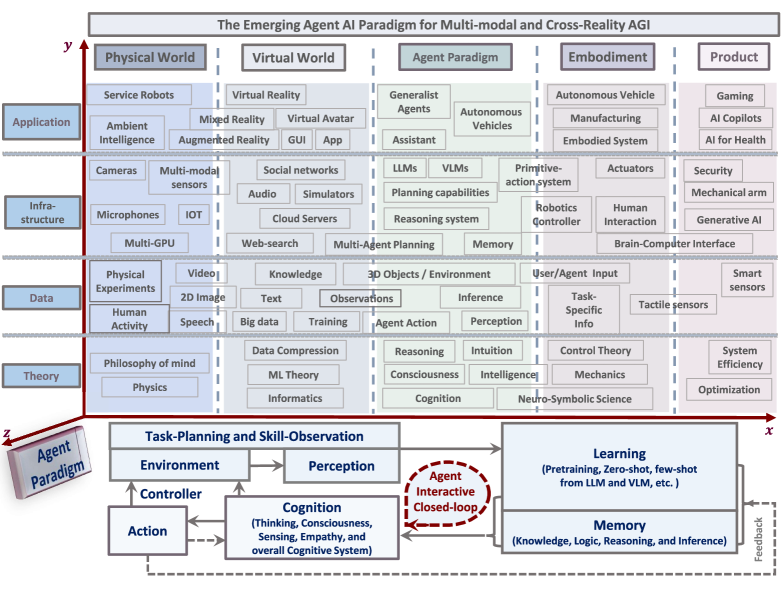
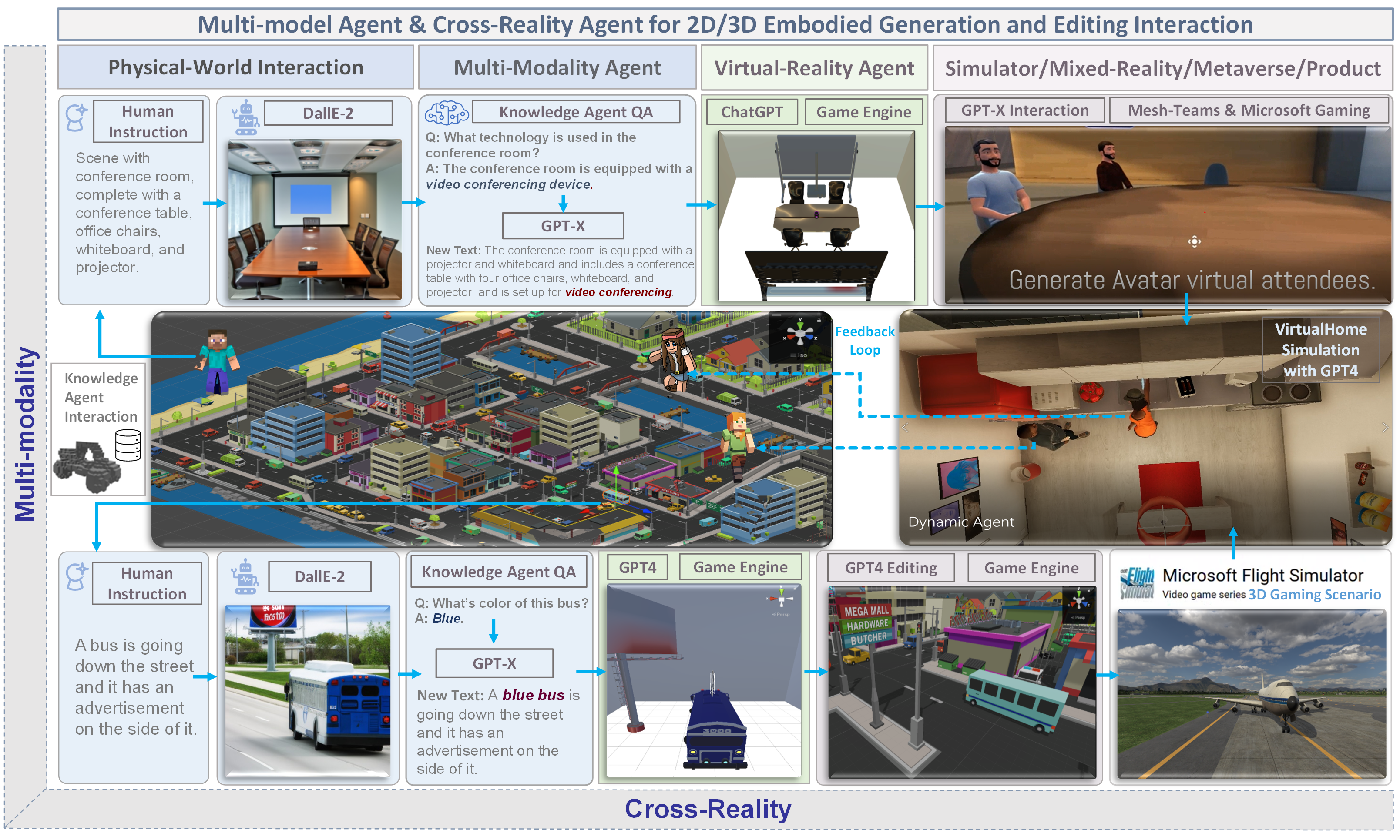
Multi-modal AI systems will likely become a ubiquitous presence in our everyday lives. A promising approach to making these systems more interactive is to embody them as agents within physical and virtual environments. At present, systems leverage existing foundation models as the basic building blocks for the creation of embodied agents. Embedding agents within such environments facilitates the ability of models to process and interpret visual and contextual data, which is critical for the creation of more sophisticated and context-aware AI systems. For example, a system that can perceive user actions, human behavior, environmental objects, audio expressions, and the collective sentiment of a scene can be used to inform and direct agent responses within the given environment. To accelerate research on agent-based multimodal intelligence, we define "Agent AI" as a class of interactive systems that can perceive visual stimuli, language inputs, and other environmentally-grounded data, and can produce meaningful embodied actions. In particular, we explore systems that aim to improve agents based on next-embodied action prediction by incorporating external knowledge, multi-sensory inputs, and human feedback. We argue that by developing agentic AI systems in grounded environments, one can also mitigate the hallucinations of large foundation models and their tendency to generate environmentally incorrect outputs. The emerging field of Agent AI subsumes the broader embodied and agentic aspects of multimodal interactions. Beyond agents acting and interacting in the physical world, we envision a future where people can easily create any virtual reality or simulated scene and interact with agents embodied within the virtual environment.
연구 동기 및 목표
- 에이전트 AI를 시각적, 언어적, 환경 데이터를 지각하고 구체화된 행동을 내는 상호작용 시스템의 한 클래스로 정의한다.
- Cross-reality 환경에서 작동하기 위해 LLMs 및 VLMs와 에이전트적 능력을 통합하는 대형 기초 모델의 통합을 조사한다.
- 게임, 로봇공학, 헬스케어와 같은 도메인에서 에이전트 유형과 응용을 분류한다.
- 제로/소수샷 시나리오에 대한 학습 전략(RL, 모방학습, 상황맥락 학습) 및 에이전트 인프라를 논의한다.
- 에이전트 기반 AI의 윤리, 프라이버시, 편향, 해석가능성 및 거버넌스 고려사항을 다룬다.
제안 방법
- LLMs/VLMs와 구체화된 행동을 통합하는 에이전트 AI 시스템을 훈련하고 평가하기 위한 프레임워크를 제안한다.
- 기초 모델 주도 에이전트의 환각과 편향의 문제를 분석하고 접지화(그라운딩)와 검색 증강 방법을 논의한다.
- 다중 도메인 에이전트를 위한 에이전트 트랜스포머 패러다임과 구축 과정을 개략한다.
- 제로샷 및 소수샷 일반화를 가능하게 하는 학습 전략(RL, IL, 상황맥락 학습)과 태스크 간 일반화를 설명한다.
- 에이전트 유형, 모듈성, 실환경/가상환경의 조직적 분류 체계와 평가 벤치마크 및 데이터셋을 제시한다.
실험 결과
연구 질문
- RQ1LLMs와 VLMs를 활용하여 물리적 및 가상 설정에서 효과적으로 작동하는 구현 가능한 다중 모달 구체화 에이전트를 어떻게 만들 수 있는가?
- RQ2도메인 간 일반화, 접지화, 강건성을 뒷받침하는 학습 패러다임과 아키텍처는 무엇인가?
- RQ3에이전트 AI를 능력, 모듈, 환경으로 분류하여 연구 및 평가를 안내하려면 어떻게 해야 하는가?
- RQ4에이전트 기반 시스템에 대한 윤리, 프라이버시 및 포용성 고려 사항은 무엇이며 이를 어떻게 완화할 수 있는가?
- RQ5다중 모달 에이전트 AI 연구를 발전시키기 위한 데이터셋과 벤치마크가 무엇인가?
주요 결과
- 에이전트 AI는 물리적 및 가상 현실에 걸친 더 인터랙티브하고 구체화된 다중 모달 지능으로의 경로로 정의된다.
- 일반형, 구체화, 시뮬레이션, 생성, 지식, 신경-기호적 에이전트를 포함하는 에이전트 AI 범주 및 응용의 포괄적 분류 체계가 제공된다.
- 기초 모델과의 통합에 대한 이점과 위험이 논의되며, 환각, 편향, 데이터 프라이버시 및 해석가능성 고려사항이 다룬다.
- 제로샷 및 소수샷 일반화를 위한 학습 전략(RL, IL, 상황맥락 학습)과 에이전트 인프라를 개략한다.
- 윤리적, 사회적 및 거버넌스 측면과 함께 데이터셋 및 에이전트 AI 진행 상황 평가를 위한 리더십 위원회 제안이 분석된다.
이 논문 읽기
누빈트 뷰어에서 원문을 열고, 읽으면서 궁금한 곳을 바로 물어보세요.
누빈트에서 이 논문 읽기이 리뷰는 AI가 논문 원문을 바탕으로 만들었습니다. 인용하기 전에 원문을 확인해 주세요.