
[논문 리뷰] Arecibo Wow! I: An Astrophysical Explanation for the Wow! Signal
이 논문은 1977년 Wow! 신호가 일시적인 방사선 방출—주로 자석성 항성 폭발 또는 소프트 감마 반복 방출에서 비롯된 것으로 보이는—에 의해 발생했으며, 이는 차가운 간성간 수소(HI) 구름에서 자극된 발산을 일으켜 1420 MHz에서 짧고 강력한 마이저 유사 신호를 만들어 냈다고 제안한다. 저자들은 아레시보 데이터에서 유사하지만 더 약한 신호들을 검출하여 그것들이 HI 방출임을 확인했으며, Wow! 신호가 외계 또는 지구 기반 간섭이 아니라 극히 드문 천체물리적 마이저 폭발이라는 자연적인 현상임을 제안한다.
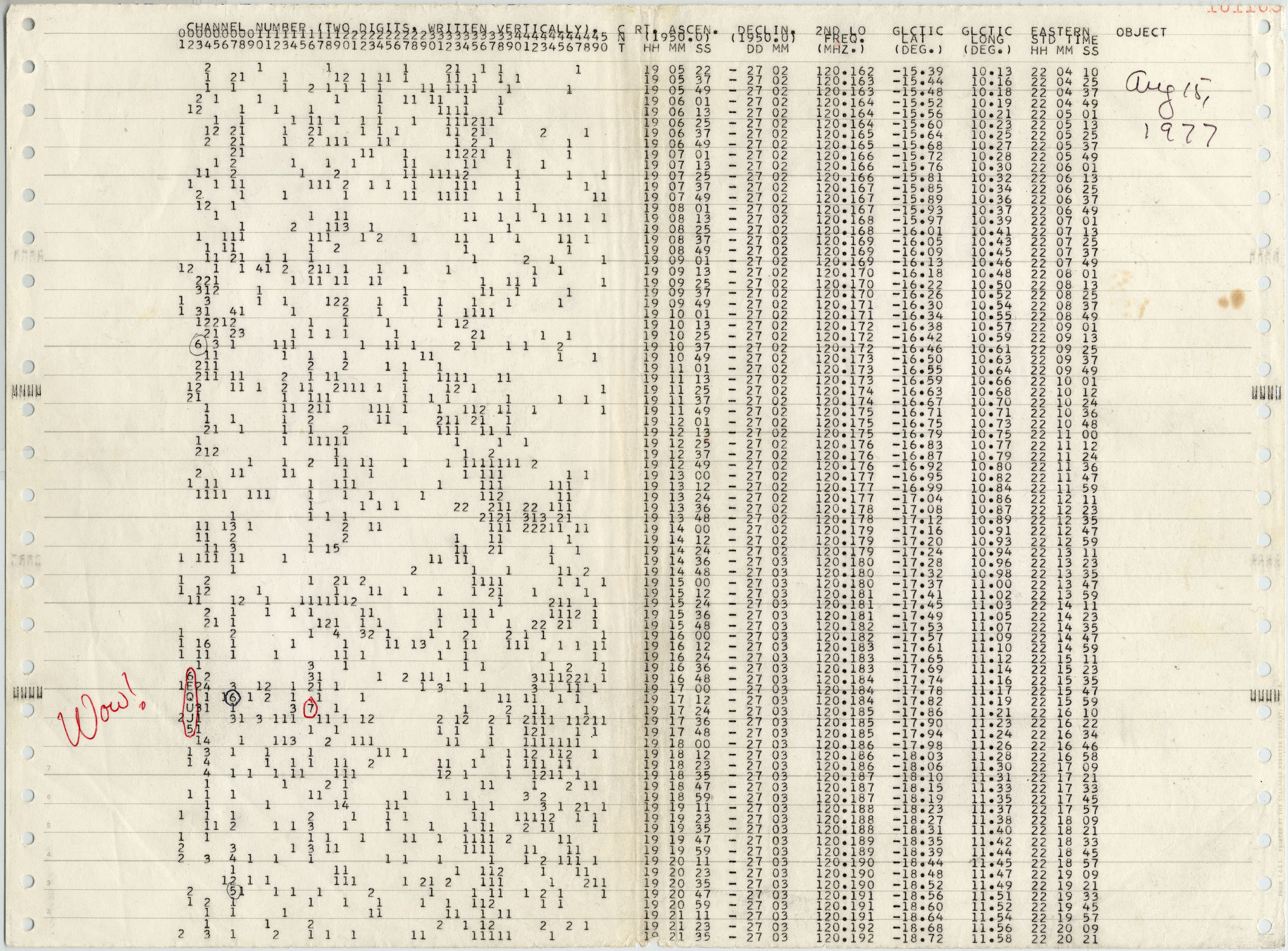
The Ohio State University Big Ear radio telescope detected in 1977 the Wow! Signal, one of the most famous and intriguing signals of extraterrestrial origin. Characterized by its strong relative intensity and narrow bandwidth near the 1420 MHz hydrogen line, its source has never been detected again despite numerous follow-up attempts. Arecibo Wow! is a new technosignature project using archived data from the Arecibo Observatory. Here we present our first results of drift scans made between February and May 2020 at 1420 MHz. The methods, frequency, and bandwidth of these observations are similar to those used to detect the Wow! Signal. However, our observations are more sensitive, have better temporal resolution, and include polarization measurements. We report the detection of narrowband signals (10 kHz) near the hydrogen line similar to the Wow! Signal, although two-orders of magnitude less intense and in multiple locations. Despite the similarities, these signals are easily identifiable as small interstellar clouds of cold hydrogen (HI) in the galaxy. We hypothesize that the Wow! Signal was caused by a sudden brightening of the hydrogen line in these clouds triggered by a strong transient radiation source, such as a magnetar flare or a soft gamma repeater (SGR). A maser flare or superradiance mechanisms can produce stimulated emission consistent with the Wow! Signal. Our hypothesis explains all observed properties of the Wow! Signal, proposes a new source of false positives in technosignature searches, and suggests that the Wow! Signal could be the first recorded event of an astronomical maser-like flare in the hydrogen line.
연구 동기 및 목표
- 수십 년에 걸친 탐색에도 불구하고 여전히 설명되지 않은 1977년 Wow! 신호의 기원을 밝히기 위해.
- Wow! 신호가 외계 또는 지구 기반 간섭이 아니라 자연적인 천체물리 현상일 수 있는지를 시험하기 위해.
- 기록된 아레시보 데이터에서 유사한 협대역 신호를 식별하여 제안된 메커니즘을 검증하기 위해.
- 자극된 발산을 통한 HI 구름에서의 물리적 메커니즘을 사용하여 Wow! 신호의 일시적, 협대역, 강력한 성질을 설명할 수 있는 검증 가능한 가설을 제공하기 위해.
- 이러한 마이저 폭발이 기술적 신호 탐색에서 잘못된 양성 결과를 낳을 수 있음을 제안하며, 유사한 신호를 해석할 때 경계를 요구한다.
제안 방법
- 원래의 Big Ear 관측과 유사한 관측 조건을 사용하여 2020년 아레시보 305미터 망원경과 2023년 12미터 망원경에서 1420 MHz에서 드리프트 스캔을 실시하였다.
- 고감도, 고시간 해상도 관측을 수행하였으며, 전체 스토크스 편광 측정을 통해 천체물리적 신호와 RFI를 구별하였다.
- 수소선 근처의 협대역 신호(Δν ≤ 10 kHz)를 분석하여, 기존의 알려진 HI 방출 특성과 스펙트럼 및 편광 특성을 비교하였다.
- 짧은 지속시간, 강한 방사선 방출(예: 자석성 항성 폭발 또는 SGR 폭발)에 의해 조명된 차가운 HI 구름에서 자극된 발산의 물리적 메커니즘을 모델링하였다.
- 마이저 증폭의 이론적 프레임워크를 사용하여, 구름 뒤에 위치한 일시적 원천이 1420 MHz에서 짧고 강력한 협대역 신호를 생성할 수 있음을 설명하였다.
- 식별된 HI 구름 뒤에 위치한 원천의 정위치를 특정하기 위해 고해상도 망원경(예: VLA)을 이용한 후속 관측을 제안하였다.
실험 결과
연구 질문
- RQ1Wow! 신호가 외계 또는 지구 기반 간섭이 아니라 자연적인 천체물리 과정에 의해 설명될 수 있는가?
- RQ21420 MHz에서 협대역, 강력하고 일시적인 무선 신호를 생성할 수 있는 물리적 메커니즘은 무엇인가? 이는 Wow! 신호의 특성과 일치해야 한다.
- RQ3기록된 아레시보 데이터에 Wow! 신호의 유사체가 존재하는가? 그리고 그들의 물리적 기원은 동일한가?
- RQ4차가운 간성간 수소(HI) 구름에서의 자극된 발산이 인공 기원이 없이도 신호의 강도, 지속 시간, 주파수를 설명할 수 있는가?
- RQ5Wow! 신호가 수소 마이저 폭발이었음을 검증하거나 반증하기 위해 어떤 관측 전략을 사용할 수 있는가?
주요 결과
- 아레시보 데이터에서 Wow! 신호와 유사한 대역폭과 주파수를 가진 협대역 신호(Δν ≤ 10 kHz)가 검출되었으며, 강도는 두 배수 정도 낮았다.
- 이 신호들은 스펙트럼 및 편광 특성에 기반하여 은하수 수소 배경 앞쪽에 위치한 차가운 수소(HI) 구름에서 유래한 것으로 확인되었다.
- 저자들은 Wow! 신호가 일시적인 방사선 방출(예: 자석성 항성 폭발 또는 SGR 폭발)에 의해 앞서 있는 HI 구름에서 자극된 발산을 유도하여 짧은 기간 동안 마이저 폭발을 일으켰다고 제안한다.
- 원천은 반드시 구름 뒤에 위치해 있어야 하며, 이는 원래의 원천이 탐지되지 않은 이유를 설명한다—선형 시야 정렬과 자극된 발산에 의한 신호 증폭 때문이다.
- 이 가설은 신호의 72초 지속 시간(망원경 빔 통과 시간), 협대역, 반복 탐지 부재를 설명할 수 있다. 이는 이러한 정렬과 일시적 사건의 희귀성 때문이며, 이는 신호의 특성과 부합한다.
- Wow! 신호는 아마도 수소선에서 기록된 첫 번째 천체 마이저 폭발일 수 있으며, 이는 새로운 종류의 일시적 무선 현상의 등장과 SETI에서 잘못된 양성 결과의 잠재적 원인이 될 수 있다.

이 논문 읽기
누빈트 뷰어에서 원문을 열고, 읽으면서 궁금한 곳을 바로 물어보세요.
누빈트에서 이 논문 읽기이 리뷰는 AI가 논문 원문을 바탕으로 만들었습니다. 인용하기 전에 원문을 확인해 주세요.