
[논문 리뷰] Communication and Control in Collaborative UAVs: Recent Advances and Future Trends
이 논문은 다중-UAV 시스템에서 협력적 의사소통과 제어의 포괄적 조사를 제공하며, 아키텍처, 채널, 군집 작업, 도시 응용 및 향후 연구 방향을 개략적으로 제시한다.
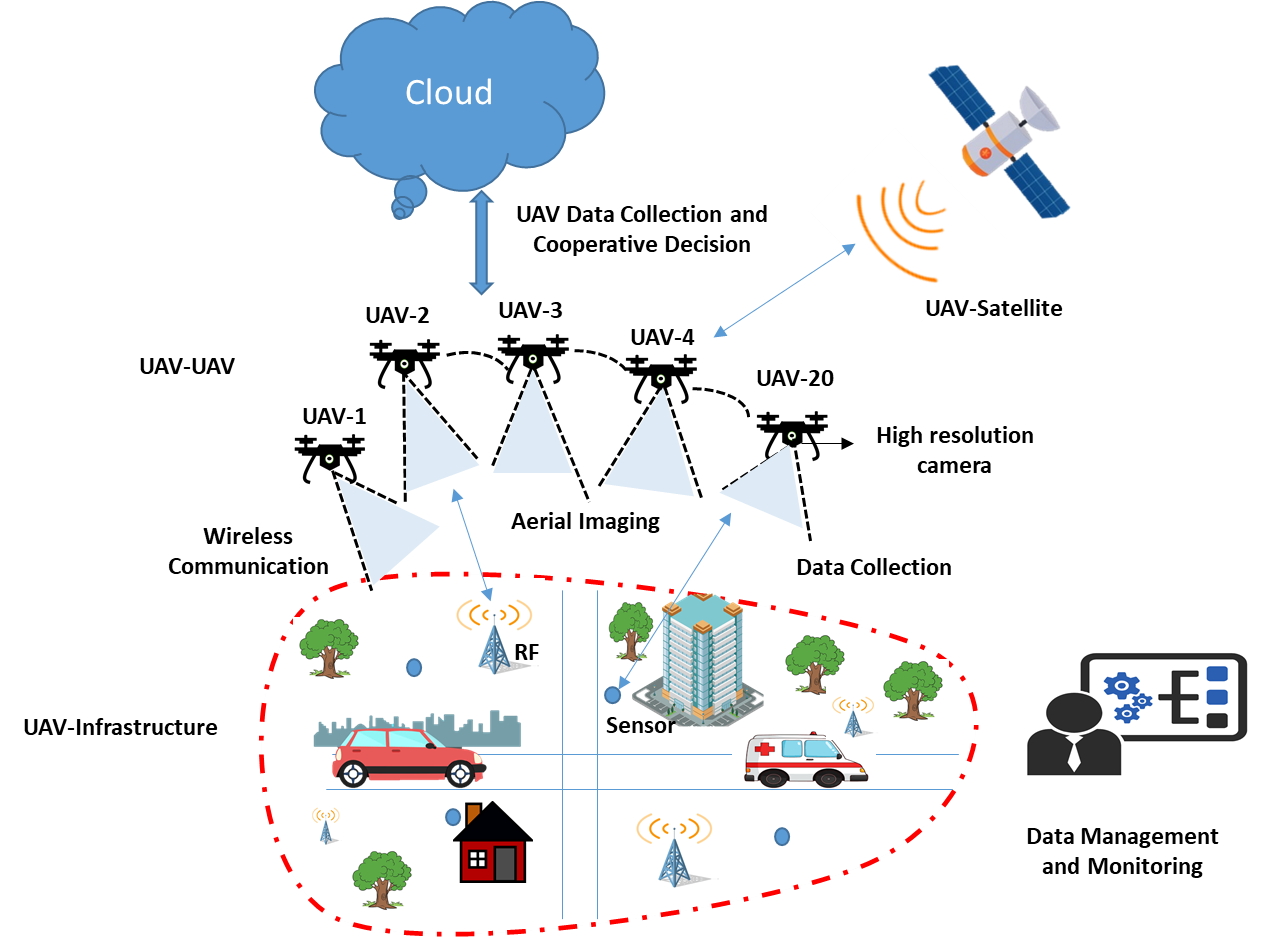
The recent progress in unmanned aerial vehicles (UAV) technology has significantly advanced UAV-based applications for military, civil, and commercial domains. Nevertheless, the challenges of establishing high-speed communication links, flexible control strategies, and developing efficient collaborative decision-making algorithms for a swarm of UAVs limit their autonomy, robustness, and reliability. Thus, a growing focus has been witnessed on collaborative communication to allow a swarm of UAVs to coordinate and communicate autonomously for the cooperative completion of tasks in a short time with improved efficiency and reliability. This work presents a comprehensive review of collaborative communication in a multi-UAV system. We thoroughly discuss the characteristics of intelligent UAVs and their communication and control requirements for autonomous collaboration and coordination. Moreover, we review various UAV collaboration tasks, summarize the applications of UAV swarm networks for dense urban environments and present the use case scenarios to highlight the current developments of UAV-based applications in various domains. Finally, we identify several exciting future research direction that needs attention for advancing the research in collaborative UAVs.
연구 동기 및 목표
- 자율적인 다중-UAV 협업을 위한 통신 및 제어 요구사항을 요약한다.
- UAV 군집에 대한 현재의 협력적 통신 메커니즘과 아키텍처를 검토한다.
- 도시 환경과 스마트 시티에서의 UAV 군집 네트워크 응용을 강조한다.
- 협력적 UAV를 위한 남은 도전과제 식별 및 향후 연구 방향을 제시한다.
제안 방법
- 협력적 UAV 통신 및 제어에 대한 구조화된 문헌 조사를 수행한다.
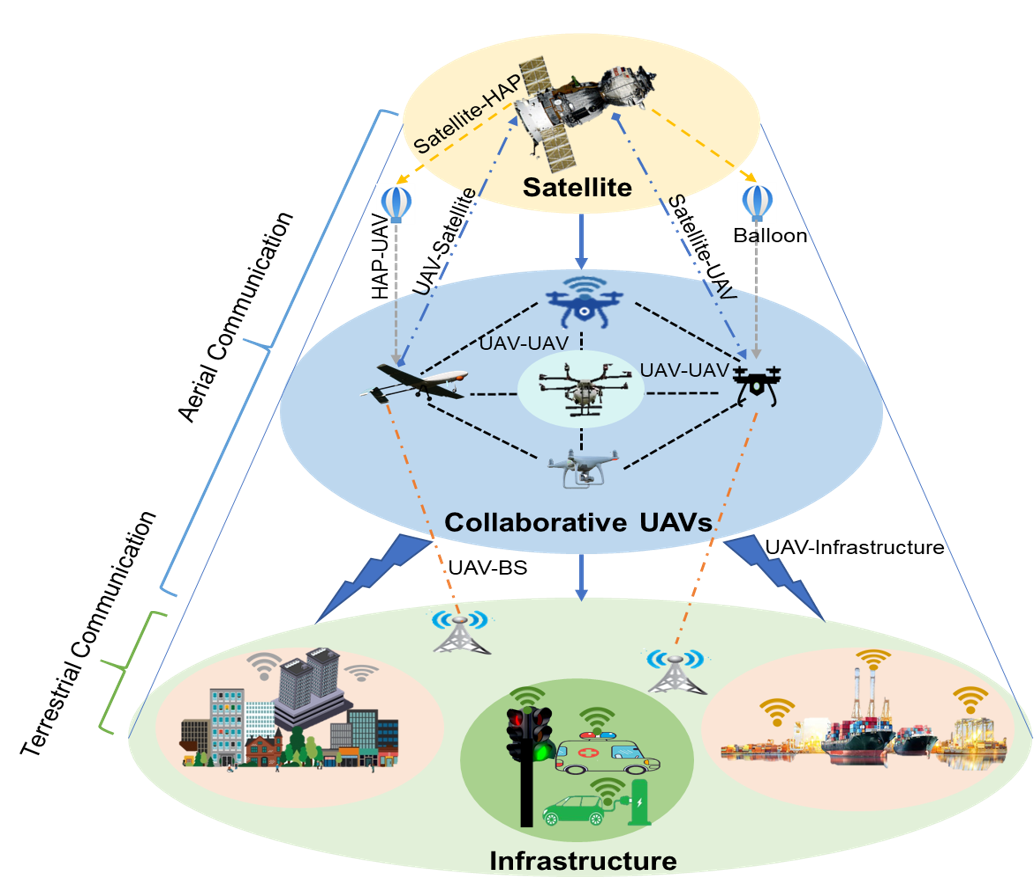
- 통신 모드를 UAV-to-Infrastructure 및 UAV-to-UAV로 분류하고 그 요구사항을 분석한다.
- 스웜 기반 협력 작업, 라우팅, 궤적 계획 및 목표 위치 추정 등을 검토한다.
- 도시 환경과 스마트 시티의 사용 사례를 조사하여 현재 발전 상황을 설명한다.
- 강화 학습 및 기타 AI 기법을 UAV 스웜 조정에 적용하는 것을 논의한다.
실험 결과
연구 질문
- RQ1다중-UAV 협업을 위한 필수적인 통신 및 제어 요구사항은 무엇인가?
- RQ2협력적 UAV 네트워크의 주요 도전과제와 한계는 무엇인가(예: 연결성, 대기시간, 스펙트럼, 이동성 등)?
- RQ3도시 환경에서 UAV 군집 협업을 보여주는 사용 사례와 응용은 무엇인가?
- RQ4향후 방향과 기술(예: 5G/6G, RL)이 협력적 UAV를 어떻게 발전시킬 수 있는가?
주요 결과
- 협력적 UAV 통신은 다중-UAV 시스템에서 더 빠르고 더 신뢰할 수 있으며 고장 허용적인 작업 완수를 가능하게 한다.
- UAV-to-Infrastructure 및 UAV-to-UAV 링크는 각기 다른 요구사항과 도전과제를 제시하며, 가시선(LoS), 간섭, 대기시간, 스펙트럼 고려 등이 포함된다.
- 군집 기반 작업은 협력 위치추정, 궤적 형성, 라우팅, 목표 추적 등 다양한 알고리즘으로 활발히 탐구되고 있다.
- 딥 강화학습 및 기타 학습 기반 접근법이 UAV 스웜의 경로 계획, 조정 및 자원 관리 향상을 위해 점점 더 많이 활용되고 있다.
- 도시 환경 및 스마트 시티의 응용은 모니터링 향상, 재난 관리 및 감시 가능성을 강조한다.
- 진보에도 불구하고 채널 모델링, 에너지 효율성, 확장 가능한 아키텍처, 대규모 UAV 스웜의 안전하고 신뢰할 수 있는 작동에는 여전히 도전과제가 남아 있다.
이 논문 읽기
누빈트 뷰어에서 원문을 열고, 읽으면서 궁금한 곳을 바로 물어보세요.
누빈트에서 이 논문 읽기이 리뷰는 AI가 논문 원문을 바탕으로 만들었습니다. 인용하기 전에 원문을 확인해 주세요.