
[논문 리뷰] DAS-N2N: Machine learning Distributed Acoustic Sensing (DAS) signal denoising without clean data
DAS-N2N는 청소된 학습 데이터가 필요 없이 분산 음향 센싱(DAS) 신호를 노이즈 제거하기 위한 약한 지도 학습 기반의 딥러닝 방법이다. 하나의 케이블에 연결된 두 개의 스플라이스된 섬유를 활용하여 짝지어진 노이즈 있는 입력을 제공함으로써, 모델은 비일관성 있는 노이즈를 억제하면서도 진짜 신호를 유지한다. 이로 인해 30초 분량의 985채널 데이터에 대해 1초 미만으로 거의 실시간 노이즈 제거가 가능하며, 남극 현장 데이터에서 마이크로세이즘 사건의 신호 대 노이즈 비율을 크게 향상시킨다.
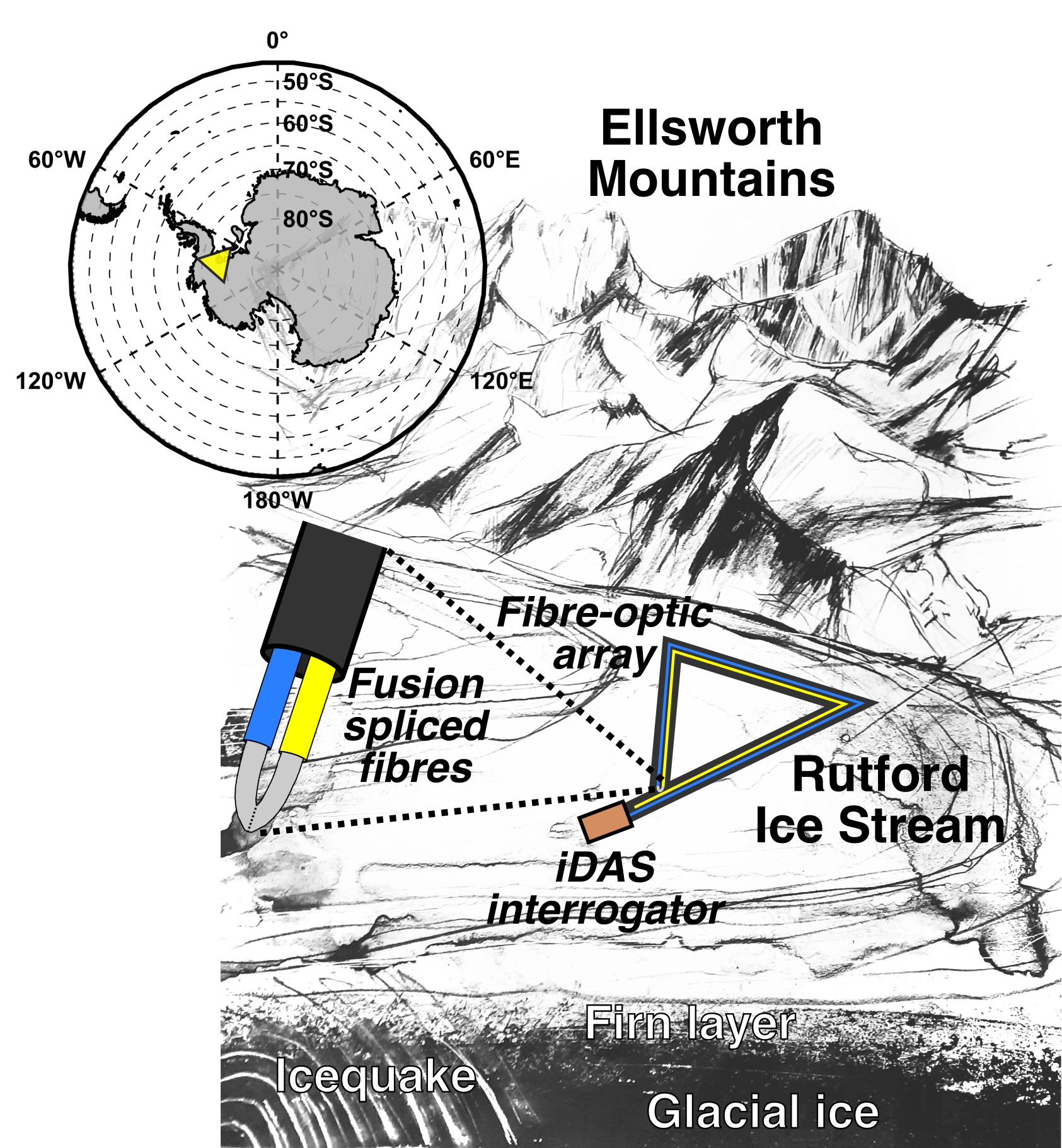
This article presents a weakly supervised machine learning method, which we call DAS-N2N, for suppressing strong random noise in distributed acoustic sensing (DAS) recordings. DAS-N2N requires no manually produced labels (i.e., pre-determined examples of clean event signals or sections of noise) for training and aims to map random noise processes to a chosen summary statistic, such as the distribution mean, median or mode, whilst retaining the true underlying signal. This is achieved by splicing (joining together) two fibres hosted within a single optical cable, recording two noisy copies of the same underlying signal corrupted by different independent realizations of random observational noise. A deep learning model can then be trained using only these two noisy copies of the data to produce a near fully-denoised copy. Once the model is trained, only noisy data from a single fibre is required. Using a dataset from a DAS array deployed on the surface of the Rutford Ice Stream in Antarctica, we demonstrate that DAS-N2N greatly suppresses incoherent noise and enhances the signal-to-noise ratios (SNR) of natural microseismic icequake events. We further show that this approach is inherently more efficient and effective than standard stop/pass band and white noise (e.g., Wiener) filtering routines, as well as a comparable self-supervised learning method based on masking individual DAS channels. Our preferred model for this task is lightweight, processing 30 seconds of data recorded at a sampling frequency of 1000 Hz over 985 channels (approx. 1 km of fiber) in $<$1 s. Due to the high noise levels in DAS recordings, efficient data-driven denoising methods, such as DAS-N2N, will prove essential to time-critical DAS earthquake detection, particularly in the case of microseismic monitoring.
연구 동기 및 목표
- 원격 또는 극한 환경에서 약한 마이크로세이즘 신호 탐지에 장애가 되는 DAS 기록에서의 높은 랜덤 노이즈 문제를 해결한다.
- 수동으로 정제된 청소된 신호 예시나 레이블이 필요 없는 노이즈 제거 방법을 개발하여 확장 가능한 구현을 가능하게 한다.
- 기존 광케이블에 내장된 双섬유 구성의 고유한 冗답성(중복성)을 활용하여, 두 개의 독립적인 노이즈 실현값에서만 이루어진 노이즈 데이터로 모델을 훈련한다.
- 지속적인 응용 분야인 지진 감시 및 조약 이행 검증과 같은 시간이 중요한 응용 분야에 적합한 실시간, 효율적이고 가벼운 노이즈 제거를 달성한다.
- 남극의 루프터드 빙하 유역에서 확보한 실제 DAS 데이터를 통해, 환경 노이즈로 인해 심각하게 떨어진 신호 대 노이즈 비율 상황에서 본 방법의 효과성을 입증한다.
제안 방법
- 동일한 지반 섭동 신호를 각각 다른 랜덤 노이즈 실현값에 의해 손상된 두 개의 독립적인 노이즈 있는 복사본을 기록하기 위해, 하나의 광케이블에 두 개의 스플라이스된 섬유를 사용한다.
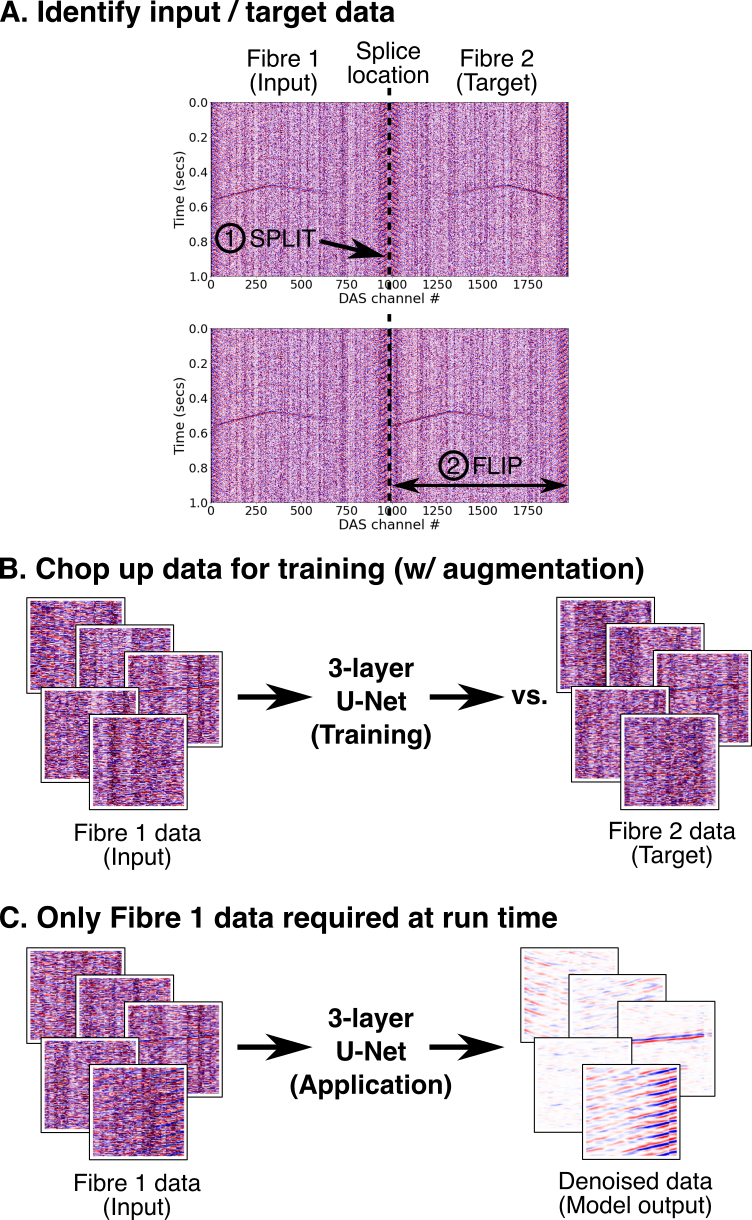
- 두 노이즈 있는 섬유 기록을 입력과 타겟으로 삼아 딥 뉴럴 네트워크를 훈련함으로써, 청소된 신호 레이블 없이도 엔드 투 엔드 학습이 가능하도록 한다.
- 1:1 매핑 전략을 적용하여, 한 쪽 노이즈 입력을 다른 노이즈 복사본과의 차이를 최소화하도록 변환함으로써 노이즈 분포를 효과적으로 학습한다.
- 속도와 저전력 소비를 고려한 가벼운 얕은 네트워크 아키텍처(예: 3층)를 사용하여, 일반 하드웨어에서도 실시간 추론이 가능하도록 한다.
- 1km 길이의 섬유 세그먼트에서 985채널을 1000Hz로 샘플링한 데이터를 슬라이딩 윈도우 방식으로 처리하며, 추론 시간이 1초 이내이다.
- 훈련 후에 단일 섬유 데이터에 대해 훈련된 모델을 배포함으로써, 운영 단계에서 이중 섬유 기록이 필요 없도록 한다.
실험 결과
연구 질문
- RQ1머신러닝 모델이 수동으로 레이블링된 청소된 데이터나 신호 예시가 전혀 없이 DAS 신호의 노이즈 제거를 효과적으로 수행할 수 있는가?
- RQ2DAS-N2N는 기존의 필터링 기법(예: 대역통과, 위erner 필터)과 비교해 신호 대역폭 내에서 비일관성 있는 노이즈를 얼마나 효과적으로 억제하는가?
- RQ3고노이즈 환경에서 채널 마스킹 기반 자기지도 학습 방법과 비교해 DAS-N2N는 속도, 정확도, 노이즈 억제 성능 면에서 뛰어나게 되는가?
- RQ4가벼운 DAS-N2N 모델이 마이크로세이즘 감시 및 초기 경고 시스템과 같은 시간이 중요한 응용 분야에서 실시간 처리를 얼마나 잘 달성할 수 있는가?
- RQ5스플라이스된 구성으로 재학습할 수 있는 후행적 모델 재학습을 통해, DAS-N2N 접근법이 기존의 스플라이스되지 않은 섬유를 갖춘 DAS 구축 환경에 일반화되고 적용 가능한가?
주요 결과
- DAS-N2N는 루프터드 빙하 유역에서 확보한 DAS 기록에서 비일관성 있는 노이즈를 성공적으로 억제하여 자연적인 마이크로세이즘 빙하우르트 사건의 신호 대 노이즈 비율을 크게 향상시켰다.
- 단일 GPU에서 30초 분량의 985채널, 1000Hz DAS 데이터를 1초 미만으로 처리하여 실시간 또는 거의 실시간 응용에 적합함을 입증했다.
- 마스킹 및 재구성 절차가 없기 때문에, 마스킹 기반 자기지도 학습 방법과 비교해 10배 이상 빠른 속도를 보였다.
- 주파수 기반 필터와 달리, 신호 관심 대역과 동일한 주파수 대역 내에 존재하는 노이즈도 효과적으로 억제하여, 기존 필터링 기법의 한계를 극복했다.
- 입력과 타겟 간 1:1 매핑을 통해 진짜 신호를 유지함으로써, 노이즈 수준이 증가할수록 발생하는 자기지도 마스킹 접근법의 보간 문제를 피했다.
- 훈련 후에 단일 섬유 데이터에 대해 훈련된 모델을 배포할 수 있으며, 운영 단계에서 추가적인 데이터 저장 또는 처리 오버헤드가 발생하지 않는다.
더 나은 연구,지금 바로 시작하세요
논문 읽기부터 검토까지, 연구 시간을 획기적으로 줄여보세요.
카드 등록 없음 · 무료 플랜 제공
이 리뷰는 AI가 만들고, 인간 에디터가 검토했습니다.