
[논문 리뷰] Digital Twin for Autonomous Surface Vessels: Enabler for Safe Maritime Navigation
이 논문은 자율 항로선박(ASV)을 위한 실시간 시뮬레이션, 센서 통합 및 예측 분석을 통해 안전하고 효율적이며 지속 가능한 해상 항해를 가능하게 하는 6단계 디지털 트윈 프레임워크(레벨 0–5)를 제안한다. 주요 기여는 디지털 트윈 기능을 ASV 운영 수요에 맞게 매핑하는 종합적인 방법론이며, 산업, 정부, 연구 분야의 이해관계자들이 디지털 트윈 도입을 가속화하고 안전성 및 환경 성능을 보장하기 위한 실질적인 권고 사항을 제시한다.
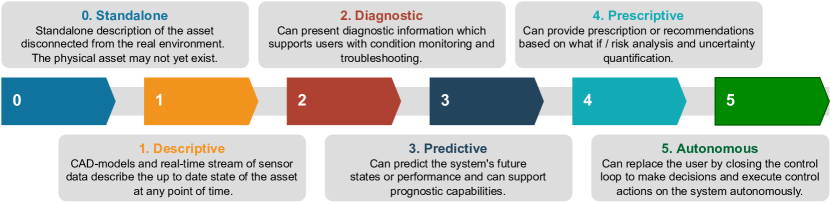
Autonomous surface vessels (ASVs) are becoming increasingly significant in enhancing the safety and sustainability of maritime operations. To ensure the reliability of modern control algorithms utilized in these vessels, digital twins (DTs) provide a robust framework for conducting safe and effective simulations within a virtual environment. Digital twins are generally classified on a scale from 0 to 5, with each level representing a progression in complexity and functionality: Level 0 (Standalone) employs offline modeling techniques; Level 1 (Descriptive) integrates sensors and online modeling to enhance situational awareness; Level 2 (Diagnostic) focuses on condition monitoring and cybersecurity; Level 3 (Predictive) incorporates predictive analytics; Level 4 (Prescriptive) embeds decision-support systems; and Level 5 (Autonomous) enables advanced functionalities such as collision avoidance and path following. These digital representations not only provide insights into the vessel's current state and operational efficiency but also predict future scenarios and assess life endurance. By continuously updating with real-time sensor data, the digital twin effectively corrects modeling errors and enhances decision-making processes. Since DTs are key enablers for complex autonomous systems, this paper introduces a comprehensive methodology for establishing a digital twin framework specifically tailored for ASVs. Through a detailed literature survey, we explore existing state-of-the-art enablers across the defined levels, offering valuable recommendations for future research and development in this rapidly evolving field.
연구 동기 및 목표
- 자율 항로선박(ASV) 기술을 발전시켜 안전하고 지속 가능한 해상 운영의 증가하는 수요를 충족시키기 위해.
- 단일 모델링에서 완전 자율성에 이르기까지 6단계의 성숙도 수준(0–5)으로 ASV에 대한 디지털 트윈 기능을 정의하고 체계화하기 위해.
- 디지털 트윈 구현을 위한 핵심 기술적 요소들—예: 센서 통합, 예측 분석, 충돌 회피—을 규명하기 위해.
- 산업, 정부, 분류 사절, 학계 등 이해관계자별 권고 사항을 제공하여 디지털 트윈 도입을 가속화하기 위해.
- 이론적 디지털 트윈 개념과 자율 해양 시스템에서의 실질적 구현 사이의 격차를 산업 간 협업을 통해 메우기 위해.
제안 방법
- 논문은 기존의 디지털 트윈 기술 및 해양 자율 시스템에의 적용을 분석하기 위해 체계적인 문헌 고찰을 수행한다.
- 디지털 트윈을 6단계의 능력 수준(0–5)으로 분류하며, 각 수준은 실시간 데이터 통합, 예측 모델링, 자율적 의사결정 능력의 복잡도가 증가하는 것을 나타낸다.
- 메서드론은 실시간 데이터 스트리밍, 동적 모델 업데이트, 센서 융합을 강조하여 디지털 트윈이 물리적 선박의 현재 상태를 반영하고 향후 행동을 예측할 수 있도록 보장한다.
- 물리 기반 모델링과 데이터 기반 모델링 접근 방식을 융합하여 ASV에서 상황 인식, 상태 모니터링 및 경로 최적화 능력을 향상시킨다.
- 안전하고 신뢰할 수 있는 자율 항해를 지원하기 위해 고급 제어 알고리즘과 사이버보안 조치를 통합한다.
- 기술 개발이 규제, 안전 및 환경 기준과 일치하도록 이해관계자 참여 및 산업 간 협업을 포함한다.
실험 결과
연구 질문
- RQ1어떻게 디지털 트윈을 체계적으로 구조화하고 분류함으로써 자율 항로선박의 개발을 지원할 수 있는가?
- RQ2각 능력 수준에서 디지털 트윈의 功能을 위해 필수적인 기술적 요소들—예: 센서 통합, 예측 분석, 실시간 시뮬레이션—은 무엇인가?
- RQ3안전하고 지속 가능한 해상 운영을 위한 디지털 트윈 구현에서 주요 과제와 기회는 무엇인가?
- RQ4산업, 정부, 연구 분야의 이해관계자들이 효과적으로 협업하여 자율 해운 분야에서 디지털 트윈 도입을 가속화할 수 있는 방법은 무엇인가?
- RQ5디지털 트윈은 ASV에서 충돌 회피, 연료 효율성 및 환경 성능 향상에 어떤 역할을 하는가?
주요 결과
- 레벨 5(자율)의 디지털 트윈은 실시간 충돌 회피 및 경로 추종과 같은 고도 기능을 가능하게 하여 항해 안전성을 크게 향상시킨다.
- 실시간 센서 데이터의 디지털 트윈 통합은 모델링 오류를 지속적으로 보정하여 정확성과 의사결정 신뢰도를 향상시킨다.
- 레벨 3에서의 예측 분석과 레벨 4에서의 정책 기반 기능은 유지보수 스케줄링과 운영 효율성을 향상시켜 정지 시간과 배출가스를 감소시킨다.
- 데이터 교환 표준화, 사이버보안 확보 및 배포 가속화를 위해 산업, 연구 기관 및 규제 기관 간 협업이 필수적이다.
- 특히 심해 항로와 같은 고위험 환경에서 실무 적용 이전에 복잡한 해양 시나리오를 시뮬레이션함으로써 사고 위험을 감소시킨다.
- 최적의 항로 계획 및 연료 효율성 향상을 통해 환경 지속 가능성도 지원하며, 해양 분야의 이산화탄소 배출 감소에 직접 기여한다.
이 논문 읽기
누빈트 뷰어에서 원문을 열고, 읽으면서 궁금한 곳을 바로 물어보세요.
누빈트에서 이 논문 읽기이 리뷰는 AI가 논문 원문을 바탕으로 만들었습니다. 인용하기 전에 원문을 확인해 주세요.