
[논문 리뷰] Escaping the sentence-level paradigm in machine translation
이 논문은 표준 Transformer 모델과 높은 용량으로 문서 수준 번역을 지지하고, 역번역 데이터로부터 문서 수준 샘플로 학습하며, 문서 맥락 성능을 평가하기 위한 새로운 생성형 평가 지표를 제안한다.
It is well-known that document context is vital for resolving a range of translation ambiguities, and in fact the document setting is the most natural setting for nearly all translation. It is therefore unfortunate that machine translation -- both research and production -- largely remains stuck in a decades-old sentence-level translation paradigm. It is also an increasingly glaring problem in light of competitive pressure from large language models, which are natively document-based. Much work in document-context machine translation exists, but for various reasons has been unable to catch hold. This paper suggests a path out of this rut by addressing three impediments at once: what architectures should we use? where do we get document-level information for training them? and how do we know whether they are any good? In contrast to work on specialized architectures, we show that the standard Transformer architecture is sufficient, provided it has enough capacity. Next, we address the training data issue by taking document samples from back-translated data only, where the data is not only more readily available, but is also of higher quality compared to parallel document data, which may contain machine translation output. Finally, we propose generative variants of existing contrastive metrics that are better able to discriminate among document systems. Results in four large-data language pairs (DE$ ightarrow$EN, EN$ ightarrow$DE, EN$ ightarrow$FR, and EN$ ightarrow$RU) establish the success of these three pieces together in improving document-level performance.
연구 동기 및 목표
- 문서 맥락이 번역의 모호성 해소에 결정적이며 문장 수준 번역을 넘어가야 한다는 주장을 한다.
- 충분한 용량의 표준 Transformer가 문서 수준 번역을 처리할 수 있음을 보여준다.
- 역번역 데이터로부터 얻은 문서 샘플이 학습 자료로 효과적이며, 순수한 병렬 문서 데이터만은 해로울 수 있음을 보여준다.
- 문서 수준 MT 성능을 더 잘 평가하기 위한 대비(constrastive) 평가의 생성적 변형을 제안한다.
제안 방법
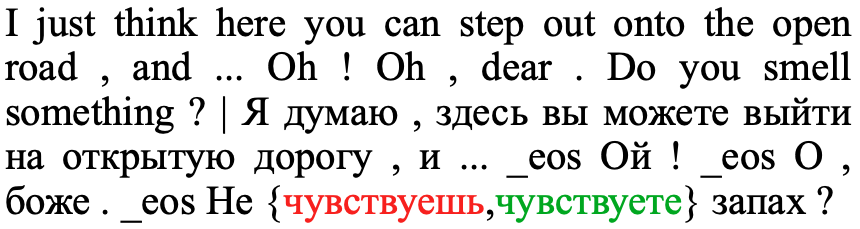
- 인접한 문장을 <sep> 구분자로 연결하여 의도된 문서-문서 학습 접근법을 사용한다.
- 문서 인식 샘플링으로 병렬 및 역번역 데이터의 혼합 풀이에서 표준 Transformer 모델(12-layer encoder, 6-layer decoder)을 학습한다.
- 대비적 및 생성적 문서 수준 테스트 세트와 함께 표준 문장 수준 메트릭(BLEU, COMET)을 평가한다.
- 문서 수준 생성 품질을 더 잘 포착하기 위해 대비 지표의 생성적 변형(GenPro, ContraGen)을 도입한다.
- 역번역 데이터로부터의 문서 맥락 학습과 병렬 데이터의 비교 분석 및 대명사/담화 현상 검토를 수행한다.

실험 결과
연구 질문
- RQ1충분한 용량의 표준 Transformer 아키텍처를 사용할 때 문서 수준 번역이 문장 수준 기준선보다 향상되는가?
- RQ2문서 수준 학습 데이터를 역번역된 단일언어 데이터에서 효과적으로 소싱할 수 있으며 병렬 문서 데이터가 필요하거나 유익한가?
- RQ3대비적 문서 수준 지표가 문서 인식 MT 시스템의 생성 능력과 일치하는가, 그리고 생성적 변형으로 개선될 수 있는가?
주요 결과
- 충분한 모델 용량이 주어지면 문서 수준 번역이 문장 수준 기준선보다 향상된다.
- 역번역 데이터의 문서 샘플로 학습하는 것이 효과적이며 단독으로 병렬 문서 데이터를 사용하는 것보다 바람직한 경우가 많다.
- 대비적 문서 수준 지표는 개선을 나타낼 수 있지만 생성적 지표는 문서 맥락 모델의 명확한 이점을 나타낸다, 특히 대명사/담화 현상에서.
- 네 가지 언어쌍에서 평가했을 때 문서 맥락 모델은 문서 수준 평가에서 일관된 이득을 보이나 문장 수준 지표는 맥락 사용에 대해 다양하거나 제한적 이득을 보인다.
- 타깃 맥락 강제 디코딩과 생성적 평가 변형은 진정한 문서 생성 역량과 구별하는 데 도움이 된다.
이 논문 읽기
누빈트 뷰어에서 원문을 열고, 읽으면서 궁금한 곳을 바로 물어보세요.
누빈트에서 이 논문 읽기이 리뷰는 AI가 논문 원문을 바탕으로 만들었습니다. 인용하기 전에 원문을 확인해 주세요.