
[논문 리뷰] FedCLIP: Fast Generalization and Personalization for CLIP in Federated Learning
FedCLIP은 연합 학습에서 CLIP 위에 주의(attention) 기반 어댑터를 두어 보이지 않는 클라이언트에 대한 빠른 일반화와 참여 클라이언트에 대한 개인화 성능을 달성하고, 학습 및 통신 비용을 크게 감소시킵니다.
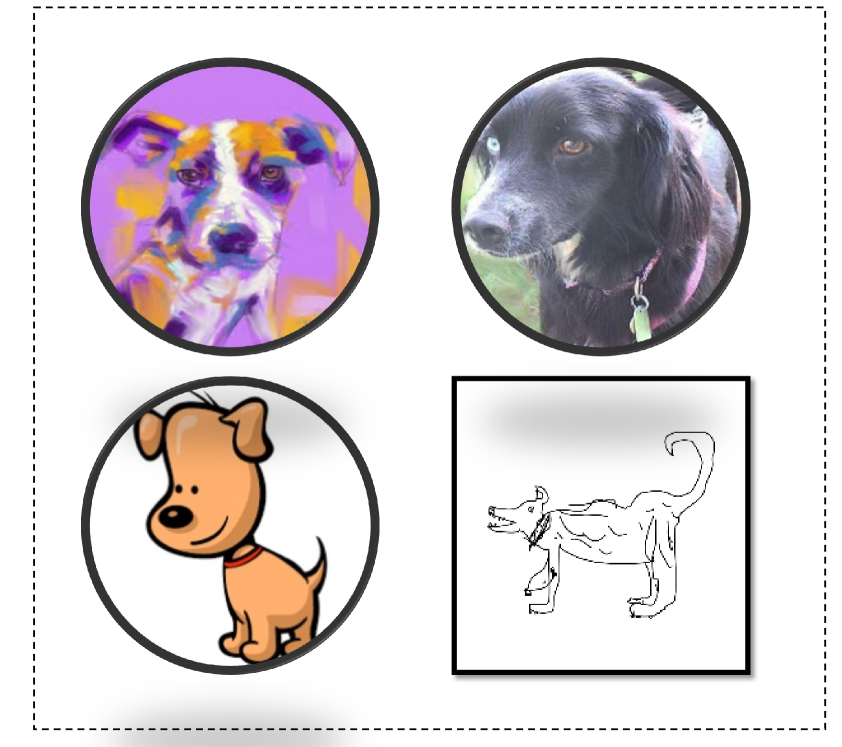
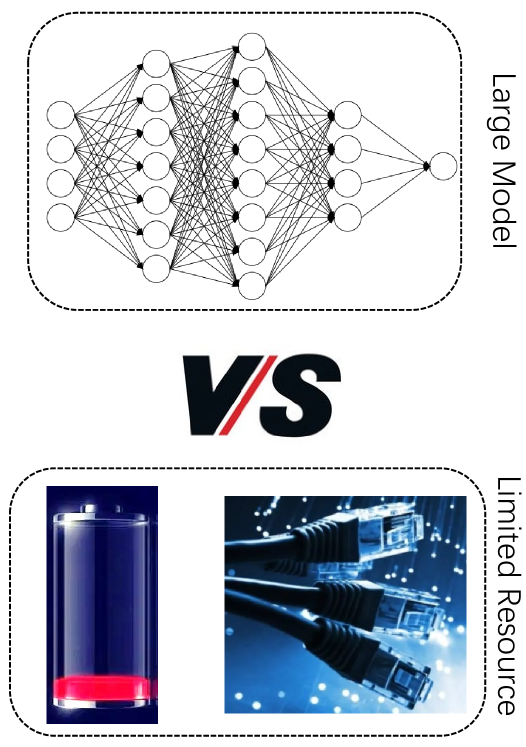
Federated learning (FL) has emerged as a new paradigm for privacy-preserving computation in recent years. Unfortunately, FL faces two critical challenges that hinder its actual performance: data distribution heterogeneity and high resource costs brought by large foundation models. Specifically, the non-IID data in different clients make existing FL algorithms hard to converge while the high resource costs, including computational and communication costs that increase the deployment difficulty in real-world scenarios. In this paper, we propose an effective yet simple method, named FedCLIP, to achieve fast generalization and personalization for CLIP in federated learning. Concretely, we design an attention-based adapter for the large model, CLIP, and the rest operations merely depend on adapters. Lightweight adapters can make the most use of pretrained model information and ensure models be adaptive for clients in specific tasks. Simultaneously, small-scale operations can mitigate the computational burden and communication burden caused by large models. Extensive experiments are conducted on three datasets with distribution shifts. Qualitative and quantitative results demonstrate that FedCLIP significantly outperforms other baselines (9% overall improvements on PACS) and effectively reduces computational and communication costs (283x faster than FedAVG). Our code will be available at: https://github.com/microsoft/PersonalizedFL.
연구 동기 및 목표
- FL에서 데이터 분포 이질성에 대응하기 위해 CLIP와 같은 대형 사전 학습 모델을 사용할 때의 문제점 해결.
- 클립 전체 모델의 미세조정 없이 클라이언트 간에 CLIP를 개인화하기 위한 경량의 적응 가능한 메커니즘 개발.
- 사전 학습된 모델의 지식을 보존하여 robust한 특징 표현을 유지하면서 작업 특화 적응을 가능하게 함.
- 전체 모델 연합 학습에 비해 계산 및 통신 부담을 감소시키기.
제안 방법
- CLIP 이미지 인코더용 주의 기반 어댑터인 AttAI 도입.
- 각 클라이언트에서 사전 학습된 CLIP 모델로 고정 특성 I = f^I(x) 및 T = f^T(y)를 추출합니다.
- 로컬 어댑터 g_i를 D_i^train에서 학습하여 att = g(I)라는 주의 벡터를 생성하고 I* = att ∘ I로 업데이트합니다.
- 정규화된 I* 및 T를 사용하여 스케일 s로 CLIP 손실 구성에 따라 CLIP 스타일 로짓을 계산합니다.
- 서버에서 어댑터 매개변수를 가중 평균 w^g* = sum_i (n_i / sum_j n_j) w_i^g로 집계하고 이를 클라이언트에 배포합니다.
- FedCLIP 최적화 동안 어댑터만 업데이트하여 trainable 매개변수를 줄이고 전체 모델 FL에 비해 통신을 감소시킵니다.
실험 결과
연구 질문
- RQ1사전 학습된 CLIP 모델 위에 경량 어댑터가 FL에서 보이지 않는 클라이언트에 대한 일반화와 참여 클라이언트에 대한 개인화를 동시에 달성할 수 있나요?
- RQ2어댑터가 연합 학습 상황에서 전체 CLIP 백본을 업데이트하는 것에 비해 계산 및 통신을 얼마나 줄일 수 있나요?
- RQ3고정된 CLIP 특징과 작업 특화 주의(attention)를 사용하는 것이 클라이언트 간 일반화와 로컬 성능에 어떤 영향을 미치나요?
주요 결과
- FedCLIP은 PACS와 Office-Home 데이터셋에서 기준선 대비 평균적으로 약 9%의 일반화 향상을 달성합니다.
- FedCLIP은 CLIP를 사용하는 FedAVG 대비 283배 적은 학습 매개변수로 계산 및 통신 비용을 대폭 줄입니다.
- 다양한 작업에 걸쳐 FedCLIP은 강한 개인화와 일반화를 보여주며 개별 클라이언트 및 전체 평균에서 종종 최고 또는 근접 최고 성능을 달성합니다.
- 세 가지 공용 이미지 벤치마크에서의 실험은 CLIP 기반 백본 대비 AlexNet 기반 대조군에 비해 방법의 견고성과 효과를 입증합니다.
- 이 접근법은 AttAI 같은 어댑터 기반 설계로 BERT나 ViT 같은 다른 아키텍처에도 확장 가능하며 배치 deployments에 실용적입니다.
이 논문 읽기
누빈트 뷰어에서 원문을 열고, 읽으면서 궁금한 곳을 바로 물어보세요.
누빈트에서 이 논문 읽기이 리뷰는 AI가 논문 원문을 바탕으로 만들었습니다. 인용하기 전에 원문을 확인해 주세요.