
[논문 리뷰] Fuzzing BusyBox: Leveraging LLM and Crash Reuse for Embedded Bug Unearthing
이 논문은 BusyBox fuzzing을 위한 LLM 생성 시드 입력과 변형 간 크래시 재사용의 두 가지 기법을 도입하여 임베디드 Linux 유틸리티의 취약점 발견을 개선하고, 최신 버전을 포함한 BusyBox 대상에서 이를 검증한다.
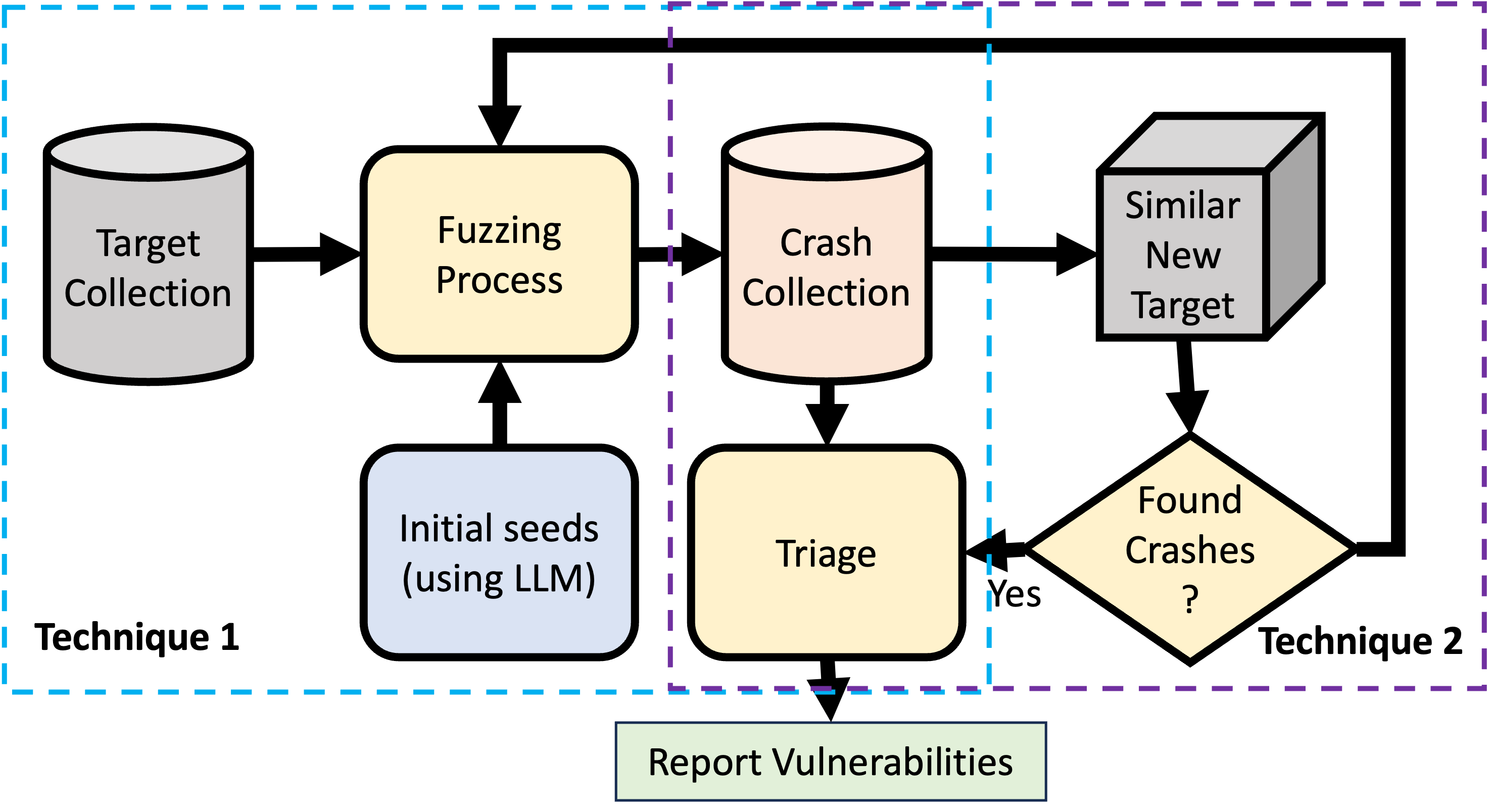
BusyBox, an open-source software bundling over 300 essential Linux commands into a single executable, is ubiquitous in Linux-based embedded devices. Vulnerabilities in BusyBox can have far-reaching consequences, affecting a wide array of devices. This research, driven by the extensive use of BusyBox, delved into its analysis. The study revealed the prevalence of older BusyBox versions in real-world embedded products, prompting us to conduct fuzz testing on BusyBox. Fuzzing, a pivotal software testing method, aims to induce crashes that are subsequently scrutinized to uncover vulnerabilities. Within this study, we introduce two techniques to fortify software testing. The first technique enhances fuzzing by leveraging Large Language Models (LLM) to generate target-specific initial seeds. Our study showed a substantial increase in crashes when using LLM-generated initial seeds, highlighting the potential of LLM to efficiently tackle the typically labor-intensive task of generating target-specific initial seeds. The second technique involves repurposing previously acquired crash data from similar fuzzed targets before initiating fuzzing on a new target. This approach streamlines the time-consuming fuzz testing process by providing crash data directly to the new target before commencing fuzzing. We successfully identified crashes in the latest BusyBox target without conducting traditional fuzzing, emphasizing the effectiveness of LLM and crash reuse techniques in enhancing software testing and improving vulnerability detection in embedded systems. Additionally, manual triaging was performed to identify the nature of crashes in the latest BusyBox.
연구 동기 및 목표
- 현실 세계의 임베디드 디바이스에서 BusyBox 변형이 얼마나 널리 퍼져 있는지 식별한다.
- LLM-생성 초기 시드를 사용하여 BusyBox에 대한 fuzzing 효과를 높인다.
- 프로그램 변형 간 크래시를 재사용하여 취약점 발견 시간을 단축한다.
- BusyBox 대상에서 접근법을 시연하고 전통적인 fuzzing에 비해 효율성을 제시한다.
- 임베디드 시스템의 오픈 소스 소프트웨어 구성 요소에 대한 실용적 함의를 강조한다.
제안 방법
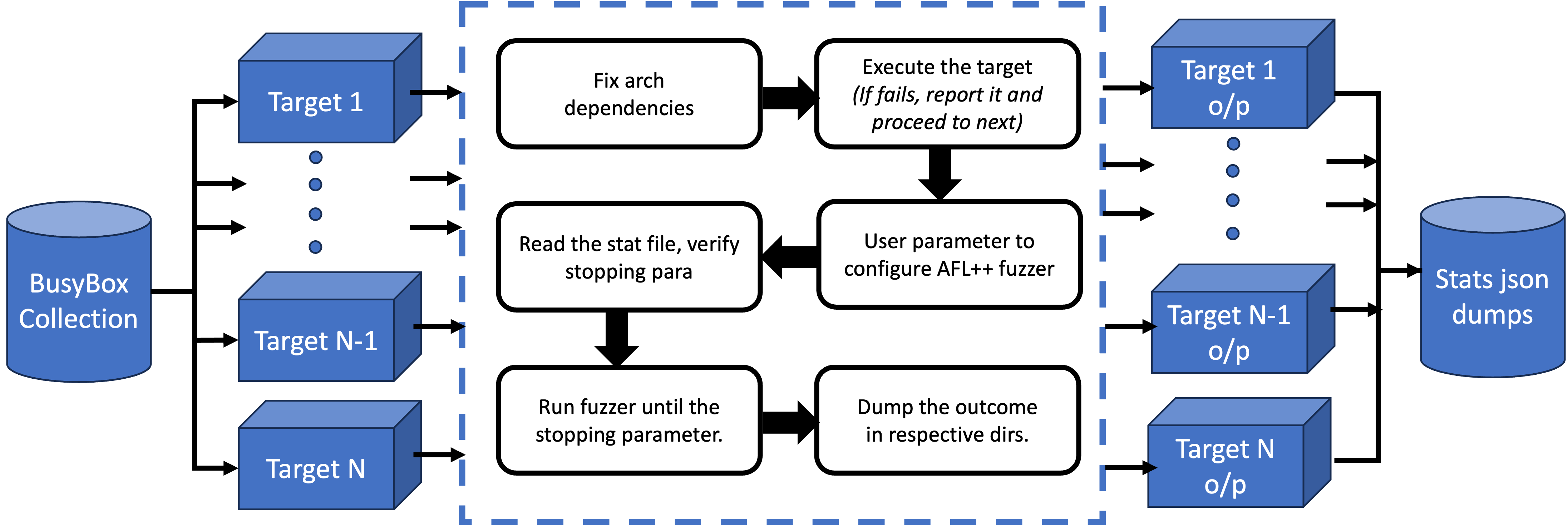
- AFL++를 QEMU 모드에서 사용하여 소스/컴파일을 변경하지 않고 BusyBox 바이너리를 fuzz한다.
- 타깃 앱렛 문법(target applet grammar)에 기반하여 GPT-4를 사용해 fuzzing용 타깃 특화 초기 시드를 생성한다.
- fuzzing 전에 afl-cmin으로 LLM 생성 시드 코퍼스를 최소화한다.
- 관련 변형들로부터 수집된 크래시 입력의 데이터베이스와 새 타깃을 대조하여 크래시 재사용을 도입한다.
- Ghidra, GDB, AFL-Triage와 같은 도구를 사용한 수동 크래시 트리아지로 크래시 기원과 CVE 관련성을 식별한다.
- 실제 펌웨어 데이터 세트의 BusyBox 버전에서 평가하고 최신 BusyBox 릴리스의 크래시를 분석한다.
실험 결과
연구 질문
- RQ1RQ1: 현실 세계의 임베디드 디바이스에서 BusyBox 변형이 얼마나 널리 퍼져 있으며 변형 간 취약점을 효율적으로 식별할 수 있는가?
- RQ2RQ2: LLM을 활용해 BusyBox와 같은 임베디드 Linux 유틸리티 프로그램의 fuzzing 테스트를 어떻게 개선할 수 있는가?
- RQ3RQ3: 크래시 재사용 전략이 새로운 BusyBox 타깃을 테스트할 때 시간과 자원을 절약하는가?
- RQ4RQ4: LLM 시드 생성과 크래시 재사용의 조합이 전체 fuzzing 없이도 최신 BusyBox 버전에서 크래시를 발견할 수 있는가?
주요 결과
- 현실 세계의 임베디드 디바이스에서 구버전 BusyBox가 남아 있어 업데이트의 필요성을 시사한다.
- LLM생성 초기 시드는 무작위 시드에 비해 상당히 더 많은 크래시를 증가시킨다.
- 크래시 재사용은 기존 크래시 데이터를 사용해 새로운 타깃을 테스트하게 하여 fuzzing 시간과 자원을 줄여준다.
- 최신 BusyBox 버전(연구 시점)은 크래시 재사용과 표적 fuzzing으로 식별된 크래시를 보였다.
- 수동 트리아지에서 크래시 특성과 문제의 BusyBox 또는 의존성에서 기원 여부를 확인하여 접근법의 타당성을 검증했다.
- 이 워크플로우는 awk를 포함한 BusyBox 앱렛에서 시연되었고 dc, man, ash 등으로 확장되었다.
이 논문 읽기
누빈트 뷰어에서 원문을 열고, 읽으면서 궁금한 곳을 바로 물어보세요.
누빈트에서 이 논문 읽기이 리뷰는 AI가 논문 원문을 바탕으로 만들었습니다. 인용하기 전에 원문을 확인해 주세요.