
[논문 리뷰] Generative AI for Visualization: State of the Art and Future Directions
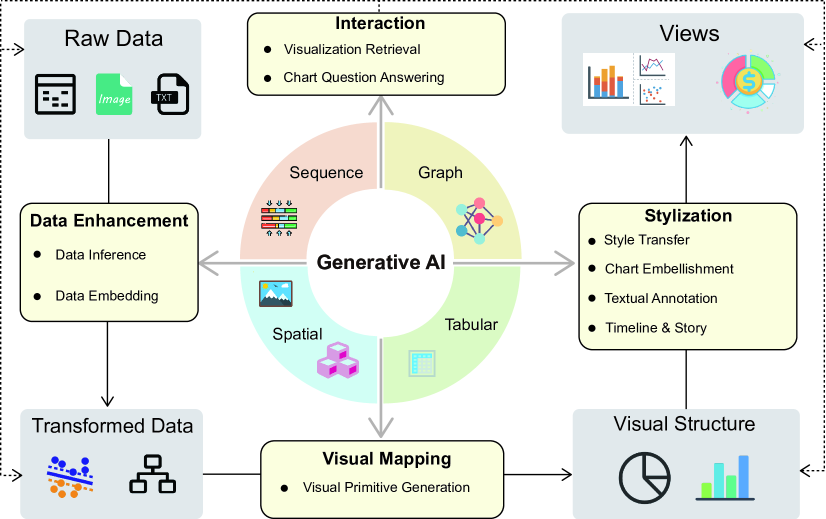
이 논문은 시각화 분야에서 생성형 AI(GenAI)의 응용에 대한 종합적인 서베이를 제공하며, 데이터 강화, 시각적 매핑 생성, 스타일화, 상호작용의 네 단계에 걸쳐 시퀀스, 표형, 공간, 그래프 생성과 같은 GenAI 기법을 분류한다. 평가, 데이터셋 셋업, 파이프라인 통합과 관련된 주요 과제를 밝히고, 종단 간 GenAI와 전통적인 시각화 워크플로우 간 격차를 메울 수 있는 향후 연구 방향을 제안한다.
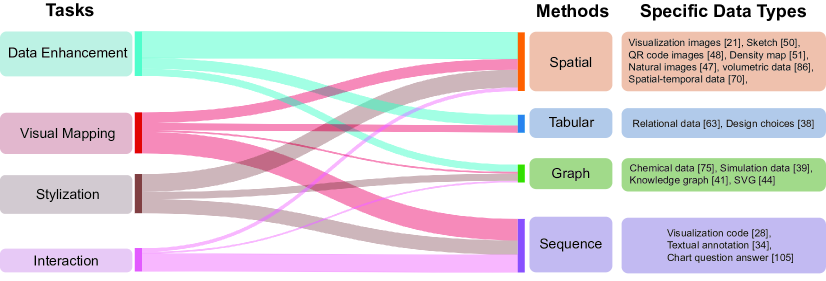
Generative AI (GenAI) has witnessed remarkable progress in recent years and demonstrated impressive performance in various generation tasks in different domains such as computer vision and computational design. Many researchers have attempted to integrate GenAI into visualization framework, leveraging the superior generative capacity for different operations. Concurrently, recent major breakthroughs in GenAI like diffusion model and large language model have also drastically increase the potential of GenAI4VIS. From a technical perspective, this paper looks back on previous visualization studies leveraging GenAI and discusses the challenges and opportunities for future research. Specifically, we cover the applications of different types of GenAI methods including sequence, tabular, spatial and graph generation techniques for different tasks of visualization which we summarize into four major stages: data enhancement, visual mapping generation, stylization and interaction. For each specific visualization sub-task, we illustrate the typical data and concrete GenAI algorithms, aiming to provide in-depth understanding of the state-of-the-art GenAI4VIS techniques and their limitations. Furthermore, based on the survey, we discuss three major aspects of challenges and research opportunities including evaluation, dataset, and the gap between end-to-end GenAI and generative algorithms. By summarizing different generation algorithms, their current applications and limitations, this paper endeavors to provide useful insights for future GenAI4VIS research.
연구 동기 및 목표
- 다양한 데이터 유형과 시각화 단계에 걸쳐 생성형 AI(GenAI)의 응용을 체계적으로 검토하고 분류하는 것.
- 평가 복잡성, 데이터셋 부족, 파이프라인 통합 문제와 같은 기술적·방법론적 과제를 특정하여 GenAI를 시각화에 적용할 때의 과제를 밝히는 것.
- 특히 규칙 기반 시각화 파이프라인과 종단 간 생성 모델 간의 단절을 포함해 현재의 GenAI4VIS 접근법의 한계를 분석하는 것.
- 하이브리드 모델링, 지식 정복, 상호작용 제어 메커니즘을 통해 GenAI4VIS의 향상을 위한 기회를 탐색하는 것.
- 다중모달 모델과 제어 가능한 생성 기술의 발전을 활용하여 GenAI를 더 효과적으로 시각화 워크플로우에 통합하기 위한 연구 로드맵을 제공하는 것.
제안 방법
- 데이터 구조에 따라 GenAI 방법을 분류: 시퀀스, 표형, 공간, 그래프 생성으로 나누어 시각화 단계에 대응시킴.
- GenAI for Visualization(GenAI4VIS)에 관한 81篇의 연구 논문을 검토하여 데이터 강화, 시각적 매핑, 스타일화, 상호작용 단계에서의 기법을 분석함.
- 확산 모델(Diffusion models, 예: Stable Diffusion), 대규모 언어 모델(Large language models, 예: GPT, LLaMA), 3D 생성 모델(DreamFusion 등)과 같은 특정 GenAI 모델을 분석함.
- 종단 간 학습과 중간 단계 제어 메커니즘의 조합을 통해 GenAI를 시각화 파이프라인에 통합하는 프레임워크를 제안함.
- 구조적 일관성을 확보하기 위해 ControlNet과 LayoutDiffusion와 같은 제어 기반 GenAI 방법에서 영감을 얻음.
- 실제로 渲染된 시각화 이미지에 텍스트 애너테이션을 추가한 데이터를 학습 데이터로 사용하여 명시적 차트 요소 추출을 회피함.
실험 결과
연구 질문
- RQ1시퀀스, 표형, 공간, 그래프 모델과 같은 다양한 생성형 AI 유형이 시각화 파이프라인의 다양한 단계에 어떻게 적용되었는가?
- RQ2시각적 유사성 외에도 평가가 복잡한 이유는 무엇인가? 특히 데이터 무결성과 효율성과 같은 요소들에 대해 설명하라.
- RQ3종단 간 GenAI와 전통적인 규칙 기반 시각화 파이프라인 간의 통합이 본질적으로 어려운 이유는 무엇이며, 이 격차는 어떻게 메울 수 있는가?
- RQ4이미지 기반 확산 모델을 사용할 경우, 시각화 생성에서 구조적 정확성과 의미적 충실도를 유지하기 위해 GenAI 모델은 어떻게 적응시킬 수 있는가?
- RQ5지식 정복, 상호작용 제어, 다중모달 학습을 통해 GenAI와 시각화의 장점을 융합할 수 있는 연구 기회가 무엇이 있는가?
주요 결과
- GenAI는 데이터 강화, 시각적 매핑 생성, 스타일화, 상호작용의 네 단계 모두에 다양하고 성공적인 응용을 보였으며, 다양한 생성 기법이 사용됨.
- 진전이 있었음에도 불구하고, 평가 기준이 시각적 유사성 외에도 데이터 무결성, 효율성, 해석 가능성 등 다양한 요소를 포함하여 GenAI4VIS의 평가가 여전히 복잡함.
- 기존의 GenAI4VIS 파이프라인은 종종 구조적 생성과 스타일화를 분리함(예: LIDA), 이로 인해 최종 출력에서 데이터-구조 일치성이 손상됨.
- 규칙 기반 시각화 시스템과 종단 간 GenAI 모델 간의 격차는 GenAI의 잠재력을 완전히 활용하지 못하게 하며, 이는 통합적이고 학습 가능한 파이프라인의 필요성을 강조함.
- 최근의 다중모달 모델(예: 시각-언어 모델)의 발전으로 실제 렌더링된 시각화 이미지에 텍스트 프롬프트를 직접 적용하여 학습할 수 있게 되었으며, 수동으로 차트 요소를 추출하는 것을 피할 수 있음.
- 향후 GenAI와 시각화의 통합은 지식 정복 및 제어 기반 생성 기법(예: ControlNet)을 통해 성능과 제어 가능성의 이중적 이점을 확보할 수 있음.
이 논문 읽기
누빈트 뷰어에서 원문을 열고, 읽으면서 궁금한 곳을 바로 물어보세요.
누빈트에서 이 논문 읽기이 리뷰는 AI가 논문 원문을 바탕으로 만들었습니다. 인용하기 전에 원문을 확인해 주세요.