
[논문 리뷰] HEAL-ViT: Vision Transformers on a spherical mesh for medium-range weather forecasting
HEAL-ViT는 중기 기상 예측을 위한 비전 트랜스포머(ViT)를 구면 메시에 적용하는 혁신적인 아키텍처를 제안한다. 이는 그래프 기반 모델의 공간 균일성과 ViT의 효율적 어텐션 메커니즘을 결합한다. 주요 지표에서 ECMWF IFS를 능가하는 성능을 달성하며, 편향 누적과 블러링을 감소시키고도 운영용으로의 구현에 적합한 낮은 계산 자원 소비를 유지한다.
In recent years, a variety of ML architectures and techniques have seen success in producing skillful medium range weather forecasts. In particular, Vision Transformer (ViT)-based models (e.g. Pangu-Weather, FuXi) have shown strong performance, working nearly "out-of-the-box" by treating weather data as a multi-channel image on a rectilinear grid. While a rectilinear grid is appropriate for 2D images, weather data is inherently spherical and thus heavily distorted at the poles on a rectilinear grid, leading to disproportionate compute being used to model data near the poles. Graph-based methods (e.g. GraphCast) do not suffer from this problem, as they map the longitude-latitude grid to a spherical mesh, but are generally more memory intensive and tend to need more compute resources for training and inference. While spatially homogeneous, the spherical mesh does not lend itself readily to be modeled by ViT-based models that implicitly rely on the rectilinear grid structure. We present HEAL-ViT, a novel architecture that uses ViT models on a spherical mesh, thus benefiting from both the spatial homogeneity enjoyed by graph-based models and efficient attention-based mechanisms exploited by transformers. HEAL-ViT produces weather forecasts that outperform the ECMWF IFS on key metrics, and demonstrate better bias accumulation and blurring than other ML weather prediction models. Further, the lowered compute footprint of HEAL-ViT makes it attractive for operational use as well, where other models in addition to a 6-hourly prediction model may be needed to produce the full set of operational forecasts required.
연구 동기 및 목표
- 표준 비전 트랜스포머가 기상 모델링에 사용하는 직각좌표 그리드에서 발생하는 공간 비균일성과 극지역 왜곡 문제를 해결하기 위해.
- 공간 균일성을 가진 구면 메시 표현 방식의 이점과 비전 트랜스포머의 장거리 어텐션 기능을 융합하기 위해.
- GraphCast와 같은 그래프 기반 모델에 비해 계산 및 메모리 오버헤드를 줄여 실용적인 운영 배포를 가능하게 하기 위해.
- 특히 소규모 대기 특징에서의 편향 누적과 블러링을 최소화함으로써 예측 품질을 향상시키기 위해.
- 표준 ViT 아키텍처를 구면 메시에서 사용할 수 있도록 하여 컴퓨터 비전 분야의 발전과의 통합을 촉진하기 위해.
제안 방법
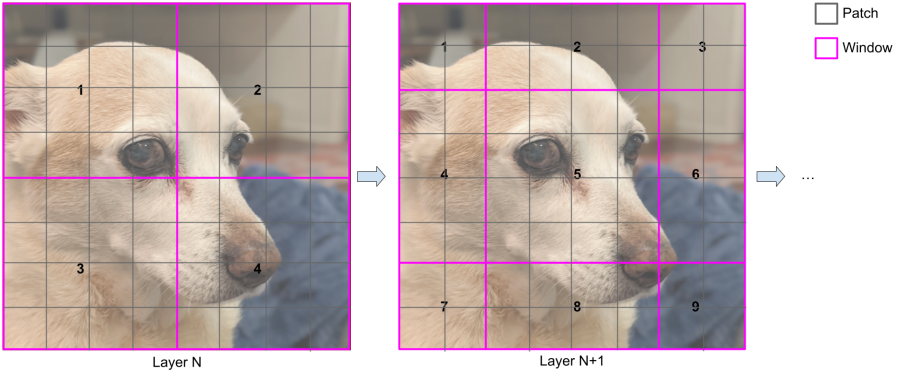
- 표준 SWIN 트랜스포머 아키텍처를 직각좌표 그리드 대신 HEALPix 구면 메시에서 작동하도록 변형한다.
- 경도·적도 그리드 데이터를 균일한 노드 분포를 가진 구면 이코사헤드럴 메시로 매핑하기 위해 그래프 기반 인코더를 사용한다.
- 구면 메시에서 장거리 대기 원거리 연관성을 효율적으로 모델링하기 위해 표준 비전 트랜스포머 프로세서를 적용한다.
- 처리된 메시를 원래의 경도·적도 예측 그리드로 다시 매핑하기 위해 그래프 기반 디코더를 사용한다.
- 인코딩 및 디코딩 과정에서 공간 구조를 유지하기 위해 메시-그리드 어텐션 메커니즘을 도입한다.
- HEALPix 메시의 규칙적인 링 구조를 활용해 국소 어텐션 및 컨텍스트 윈도우 메커니즘을 지원한다.
실험 결과
연구 질문
- RQ1비전 트랜스포머가 구면 메시에 효과적으로 적용되어 중기 기상 예측 성능을 향상시킬 수 있는가?
- RQ2공간적으로 균일한 구면 메시를 사용할 경우, 직각좌표 그리드 기반 ViT 모델 대비 편향 누적과 블러링이 감소하는가?
- RQ3구면 메시에서 작동할 때도 ViT 기반 모델의 계산 효율성이 유지되어 운영용 구현이 가능한가?
- RQ4RMSE, 편향 및 스펙트럼 에너지 분포 측면에서 HEAL-ViT의 성능이 ECMWF IFS 및 GraphCast와 같은 최신 기술 모델과 비교해 어떻게 되는가?
- RQ5인코더 및 메시 구조의 선택이 예측 품질과 스펙트럼 정밀도에 얼마나 큰 영향을 미치는가?
주요 결과
- HEAL-ViT는 여러 대기 변수에서 RMSE 감소를 포함한 주요 예측 품질 지표에서 ECMWF IFS 모델을 능가한다.
- 다른 머신러닝 기반 기상 예측 모델 대비 시간이 지남에 따라 훨씬 적은 편향 누적을 보였다.
- WS10 및 Z500에서 특히 작은 척도에서 더 높은 조선 에너지 스펙트럼을 보이며, 더 작은 대기 특징의 보존이 뛰어나다는 점에서 예측이 더 흐릿하지 않음을 입증했다.
- 예측 리드 타임에 걸쳐 에너지 스펙트럼이 비교적 일정하게 유지되어, ERA5-IFS 기준선과 유사한 안정적인 예측 역학을 나타냈다.
- GraphCast와 같은 그래프 기반 모델보다 메모리 및 계산 자원 소비가 적어, 동시에 여러 예측이 필요한 운영 환경에 적합하다.
- 인코더에서 구면 메시를 사용함으로써 패치 기반 인코더(예: FuXi)에서 관찰되는 스펙트럼 피크를 줄였으며, 그리드-메시 이산화 과정에서 발생하는 잔상이 감소함을 시사했다.
이 논문 읽기
누빈트 뷰어에서 원문을 열고, 읽으면서 궁금한 곳을 바로 물어보세요.
누빈트에서 이 논문 읽기이 리뷰는 AI가 논문 원문을 바탕으로 만들었습니다. 인용하기 전에 원문을 확인해 주세요.