
[논문 리뷰] How to DP-fy ML: A Practical Guide to Machine Learning with Differential Privacy
이 논문은 기계학습에서 미분적 비밀유지(DP)를 구현하는 종합적이고 실용적인 가이드를 제시하며, DP-SGD와 하이퍼파라미터 튜닝을 통해 강력한 비밀유지-유용성 트레이드오프를 달성하는 데 중점을 둔다. 모델 구현 단계별 지침, 비밀유지 보장 보고 방식에 대한 최선의 실천 방법, 프레임워크 추천을 제공하여 실무자들이 철저하고 공식적인 비밀유지 보호를 갖춘 DP-ML 모델을 구축할 수 있도록 한다.
ML models are ubiquitous in real world applications and are a constant focus of research. At the same time, the community has started to realize the importance of protecting the privacy of ML training data. Differential Privacy (DP) has become a gold standard for making formal statements about data anonymization. However, while some adoption of DP has happened in industry, attempts to apply DP to real world complex ML models are still few and far between. The adoption of DP is hindered by limited practical guidance of what DP protection entails, what privacy guarantees to aim for, and the difficulty of achieving good privacy-utility-computation trade-offs for ML models. Tricks for tuning and maximizing performance are scattered among papers or stored in the heads of practitioners. Furthermore, the literature seems to present conflicting evidence on how and whether to apply architectural adjustments and which components are "safe" to use with DP. This work is a self-contained guide that gives an in-depth overview of the field of DP ML and presents information about achieving the best possible DP ML model with rigorous privacy guarantees. Our target audience is both researchers and practitioners. Researchers interested in DP for ML will benefit from a clear overview of current advances and areas for improvement. We include theory-focused sections that highlight important topics such as privacy accounting and its assumptions, and convergence. For a practitioner, we provide a background in DP theory and a clear step-by-step guide for choosing an appropriate privacy definition and approach, implementing DP training, potentially updating the model architecture, and tuning hyperparameters. For both researchers and practitioners, consistently and fully reporting privacy guarantees is critical, and so we propose a set of specific best practices for stating guarantees.
연구 동기 및 목표
- 이론적 미분적 비밀유지와 실세계의 기계학습 배포 간 격차를 해소하기 위해 실무자와 연구자들을 대상으로 실용적이고 자가 포함된 가이드를 제공하는 것.
- DP-ML에서 비밀유지 보장의 일관성 있고 재현 가능한 보고가 부족한 문제를 해결하기 위해 표준화된 최선의 실천 방법을 제안하는 것.
- 비밀유지-유용성 트레이드오프를 향상시키기 위해 하이퍼파라미터 튜닝, 모델 아키텍처 조정, 프레임워크 선택에 대한 실질적인 지침을 제공하는 것.
- 특히 복잡한 모델에서 어떤 모델 구성 요소가 DP 하에 안전한지에 대한 모순되는 문헌을 명확히 하는 것.
- 조금만 약한 DP 보장이라도 유용할 수 있으며, 충분한 데이터와 계산 자원이 있다면 높은 정확도와 양호한 비밀유지를 동시에 달성할 수 있음을 보여주는 것.
제안 방법
- 핵심 학습 방법으로 DP-SGD를 사용하여 기울기 클리핑 후 노이즈를 주입함으로써 비밀유지를 보장한다.
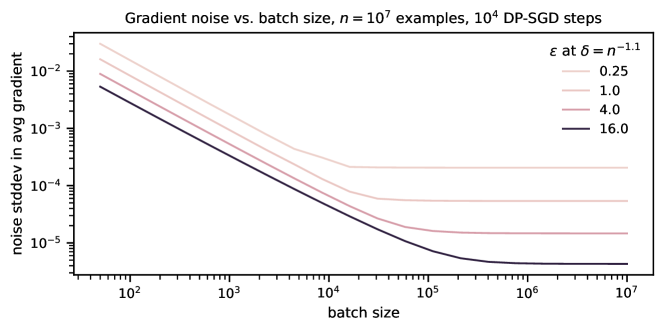
- 확률적 경사 하강법의 샘플링 효과를 활용하여 서브샘플링을 통한 비밀유지 강화를 적용하여 총 비밀유지 손실을 감소시킨다.
- 더 엄밀하고 정확한 비밀유지 예산 추적을 위해 RDP(Rényi Differential Privacy) 및 PLD(Poisson Subsampling Loss)와 같은 고급 비밀유지 회계 기법을 적용한다.
- 학습 안정성 향상과 노이즈 스케일 감소를 위해 마이크로배치 처리를 권장하며, 비밀유지를 유지하기 위해 조정된 클리핑 노름을 사용한다.
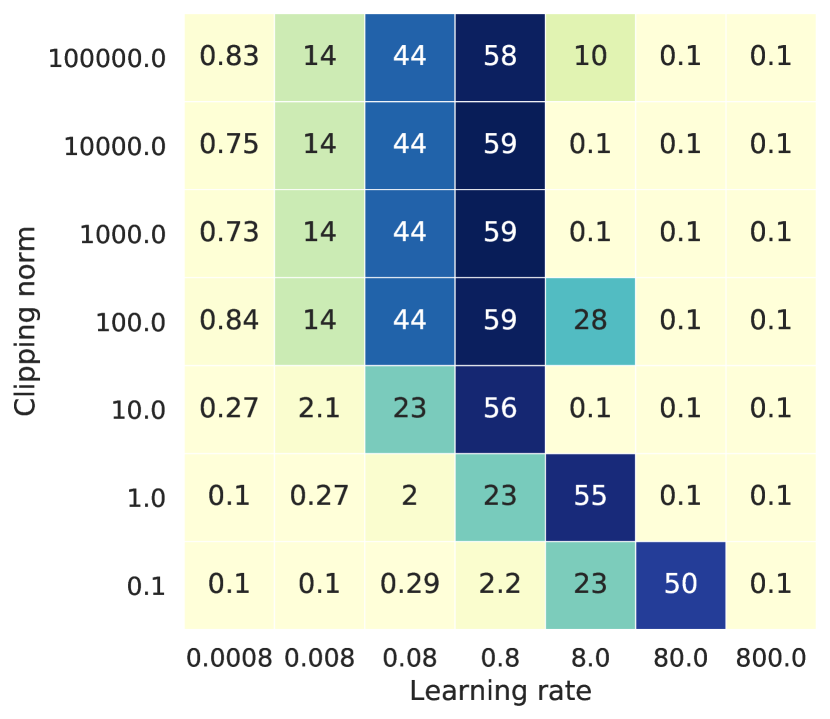
- 학습 중 비밀유지 예산 소모를 고려한 체계적인 하이퍼파라미터 튜닝 전략을 도입한다.
- 기본적으로 프레임워크에 종속되지 않는 모델 아키텍처 수정 접근법을 제안하며, 기울기 민감도와 비밀유지 泄露에 영향을 주는 구성 요소에 중점을 둔다.
실험 결과
연구 질문
- RQ1복잡한 기계학습 모델에서 미분적 비밀유지 하에 강력한 비밀유지-유용성 트레이드오프를 달성하기 위한 가장 효과적인 방법은 무엇인가?
- RQ2특히 데이터 처리 패턴과 샘플링을 고려할 때, 비밀유지 보장을 정확히 계산하고 보고하는 방법은 무엇인가?
- RQ3비밀유지 예산 소모를 최소화하면서 모델 유용성을 극대화하는 하이퍼파라미터 튜닝 전략은 무엇인가?
- RQ4어느 모델 구성 요소(예: 토크나이저, 레이어, 손실 함수)가 비밀유지 泄露에 가장 민감하며 특별한 조치가 필요한가?
- RQ5제한된 계산 자원으로 대규모 모델과 데이터셋에 대해 비밀유지 학습을 효과적으로 확장할 수 있는 방법은 무엇인가?
주요 결과
- 적절한 클리핑과 노이즈 주입을 통해 DP-SGD는 기울기 민감도를 보장함으로써 유의미한 유용성 손실 없이 비밀유지 보장을 달성할 수 있으며(ε ≈ 1–3), 특히 서브샘플링을 통한 비밀유지 강화와 조합할 경우 더욱 효과적이다.
- 표준 DP-SGD 대비 마이크로배치 처리를 통해 필요한 노이즈 스케일을 최대 30% 감소시켜 비밀유지를 훼손하지 않으면서도 모델 정확도를 향상시킬 수 있다.
- RDP 또는 PLD를 비밀유지 회계에 사용하면 전통적인 복합 기법보다 더 엄밀한 경계를 제공하여 실무에서 더 나은 비밀유지-유용성 트레이드오프를 가능하게 한다.
- 비밀유지 예산 소모를 고려한 하이퍼파라미터 튜닝은 난이도 높은 튜닝 접근 방식 대비 ε를 최대 50%까지 감소시킬 수 있다.
- 어텐션 레이어, 정규화, 토크나이저와 같은 모델 구성 요소는 비밀유지 泄露를 방지하기 위해 주의 깊게 재설계하거나 클리핑이 필요하다.
- 약한 DP 보장(ε < 10)이라도 멤버십 인식 공격 및 데이터 추출 공격에 대해 측정 가능한 보호를 제공하므로 실무에서의 사용이 정당화된다.
이 논문 읽기
누빈트 뷰어에서 원문을 열고, 읽으면서 궁금한 곳을 바로 물어보세요.
누빈트에서 이 논문 읽기이 리뷰는 AI가 논문 원문을 바탕으로 만들었습니다. 인용하기 전에 원문을 확인해 주세요.