
[논문 리뷰] MiniGPT4-Video: Advancing Multimodal LLMs for Video Understanding with Interleaved Visual-Textual Tokens
MiniGPT4-Video는 비주얼 토큰과 프레임별 자막을 교대로 배치하여 비디오 프레임 시퀀스를 처리하도록 MiniGPT-v2를 확장하고, 여러 비디오 QA 벤치마크에서 최첨단 결과를 달성한다.
This paper introduces MiniGPT4-Video, a multimodal Large Language Model (LLM) designed specifically for video understanding. The model is capable of processing both temporal visual and textual data, making it adept at understanding the complexities of videos. Building upon the success of MiniGPT-v2, which excelled in translating visual features into the LLM space for single images and achieved impressive results on various image-text benchmarks, this paper extends the model's capabilities to process a sequence of frames, enabling it to comprehend videos. MiniGPT4-video does not only consider visual content but also incorporates textual conversations, allowing the model to effectively answer queries involving both visual and text components. The proposed model outperforms existing state-of-the-art methods, registering gains of 4.22%, 1.13%, 20.82%, and 13.1% on the MSVD, MSRVTT, TGIF, and TVQA benchmarks respectively. Our models and code have been made publicly available here https://vision-cair.github.io/MiniGPT4-video/
연구 동기 및 목표
- 다중모달 LLM이 정적 이미지 이상으로 동적 비디오 콘텐츠를 이해하도록 발전시키다
- 비디오 기반 QA를 위해 시간적 시각 정보를 텍스트 대화와 통합하다
- 인터리브된 토큰을 통해 시간적 다이나믹스를 보존하면서 프레임당 토큰 부하를 줄이다
- 프레임당 자막을 활용해 다중모달 이해와 추론을 강화하다
제안 방법
- 샘플링된 각 비디오 프레임을 응축된 시각 토큰 세트로 표현한다(네 개의 인접 토큰을 하나로 병합).
- 프레임별 시각 토큰을 프레임 자막을 LLM 토크나이저로 토큰화한 것과 연결한다.
- 프레임 특징을 추출하기 위해 고정된 시각 백본으로 EVA-CLIP을 사용한다.
- 시각+자막 토큰을 선형 투영 계층을 통해 LLM 공간으로 매핑한다.
- QKV 구성요소에 LoRA를 적용해 언어 모델을 효율적으로 미세조정한다(랭크 64, 알파 16).
- 다단계로 학습한다: 이미지-텍스트 사전학습, 프레임 샘플링을 포함한 비디오-텍스트 사전학습, 그리고 비디오-질문-응답 지시 미세조정.
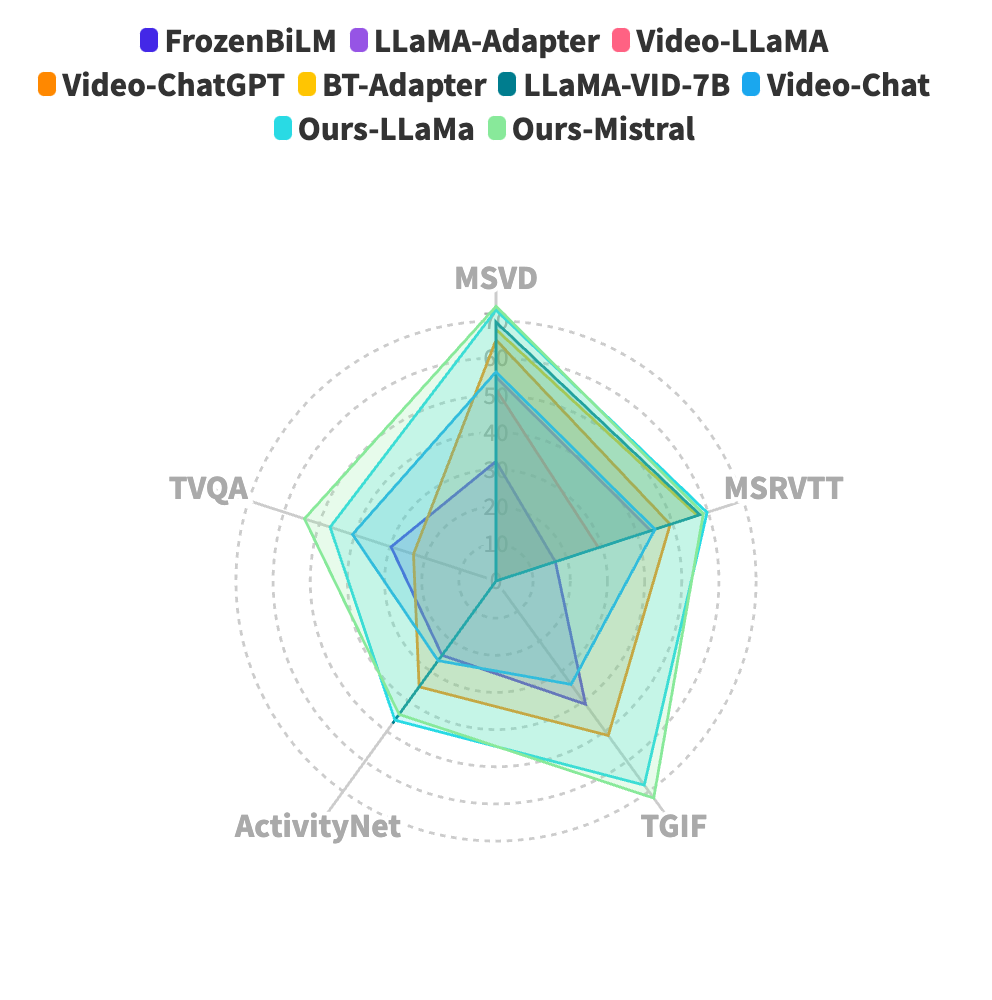
실험 결과
연구 질문
- RQ1정렬된 텍스트 자막을 갖춘 비디오 프레임 시퀀스에 대해 LLM 기반 모델이 어떻게 처리하고 추론할 수 있는가?
- RQ2프레임별 자막을 포함하는 것이 다중모달 비디오 이해 및 QA 성능을 어느 정도까지 향상시키는가?
- RQ3비디오 LLM에서 프레임 샘플링, 토큰화, 컨텍스트 윈도우 제약 간의 트레이드오프는 무엇인가?
- RQ4학습된 투영을 통해 고정된 비전 백본이 LLM 공간으로 매핑될 때 경쟁력 있는 비디오 QA 결과를 달성할 수 있는가?
주요 결과
- 모형은 MSVD, MSRVTT, TGIF 및 TVQA에서 각각 4.22%, 1.13%, 20.82%, 13.1%의 성능 향상을 보여 최첨단 7B 방법들을 능가한다.
- 자막은 벤치마크 전반의 성능을 향상시키며, 자막을 포함했을 때 더 높은 점수를 달성한다.
- 제로샷 개방형(Open-ended) 및 MCQ 평가가 다수의 비디오 QA 데이터셋에서 기존 LVLMs에 비해 큰 이점을 보인다.
- 단일의 인터리브된 시각-텍스트 토큰 스트림으로 영상-ChatGPT 스타일의 경쟁력 있는 기능을 보여준다.
- 프레임은 LLM 컨텍스트 윈도우에 맞게 샘플링되므로 제약 내에서 더 긴 비디오를 표현할 수 있다.

이 논문 읽기
누빈트 뷰어에서 원문을 열고, 읽으면서 궁금한 곳을 바로 물어보세요.
누빈트에서 이 논문 읽기이 리뷰는 AI가 논문 원문을 바탕으로 만들었습니다. 인용하기 전에 원문을 확인해 주세요.