
[논문 리뷰] Neural Architecture Search using Particle Swarm and Ant Colony Optimization
이 논문은 OpenNAS 내에서 군집 지능 방법으로 PSO와 ACO를 비교하여 이미지 분류를 위한 CNN 아키텍처를 자동으로 생성하며, CIFAR-10과 Fashion-MNIST 데이터셋에서 일반적으로 PSO가 ACO보다 더 높은 정확도를 산출한다는 것을 보인다.
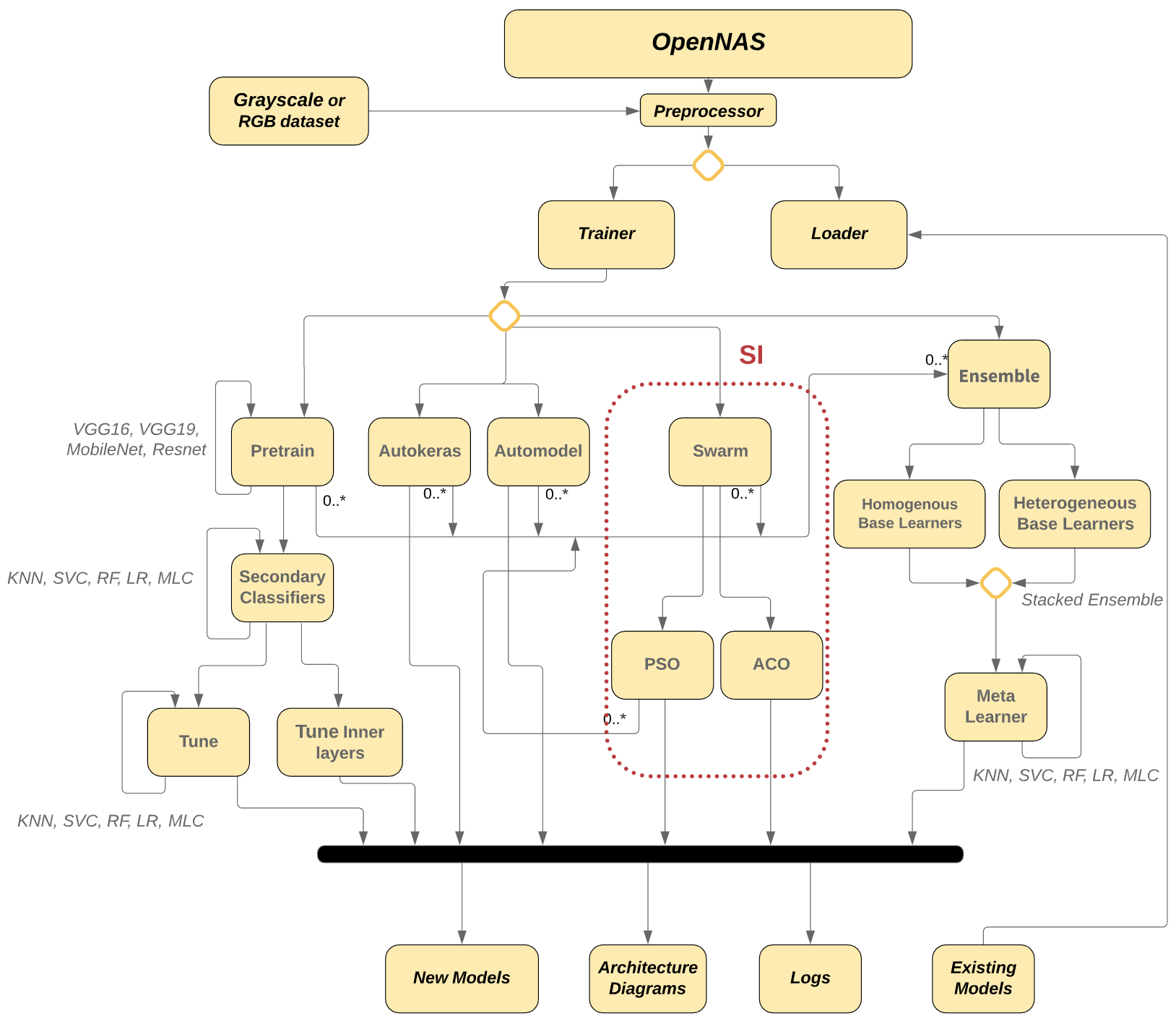
Neural network models have a number of hyperparameters that must be chosen along with their architecture. This can be a heavy burden on a novice user, choosing which architecture and what values to assign to parameters. In most cases, default hyperparameters and architectures are used. Significant improvements to model accuracy can be achieved through the evaluation of multiple architectures. A process known as Neural Architecture Search (NAS) may be applied to automatically evaluate a large number of such architectures. A system integrating open source tools for Neural Architecture Search (OpenNAS), in the classification of images, has been developed as part of this research. OpenNAS takes any dataset of grayscale, or RBG images, and generates Convolutional Neural Network (CNN) architectures based on a range of metaheuristics using either an AutoKeras, a transfer learning or a Swarm Intelligence (SI) approach. Particle Swarm Optimization (PSO) and Ant Colony Optimization (ACO) are used as the SI algorithms. Furthermore, models developed through such metaheuristics may be combined using stacking ensembles. In the context of this paper, we focus on training and optimizing CNNs using the Swarm Intelligence (SI) components of OpenNAS. Two major types of SI algorithms, namely PSO and ACO, are compared to see which is more effective in generating higher model accuracies. It is shown, with our experimental design, that the PSO algorithm performs better than ACO. The performance improvement of PSO is most notable with a more complex dataset. As a baseline, the performance of fine-tuned pre-trained models is also evaluated.
연구 동기 및 목표
- CNN 아키텍처 탐색을 자동화하여 수동 하이퍼파라미터 조정 및 시행착오 설계를 줄이다.
- 이미지 분류를 위한 OpenNAS 프레임워크 내에서 군집 지능 접근 방식(PSO 및 ACO)을 평가한다.
- 표준 데이터셋(CIFAR-10, Fashion-MNIST)에서 미세조정된 사전 학습 모델과의 성능을 평가한다.
- 전이 학습 및 앙상블 기법을 통합하는 구성 가능한 OpenNAS 파이프라인을 제공한다.
- 군집 설정이 모델 정확도와 학습 시간에 미치는 영향을 안내한다.
제안 방법
- OpenNAS 시스템은 CNN 아키텍처를 생성하기 위한 탐색 전략으로 PSO와 ACO를 통합한다.
- PSO 및 ACO 구성은 계층 타입, 하이퍼파라미터 및 탐색 깊이를 정의하여 아키텍처 공간을 탐색한다.
- 모델은 피트니스를 평가하기 위해 고정된 에폭 수로 트레이닝하고 손실 함수로 교차 엔트로피를 사용한다.
- 실험은 그레이스케일/컬러 이미지 데이터셋(CIFAR-10 및 Fashion-MNIST)을 사용하고 사전 학습된 베이스라인과 비교한다.
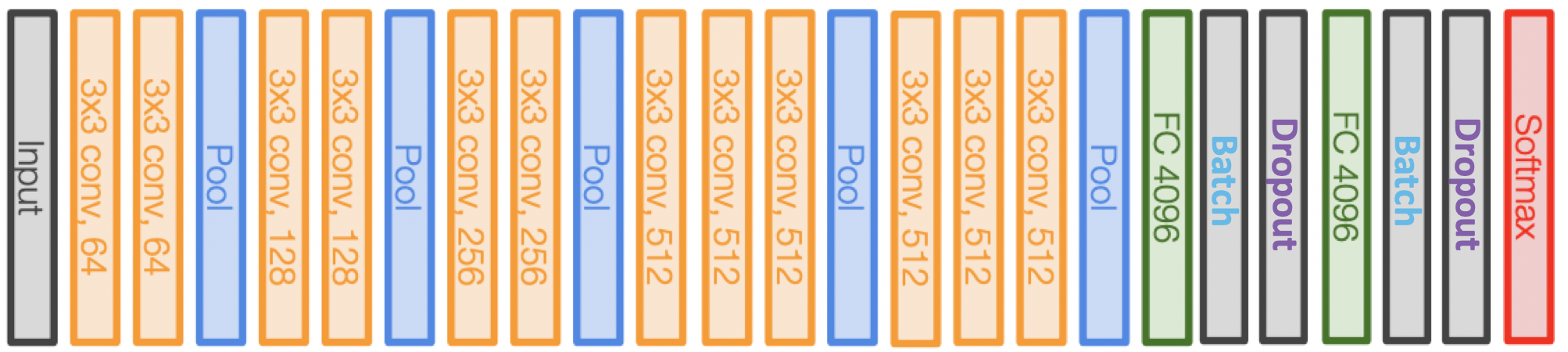
- 미세조정 및 전이 학습은 OpenNAS 프레임워크 내에서 보완적 접근으로 사용된다.
- 환경은 Python 기반 라이브러리(psoCNN, DeepSwarm, AutoKeras)와 표준 딥러닝 프레임워크(TensorFlow, Keras)를 사용한다.
실험 결과
연구 질문
- RQ1NAS 작업에서 PSO가 생성한 CNN 아키텍처가 ACO가 생성한 아키텍처보다 더 높은 분류 정확도를 달성할 수 있는가?
- RQ2CIFAR-10 및 Fashion-MNIST 데이터셋에서 정확도, 재현성(StDev), 실행 시간 측면에서 PSO와 ACO가 어떻게 비교되는가?
- RQ3군집 설정(population, iterations/epochs, depth)이 모델 성능과 학습 시간에 미치는 영향은 무엇인가?
- RQ4SI 방식이 적용된 OpenNAS의 성능이 미세조정된 사전 학습 네트워크 및 DeepSwarm과 같은 기존 NAS 접근 방식과 어떻게 비교되는가?
- RQ5OpenNAS의 앙상블/전이 학습 구성 요소가 SI 기반 탐색을 보완하여 결과를 개선할 수 있는가?
주요 결과
- 테스트 데이터셋에서 PSO로 도출된 모델이 일반적으로 ACO로 도출된 모델보다 평균 정확도가 높다.
- CIFAR-10에서 PSO는 보고된 구성에서 평균 정확도 약 85.3%를 달성했고 ACO는 82.2%였다.
- Fashion-MNIST에서 PSO와 ACO 모두 93% 이상에 도달했으며, PSO가 종종 미묘한 차이로 우세했다.
- 더 복잡한 데이터(CIFAR-10)에서 PSO 결과가 정확도 향상을 더 크게 보여주었다.
- ACO 결과는 개미 수를 늘리면 정확도가 다소 증가할 수 있지만 실행 시간이 급격히 증가하므로 구성의 중요성을 시사한다.
- OpenNAS PSO 기반 모델은 DeepSwarm과 경쟁력 있는 정확도나 그 이상을 달성했고 일부 사전 학습 베이스라인과도 유사하거나 더 나았다.
이 논문 읽기
누빈트 뷰어에서 원문을 열고, 읽으면서 궁금한 곳을 바로 물어보세요.
누빈트에서 이 논문 읽기이 리뷰는 AI가 논문 원문을 바탕으로 만들었습니다. 인용하기 전에 원문을 확인해 주세요.