
[논문 리뷰] On Efficient Training of Large-Scale Deep Learning Models: A Literature Review
작업 독립적이며 모델 독립적인 설문으로, 데이터-, 모델-, 최적화-, 예산- 및 시스템 중심 관점에서 대규모 딥러닝 모델의 학습 속도 향상을 위한 일반 기술을 분류합니다.
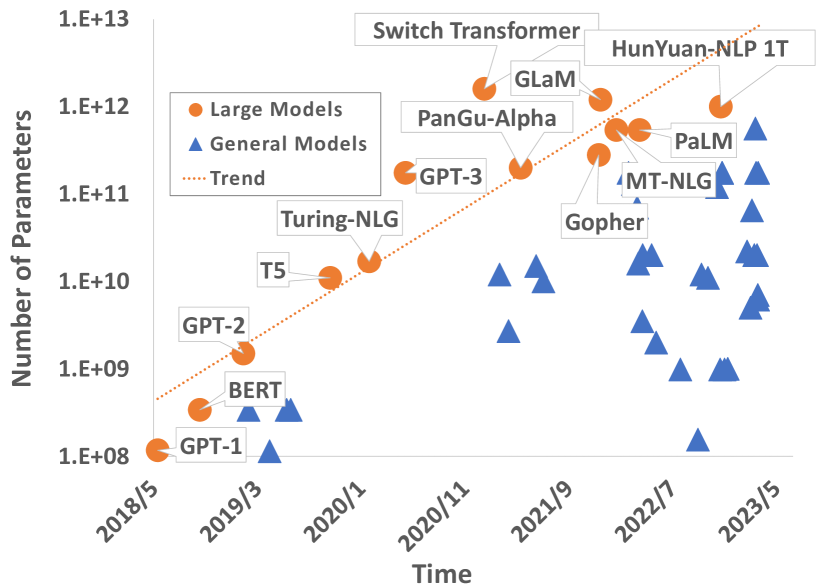
The field of deep learning has witnessed significant progress, particularly in computer vision (CV), natural language processing (NLP), and speech. The use of large-scale models trained on vast amounts of data holds immense promise for practical applications, enhancing industrial productivity and facilitating social development. With the increasing demands on computational capacity, though numerous studies have explored the efficient training, a comprehensive summarization on acceleration techniques of training deep learning models is still much anticipated. In this survey, we present a detailed review for training acceleration. We consider the fundamental update formulation and split its basic components into five main perspectives: (1) data-centric: including dataset regularization, data sampling, and data-centric curriculum learning techniques, which can significantly reduce the computational complexity of the data samples; (2) model-centric, including acceleration of basic modules, compression training, model initialization and model-centric curriculum learning techniques, which focus on accelerating the training via reducing the calculations on parameters; (3) optimization-centric, including the selection of learning rate, the employment of large batchsize, the designs of efficient objectives, and model average techniques, which pay attention to the training policy and improving the generality for the large-scale models; (4) budgeted training, including some distinctive acceleration methods on source-constrained situations; (5) system-centric, including some efficient open-source distributed libraries/systems which provide adequate hardware support for the implementation of acceleration algorithms. By presenting this comprehensive taxonomy, our survey presents a comprehensive review to understand the general mechanisms within each component and their joint interaction.
연구 동기 및 목표
- 작업이나 아키텍처에 의존하지 않는 대규모 모델 학습 가속 기술의 일반적인 요약.
- 학습 과정을 데이터 중심, 모델 중심, 최적화 중심, 예산화, 시스템 중심 구성 요소로 분해하는 분류체계를 제시한다.
- 구성 요소 간 상호 작용을 분석하고 효율적 학습 패러다임의 향후 방향을 논의한다.
제안 방법
- 일반적인 기울기 기반 업데이트 공식을 다섯 가지 구성 요소(데이터, 모델, 최적화, 예산, 시스템)로 분해한다.
- 데이터 중심, 모델 중심, 최적화 중심, 예산 학습, 시스템 중심의 관점으로 기존 가속 기술을 분류하는 다섯 가지 분류 체계를 제안한다.
- 데이터 정규화, 데이터 샘플링, 커리큘럼 학습, 설계 축소(아키텍처 압축), 초기화, 학습률 및 배치 크기 전략, 분산 시스템 프레임워크와 같은 기법들을 검토하고 합성한다.
- 구성 요소 간의 실무적 고려사항, 강점, 약점 및 상호 작용을 논의한다.
- 아키텍처와 도메인에 걸쳐 적용 가능한 일반 가속 패러다임의 미래 연구 방향과 가능성을 제시한다.
실험 결과
연구 질문
- RQ1아키텍처 및 태스크에 독립적이고 일반적인 대형 딥러닝 모델의 학습 가속 기법은 무엇인가?
- RQ2학습 과정을 데이터 중심, 모델 중심, 최적화 중심, 예산 중심, 시스템 중심 구성 요소로 어떻게 분해하여 가속 전략을 설계할 수 있는가?
- RQ3실무 환경에서 이 구성 요소들 간의 트레이드오프와 상호 작용은 무엇인가?
- RQ4모델 및 데이터셋 규모가 계속 커짐에 따라 효율적인 학습을 유지할 수 있는 향후 방향은 무엇인가?
주요 결과
- 다섯 가지 관점(데이터, 모델, 최적화, 예산화, 시스템)에 걸친 포괄적 학습 가속 기술 분류체계.
- 데이터 중심 방법은 데이터 증가, 정규화, 샘플링, 커리큘럼 학습에 초점을 맞추어 정확도를 유지하면서 계산량을 줄인다.
- 모델 중심 방법은 아키텍처 효율성, 압축, 더 나은 초기화에 목표를 두어 학습 비용을 줄인다.
- 최적화 중심 전략은 학습률 스케줄, 대배치 학습, 견고한 목적함수를 강조하여 효율성과 일반화를 개선한다.
- 자원 제약이 있는 시나리오에서 한도 내에서 성능을 극대화하도록 예산 학습을 다룬다.
- 시스템 중심 접근은 분산 프레임워크와 하드웨어 인식 구현을 논의하여 확장 가능한 학습을 가능하게 한다.
이 논문 읽기
누빈트 뷰어에서 원문을 열고, 읽으면서 궁금한 곳을 바로 물어보세요.
누빈트에서 이 논문 읽기이 리뷰는 AI가 논문 원문을 바탕으로 만들었습니다. 인용하기 전에 원문을 확인해 주세요.