
[논문 리뷰] Predicting Tuberculosis from Real-World Cough Audio Recordings and Metadata
이 연구는 저소득 지역에서 모바일 앱을 통해 수집한 기침 음성 기록과 임상 메타데이터를 사용하여 결핵(TB)을 예측하는 기계학습 모델을 개발하고 평가한다. 기침 소리와 인구통계학적 및 임상 데이터를 결합했을 때 AUC가 0.81±0.05에 도달하여 모바일 기반 음성 및 증상 분석이 저소득 환경에서 결핵 환자 선별 효율을 향상시킬 수 있음을 보여준다.
Tuberculosis (TB) is an infectious disease caused by the bacterium Mycobacterium tuberculosis and primarily affects the lungs, as well as other body parts. TB is spread through the air when an infected person coughs, sneezes, or talks. Medical doctors diagnose TB in patients via clinical examinations and specialized tests. However, coughing is a common symptom of respiratory diseases such as TB. Literature suggests that cough sounds coming from different respiratory diseases can be distinguished by both medical doctors and computer algorithms. Therefore, cough recordings associated with patients with and without TB seems to be a reasonable avenue of investigation. In this work, we utilize a very large dataset of TB and non-TB cough audio recordings obtained from the south-east of Africa, India, and the south-east of Asia using a fully automated phone-based application (Hyfe), without manual annotation. We fit statistical classifiers based on spectral and time domain features with and without clinical metadata. A stratified grouped cross-validation approach shows that an average Area Under Curve (AUC) of approximately 0.70 $\pm$ 0.05 both for a cough-level and a participant-level classification can be achieved using cough sounds alone. The addition of demographic and clinical factors increases performance, resulting in an average AUC of approximately 0.81 $\pm$ 0.05. Our results suggest mobile phone-based applications that integrate clinical symptoms and cough sound analysis could help community health workers and, most importantly, health service programs to improve TB case-finding efforts while reducing costs, which could substantially improve public health.
연구 동기 및 목표
- 실제 공동체 기반 환경에서 수집한 기침 음성 기록과 임상 메타데이터를 사용하여 TB 상태를 예측하는 기계학습 모델을 개발하기 위해.
- 자동화된 스마트폰 기반 데이터 수집을 통해 기침 소리를 이용해 TB와 비-TB 기침을 구분하는 데 있어 전통적인 기계학습 및 딥러닝 모델의 성능을 평가하기 위해.
- 임상 및 인구통계학적 메타데이터 통합이 기침 음성만으로의 예측 정확도를 향상시키는지 평가하기 위해.
- 향후 AI 기반의 결핵 스크리닝 연구를 위한 공개 가능한 대규모 데이터셋과 벤치마크를 제공하기 위해.
- 저비용, 비침습적인 디지털 도구를 통해 공동체 기반의 결핵 환자 선별을 지원하기 위해.
제안 방법
- 수동 레이블링 없이 완전히 자동화된 스마트폰 기반 애플리케이션(Hyfe)을 사용해 7개 국가에서 대규모 기침 음성 기록과 임상 메타데이터를 수집했다.
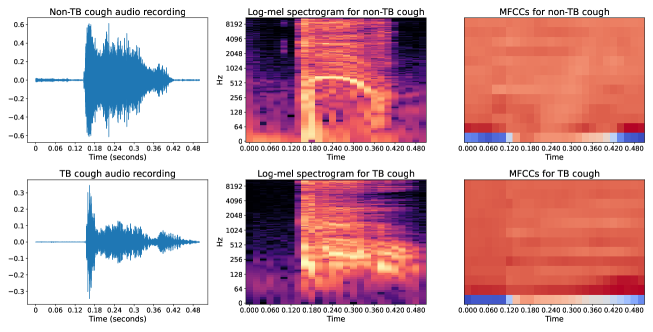
- MFCC, 스펙트럼 중심, 제로크로싱 레이트, 로그멜 스펙트로그램 등을 포함한 스펙트럼, 시간, 스펙트로타임프레럴 특징과 같은 저수준 음향 특징(LLDs)을 추출했다.
- 음성 전용 및 음성+메타데이터 입력을 모두 사용해 전통적인 기계학습 모델(예: 로지스틱 회귀, SVM, 랜덤 포레스트, AdaBoost, MLP)을 훈련시켰다.
- 기침 소리의 스펙트로그램 표현을 기반으로 2차원 컨볼루션 신경망(2D-CNNs)을 적용해 계층적 패턴을 학습시켰다.
- 참가자 수준의 데이터 구조를 고려하고 데이터 泄露를 방지하기 위해 분류된 그룹화된 교차검증을 사용했다.
- 개별 기침 예측을 가중 평균으로 조합하여 참가자 수준의 분류 성능을 향상시켰다.
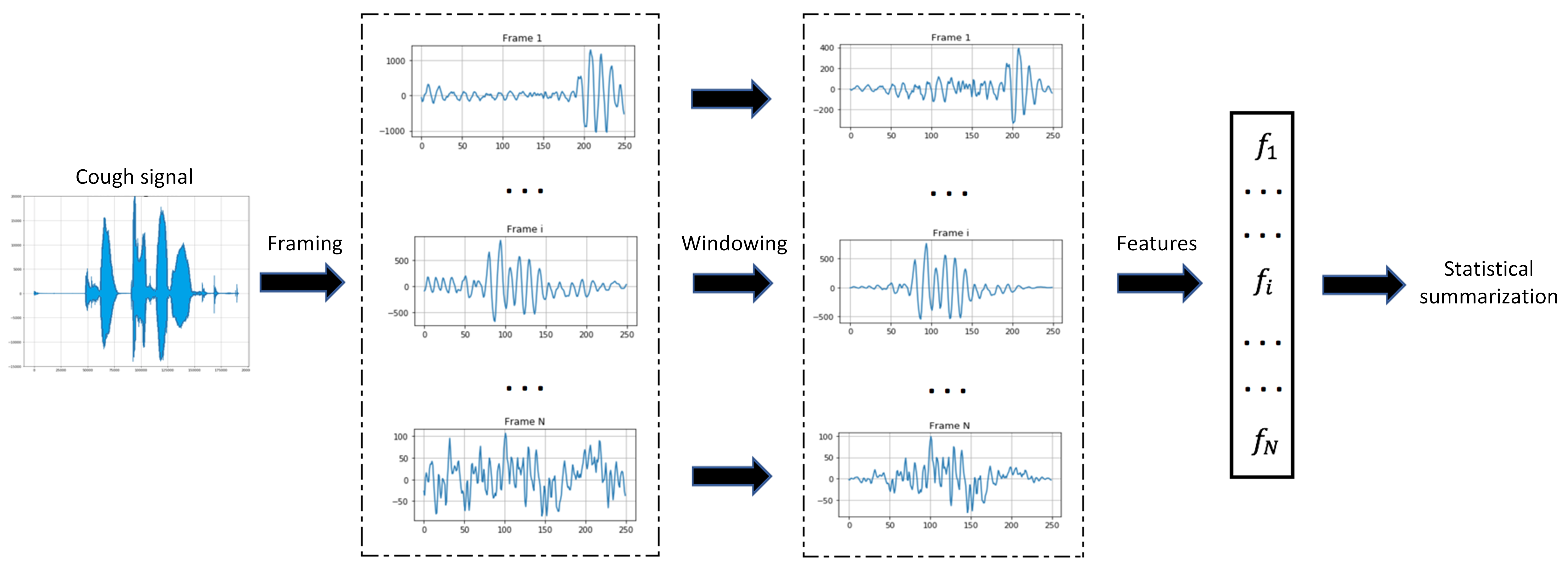
실험 결과
연구 질문
- RQ1실제 공동체 기반 인구에서 기침 음성 기록만으로도 신뢰성 있게 TB 상태를 예측할 수 있는가?
- RQ2임상 및 인구통계학적 메타데이터의 포함이 기침 소리 기반의 TB 예측 모델 성능에 어떤 영향을 미치는가?
- RQ3기계학습 모델 중 전통적 모델인지 딥러닝 모델인지가 기침 음성 및 메타데이터에서 TB를 분류하는 데 더 나은 성능을 보이는가?
- RQ4개인당 여러 번의 기침 예측을 집계하면 전체 진단 정확도가 향상되는가?
- RQ5모바일 기반 음성 및 증상 분석이 고부하, 저소득 환경에서 확장 가능하고 저비용의 도구로 기능할 수 있는가?
주요 결과
- 기침 전용 실험에서 가장 우수한 성능을 보인 모델(2D-CNN)은 기침 수준 분류 작업에서 평균 AUC 약 0.70±0.05를 달성했다.
- 기침 확률을 집계한 참가자 수준의 분류 성능은 기침 수준 예측보다 높은 AUC를 기록했으며, 모든 모델에서 향상된 성능를 보였다.
- 기침+메타데이터 실험에서 MLP를 제외한 모든 모델이 평균 AUC 0.80 이상을 달성했으며, 앙상블 모델인 AdaBoost는 기침 수준 기준으로 0.82±0.05의 AUC를 기록했다.
- 임상 및 인구통계학적 메타데이터 추가로 인해 평균 AUC가 기침 전용 시 약 0.70에서 기침+메타데이터 시 약 0.81로 상승하여 성능 향상이 뚜렷하게 나타났다.
- 로지스틱 회귀와 AdaBoost가 랜덤 포레스트 및 MLP와 같은 더 복잡한 모델보다 뛰어난 성능를 보여, 이 작업에 대해 단순한 모델이 더 효과적일 수 있음을 시사한다.
- 기침 수준 예측의 가중 평균화가 참가자 수준 분류 성능 향상에 기여하여 앙상블 전략이 시스템의 강건성을 높일 수 있음을 나타냈다.
더 나은 연구,지금 바로 시작하세요
논문 읽기부터 검토까지, 연구 시간을 획기적으로 줄여보세요.
카드 등록 없음 · 무료 플랜 제공
이 리뷰는 AI가 만들고, 인간 에디터가 검토했습니다.