
[논문 리뷰] WildFake: A Large-scale Challenging Dataset for AI-Generated Images Detection
이 논문은 GAN, 확산 모델 및 기타 생성기에서 유래한 다양한 스타일과 실제 응용 분야를 포함하는 고품질 위조 이미지를 포함하는 대규모이고 다양한 데이터셋인 WildFake를 소개한다. 이 데이터셋은 교차 가중치, 교차 버전 및 열악한 조건 시나리오에서 검출기의 강건성 평가를 가능하게 하며, ViT 기반 모델이 기하학적 및 색상 변형 조건에서 ResNet-50보다 더 뛰어난 강건성을 보임을 드러낸다.
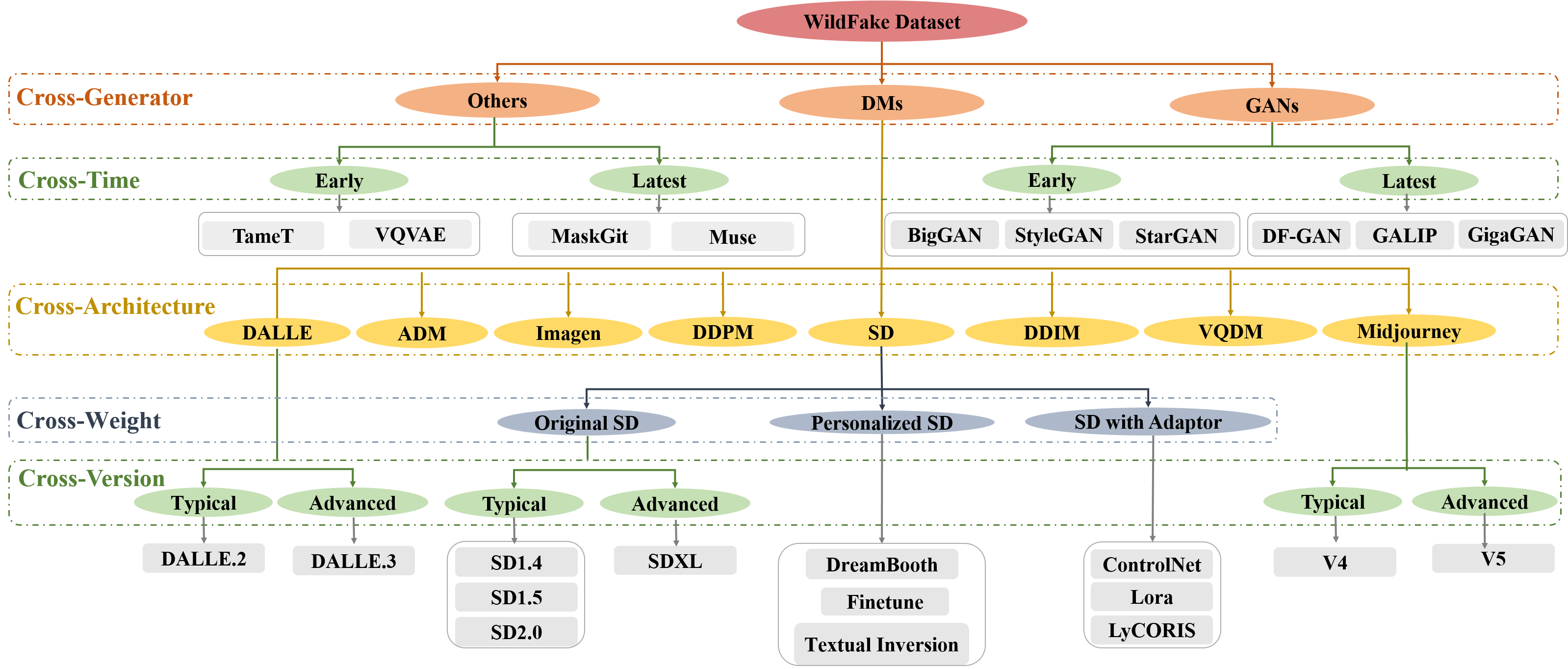
The extraordinary ability of generative models enabled the generation of images with such high quality that human beings cannot distinguish Artificial Intelligence (AI) generated images from real-life photographs. The development of generation techniques opened up new opportunities but concurrently introduced potential risks to privacy, authenticity, and security. Therefore, the task of detecting AI-generated imagery is of paramount importance to prevent illegal activities. To assess the generalizability and robustness of AI-generated image detection, we present a large-scale dataset, referred to as WildFake, comprising state-of-the-art generators, diverse object categories, and real-world applications. WildFake dataset has the following advantages: 1) Rich Content with Wild collection: WildFake collects fake images from the open-source community, enriching its diversity with a broad range of image classes and image styles. 2) Hierarchical structure: WildFake contains fake images synthesized by different types of generators from GANs, diffusion models, to other generative models. These key strengths enhance the generalization and robustness of detectors trained on WildFake, thereby demonstrating WildFake's considerable relevance and effectiveness for AI-generated detectors in real-world scenarios. Moreover, our extensive evaluation experiments are tailored to yield profound insights into the capabilities of different levels of generative models, a distinctive advantage afforded by WildFake's unique hierarchical structure.
연구 동기 및 목표
- AI 생성 이미지 탐지에 적합한 포괄적이고 대규모인 데이터셋이 다양한 생성 모델과 실제 이미지 분포를 모두 포함하지 못하는 문제를 해결하기 위해.
- 특히 새로운 또는 변화하는 생성 모델에서 발생하는 경우를 고려해, 다양한 모델 아키텍처, 가중치, 버전 간의 검출기 일반화 능력을 향상시키기 위해.
- 압축, 축소, 워터마킹, 색상 변형과 같은 일반적인 이미지 열악성 유형에 대한 검출기 강건성 평가를 위해.
- 생성기 유형, 아키텍처, 가중치, 모델 버전을 기반으로 계층적이고 다단계의 가짜 이미지 분류 체계를 제공하여 검출 성능의 미세 분석을 가능하게 하기 위해.
- 학술 공동체가 연구를 발전시킬 수 있도록 다양한 고품질 데이터셋을 공개적으로 배포함으로써 지원하기 위해.
제안 방법
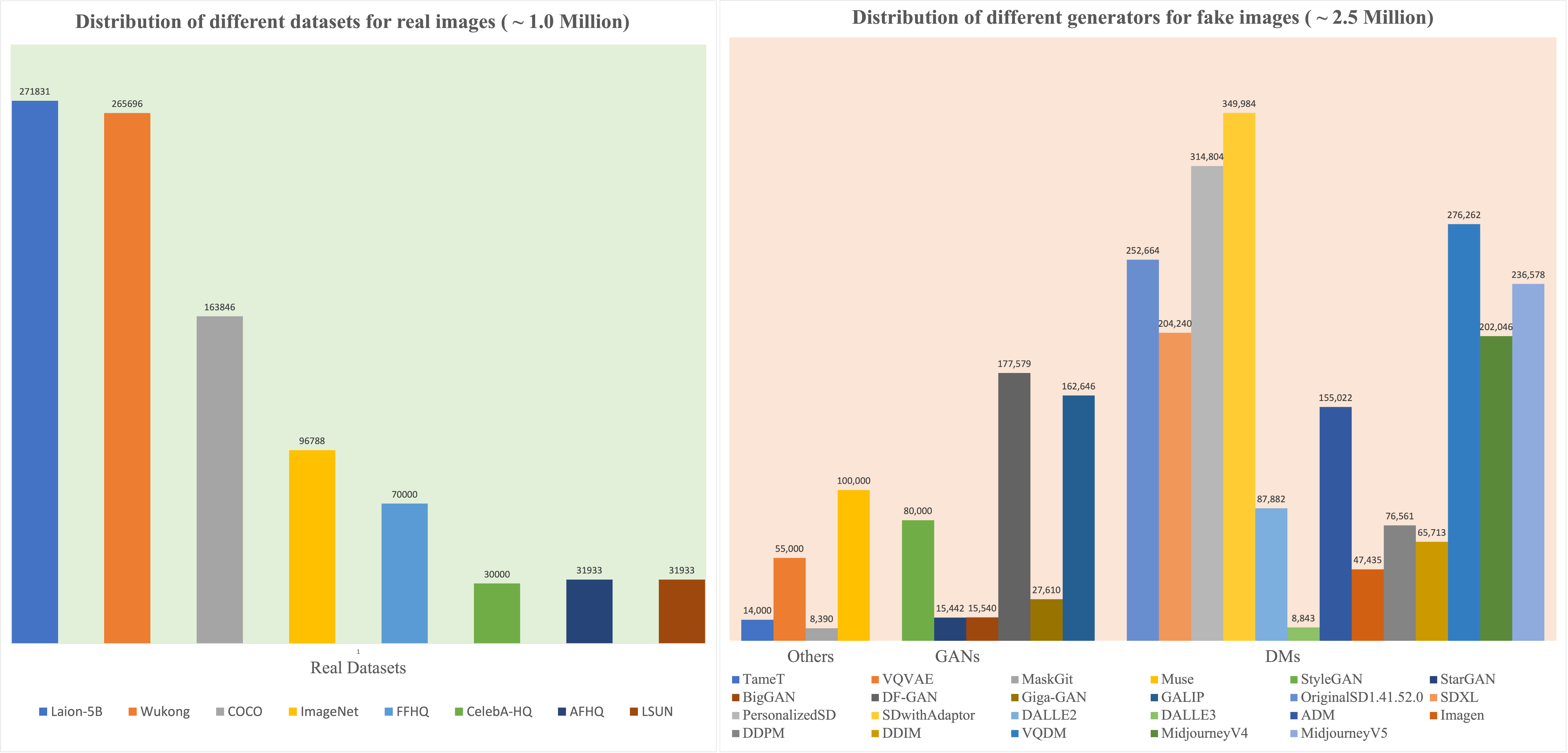
- 최신 기술의 GAN, 확산 모델(DMs), 기타 생성 모델을 사용한 종합적인 파이프라인을 통해 오픈소스 커뮤니티에서 가짜 이미지를 수집하고 생성한다.
- 이미지 캡션, 생성, 분류 작업에 사용되는 다양한 오픈소스 데이터셋에서 실제 이미지를 확보하여 스타일 및 콘텐츠 다양성을 보장한다.
- 생성기 유형(GANs, DMs, Others), 모델 아키텍처, 모델 가중치, 모델 버전의 네 단계로 계층화된 구조로 데이터셋을 구성하여 상호 비교 평가를 가능하게 한다.
- 강건성 테스트를 위해 다운샘플링, JPEG 압축, 기하학적 변형(뒤집기, 자르기), 워터마킹(텍스트 및 시각적), 색상 조정(명도, 대비, 채도, hue) 등의 열악성 기법을 적용한다.
- Stable Diffusion, Midjourney, GAN 모델 전반에서 교차 가중치, 교차 버전, 교차 시간 일반화를 고려해 다양한 검출기(ViT 기반 및 ResNet-50 기반 등)를 훈련하고 평가한다.
- 에이블레이션 연구 및 비교 실험을 수행하여 다양한 열악성 유형과 모델 진화 단계에서의 검출기 성능 분석을 수행한다.
실험 결과
연구 질문
- RQ1동일한 생성 모델 아키텍처(예: Stable Diffusion)의 다른 가중치 간에 AI 생성 이미지 검출기가 얼마나 잘 일반화되는가?
- RQ2이전 모델에 비해 더 새로운 또는 고급 버전의 생성 모델에서 검출기의 일반화 성능은 어떻게 되는가?
- RQ3실제 배포 환경에서 흔히 발생하는 압축, 축소, 워터마킹 등의 일반적인 이미지 열악성 유형에 대해 검출기는 얼마나 강건한가?
- RQ4교차 버전 및 교차 가중치 평가 조건에서 다양한 생성 모델 유형(GANs, 확산 모델, 기타) 간에 검출기 성능은 어떻게 달라지는가?
- RQ5아키텍처 선택(ViT 대비 ResNet-50)이 이미지 열악성 조건에서 검출기 강건성에 얼마나 영향을 미치는가?
주요 결과
- WildFake에서 훈련된 검출기는 Stable Diffusion와 같은 동일한 모델 패밀리의 다른 가중치 간에도 강력한 일반화 성능를 보이며, 가중치 내 평가 성능와 유사한 성능을 기록한다.
- 교차 버전 평가 결과, 확산 모델의 진화하는 버전(예: Stable Diffusion 및 Midjourney) 간에도 검출기가 안정적인 성능 유지를 보이며, 핵심 아키텍처의 안정성이 탐지 가능한 패턴을 유지함을 시사한다.
- 기하학적 및 색상 변형 조건에서 ViT 기반 검출기가 ResNet-50 기반 검출기보다 뛰어난 성능를 보이며, 이러한 열악성 조건에서 더 높은 강건성을 확보한다.
- 두 검출기 모두 이미지 기반 또는 텍스트 기반 워터마킹이 적용된 이미지를 처리할 때 심각한 성능 저하를 겪으며, 워터마킹 영향을 받는 샘플에 대한 치명적인 취약성을 드러낸다.
- 해상도 및 품질이 낮은 이미지(예: 64×64 또는 저품질 JPEG)는 검출 정확도에 상당한 부정적 영향을 미치며, 신뢰할 수 있는 검출을 위해서는 입력 품질의 중요성을 강조한다.
- 최신 GAN에서 훈련된 검출기는 이전 GAN 버전에서 훈련된 검출기보다 더 뛰어난 일반화 성능를 보이며, 이는 최신 모델이 더 일관되거나 탐지 가능한 아티팩트를 더 많이 남길 수 있음을 시사한다.
이 논문 읽기
누빈트 뷰어에서 원문을 열고, 읽으면서 궁금한 곳을 바로 물어보세요.
누빈트에서 이 논문 읽기이 리뷰는 AI가 논문 원문을 바탕으로 만들었습니다. 인용하기 전에 원문을 확인해 주세요.