
[Paper Review] Incorporating time-dependent demand patterns in the optimal location of capacitated charging stations
This paper proposes a multi-period, time-dependent mixed-integer linear programming model for optimally locating capacitated electric vehicle charging stations in urban areas, explicitly accounting for spatial and temporal variations in charging demand and different charger types. Results show that ignoring time-dependent demand can lead to substantial unserved demand, with the proposed model significantly outperforming single-period approaches in meeting peak-hour needs.
A massive use of electric vehicles is nowadays considered to be a key element of a sustainable transportation policy and the availability of charging stations is a crucial issue for their extensive use. Charging stations in an urban area have to be deployed in such a way that they can satisfy a demand that may dramatically vary in space and time. In this paper we present an optimization model for the location of charging stations that takes into account the main specific features of the problem, in particular the different charging technologies, and their associated service time, and the fact that the demand depends on space and time. To measure the importance of incorporating the time dependence in an optimization model, we also present a simpler model that extends a classical location model and does not include the temporal dimension. A worst-case analysis and extensive computational experiments show that ignoring the temporal dimension of the problem may lead to a substantial amount of unsatisfied demand.
Motivation & Objective
- To address the challenge of deploying electric vehicle (EV) charging stations in urban areas where demand varies significantly by time and location.
- To incorporate different charging technologies (slow, quick, fast) and their associated service times into the location decision process.
- To compare a multi-period, time-dependent model with a classical single-period model to assess the impact of ignoring temporal demand dynamics.
- To balance infrastructure cost and customer travel distance while ensuring high service levels during peak demand periods.
- To demonstrate that time-independent models may fail to meet critical demand during peak hours, leading to significant unserved demand.
Proposed method
- Formulates a mixed-integer linear programming (MILP) model (MP-CFL) that explicitly models demand variation across multiple time intervals within a day.
- Models the urban area as a network of zones, each represented by a node with time-varying demand for EV charging.
- Incorporates three types of chargers (Level 1, 2, and 3) with distinct charging times and capacities, affecting service availability and customer waiting times.
- Uses a single-period model (SP-CFL) as a benchmark, which aggregates demand over time and ignores temporal fluctuations.
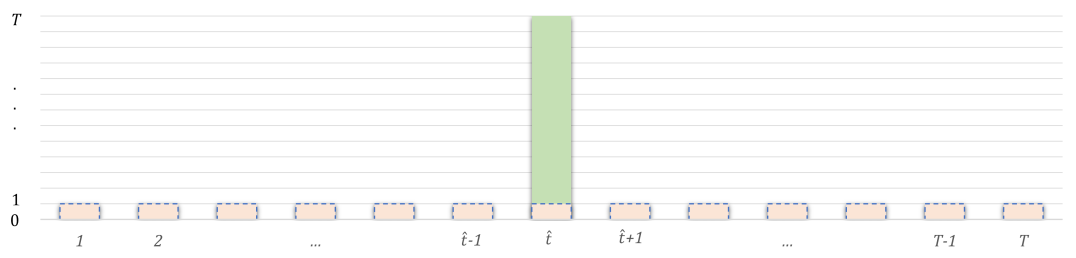
- Implements a worst-case analysis to theoretically demonstrate the risk of unserved demand when time dependency is ignored.
- Employs extensive computational experiments on real-world and synthetic instances to compare solution quality and computational effort between models.
Experimental results
Research questions
- RQ1How does ignoring the time-dependent nature of EV charging demand affect the performance of a facility location model for charging stations?
- RQ2To what extent does incorporating temporal demand variation improve the ability to serve peak-hour demand?
- RQ3What is the trade-off between infrastructure cost and customer travel distance when time-dependent demand is modeled?
- RQ4How do different charging technologies (slow, quick, fast) influence the optimal location and capacity decisions?
- RQ5How does the computational complexity of the time-dependent model compare to the single-period model?
Key findings
- Ignoring the temporal dimension in EV charging station location leads to a substantial amount of unserved demand, especially during peak hours, as demonstrated by worst-case analysis.
- The multi-period model (MP-CFL) consistently outperforms the single-period model (SP-CFL) in serving demand, particularly during high-traffic periods.
- For the highest value of the demand-weighting parameter (λ = 0.9999), the MP-CFL model achieved an optimality gap of 0.00% on average, indicating high solution quality.
- Computational times for MP-CFL are only marginally higher than for SP-CFL, with average CPU times of 1,528.78 seconds versus 2,152.78 seconds, respectively, under the highest λ.
- The SP-CFL model exhibits increasing optimality gaps with higher λ, reaching up to 6.85% in the worst case, indicating poor solution reliability.
- The MP-CFL model maintains low optimality gaps (average 0.11%) even under high demand variability, showing robustness and reliability in solution quality.
Read this paper
Open the full text in the Nubint reader and ask about any passage as you read.
Read this paper on NubintThis review was generated by AI from the original paper. Please check the paper before citing it.