
[Paper Review] On the fractional instanton liquid picture of the Yang-Mills vacuum and Confinement
This paper proposes the fractional instanton liquid model (FILM) as a microscopic mechanism for confinement in 4D SU(N) Yang-Mills theory at zero temperature. The model describes the vacuum as a liquid of self-dual fractional instantons with topological charge $1/N$, which carry $\mathbb{Z}_N$ flux and finite free energy, enabling confinement through flux-induced string formation, while remaining consistent with large-$N$ limits and non-perturbative properties like topological susceptibility.
I review the main features of our model of the 4-dimensional Yang-Mills theory vacuum as a liquid of fractional instantons. The model provides a possible microscopic mechanism for Confinement in four dimensional Yang-Mills theory at $T=0$. It also connects this property to other non-perturbative properties of the theory which can be explained by the same model. This paper is a, somewhat enlarged, written up version of my recent talks on the subject given at ICTS-Bangalore, KITP-Santa Barbara and IMSC-Chennai.
Motivation & Objective
- To provide a unified, microscopic explanation for confinement in 4D Yang-Mills theory at zero temperature.
- To connect confinement with other non-perturbative features such as finite topological susceptibility and theta dependence.
- To demonstrate that fractional instantons—smooth, self-dual configurations with $1/N$ topological charge—can form a stable liquid-like vacuum structure.
- To show that the model remains valid in the large-$N$ limit, preserving confinement and non-perturbative dynamics.
- To establish a link between semiclassical configurations and long-distance confinement via quantum fluctuations and flux lines.
Proposed method
- Constructing periodic arrays of fractional instantons on a 4-torus using twisted boundary conditions to realize self-dual configurations with $\mathbb{Z}_N$ flux.
- Using the index theorem to argue that crystal structures of fractional instantons can be deformed continuously into a liquid phase without energy cost.
- Modeling the vacuum as a liquid of fractional instantons and anti-instantons, where their size and separation are determined by quantum fluctuations and the inverse $\Lambda$ parameter.
- Analyzing long-distance properties such as confinement through the flux and free energy of fractional instantons, ignoring short-distance quantum fluctuations.
- Employing finite-volume lattice simulations in SU(2) Yang-Mills theory to probe the evolution from semiclassical to non-perturbative regimes.
- Relating the model to large-$N$ behavior by showing that unit fractional instantons with charge $1/N$ have finite action in the large-$N$ limit.
Experimental results
Research questions
- RQ1How can confinement in 4D Yang-Mills theory be explained by a microscopic, non-perturbative mechanism involving topological defects?
- RQ2Why do fractional instantons with $1/N$ topological charge remain stable and relevant in the large-$N$ limit, unlike full instantons?
- RQ3What is the role of $\mathbb{Z}_N$ flux and finite free energy in generating confinement via string-like flux tubes?
- RQ4How does the liquid-like arrangement of fractional instantons emerge from the interplay of topology, quantum fluctuations, and gauge dynamics?
- RQ5Can the fractional instanton liquid model consistently explain both confinement and topological susceptibility in the same framework?
Key findings
- The fractional instanton liquid model provides a unified explanation for confinement, topological susceptibility, and theta dependence in 4D Yang-Mills theory at $T=0$.
- Fractional instantons with topological charge $1/N$ are stable, self-dual, and carry $\mathbb{Z}_N$ flux, enabling confinement via flux-line formation.
- The typical size-separation of fractional instantons is estimated at 0.7 fermi in SU(2) theory, determined by quantum fluctuations and the inverse $\Lambda$ parameter.
- The model remains consistent in the large-$N$ limit because unit fractional instantons have finite action, preserving non-perturbative features like confinement.
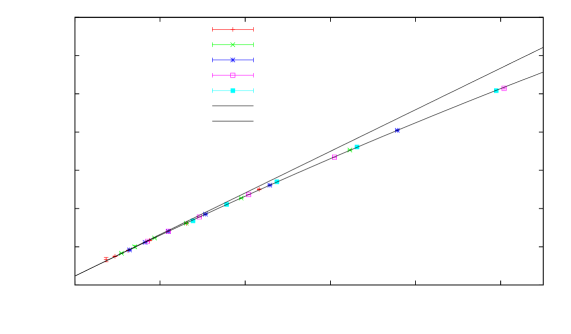
- Numerical evidence from SU(2) lattice simulations supports the existence of fractional instanton-like configurations and their role in the vacuum structure.
- The model suggests that the vacuum is not a gas of instantons but a liquid of fractional instantons, with their positions and fluxes determining long-distance physics like confinement.
Read this paper
Open the full text in the Nubint reader and ask about any passage as you read.
Read this paper on NubintThis review was generated by AI from the original paper. Please check the paper before citing it.