
[論文レビュー] One Relation for All Wavelengths: The Far-Ultraviolet to Mid-Infrared Milky Way Spectroscopic R(V) Dependent Dust Extinction Relationship
本論文は、912 Å から 32 µm の範囲で、最初の統一的で分光的に導かれた R(V)-依存性を持つ銀河系の減光法則を提示する。4つの波長領域において A(λ)/A(V) と R(V)⁻¹ の線形回帰を用いて、その法則が得られた。この研究では、2175 Å のボーリングと光学的特徴は粒子サイズ(R(V))に依存するが、10 µm および 20 µm のケイ酸塩特徴は依存しないことが明らかになった。また、全波長域の減光補正に適した dust_extinction Python パッケージに G23 モデルを提供している。
Dust extinction is one of the fundamental measurements of dust grain sizes, compositions, and shapes. Most of the wavelength dependent variations seen in Milky Way extinction are strongly correlated with the single parameter R(V)=A(V)/E(B-V). Existing R(V) dependent extinction relationships use a mixture of spectroscopic and photometry observations, hence do not fully capture all the important dust features nor continuum variations. Using four existing samples of spectroscopically measured dust extinction curves, we consistently measure the R(V) dependent extinction relationship spectroscopically from the far-ultraviolet to mid-infrared for the first time. Linear fits of A(lambda)/A(V) dependent on R(V) are done using a method that fully accounts for their significant and correlated uncertainties. These linear parameters are fit with analytic wavelength dependent functions to determine the smooth R(V) (2.3-5.6) and wavelength (912 A-32 micron) dependent extinction relationship. This relationship shows that the far-UV rise, 2175 A bump, and the three broad optical features are dependent on R(V), but the 10 and 20 micron features are not. Existing literature relationships show significant deviations compared to this relationship especially in the far-ultraviolet and infrared. Extinction curves that clearly deviate from this relationship illustrate that this relationship only describes the average behavior versus R(V). We find tentative evidence that the relationship may not be linear with 1/R(V) especially in the ultraviolet. For the first time, this relationship provides measurements of dust extinction that spectroscopically resolve the continuum and features in the ultraviolet, optical, and infrared as a function of R(V) enabling detailed studies of dust grains properties and full spectroscopic accounting for the effects of dust extinction on astrophysical objects.
研究の動機と目的
- 遠紫外から中赤外域にわたる連続的な R(V)-依存性を持つダスト減光関係を、分光測定値のみを用いて確立すること。
- 分光的および光度的データを混合するか、重要な波長領域を欠落させる既存の減光法則に生じる不一致を解消すること。
- 2175 Å のボーリングや 10/20 µm のケイ酸塩特徴といったダスト特徴が R(V)(粒子サイズの代理変数)にどのように依存するかを特定すること。
- 相関のある不確実性を完全に考慮し、多波長天文学的研究における正確な減光補正を可能にする滑らかで実験的に制約された減光モデルを提供すること。
提案手法
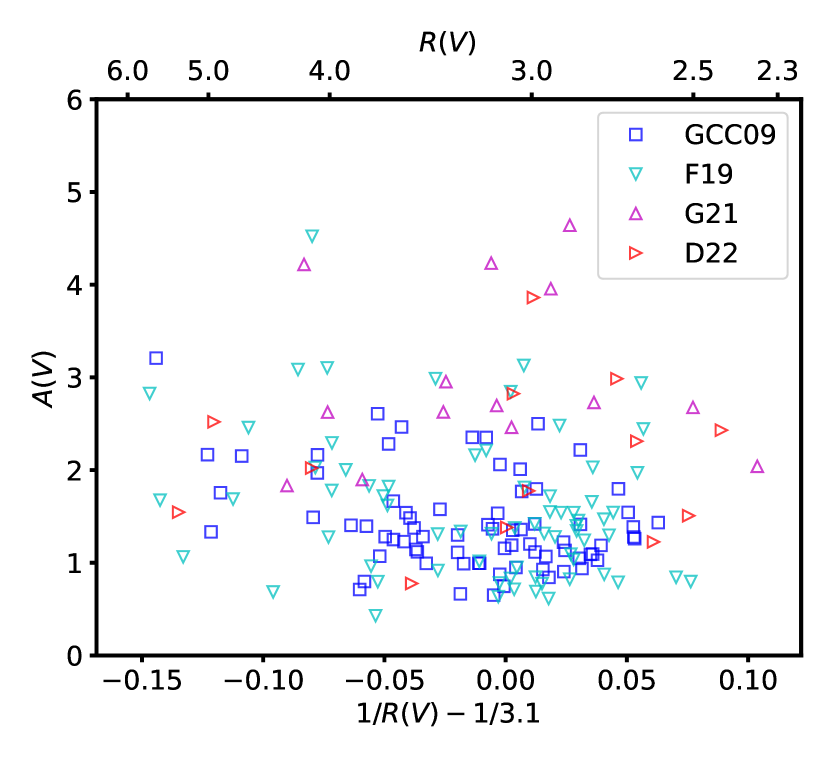
- 著者らは、912 Å から 32 µm の範囲をカバーする分光的に測定された減光曲線を代表する4つのサンプルを用いる。
- 各波長領域において、A(λ)/A(V) と R(V)⁻¹ − 3.1⁻¹ の線形回帰を実行し、R(V) 依存性をモデル化する。
- 得られた回帰係数を解析的関数にフィットさせ、全波長域にわたる連続的で滑らかな減光法則を構築する。
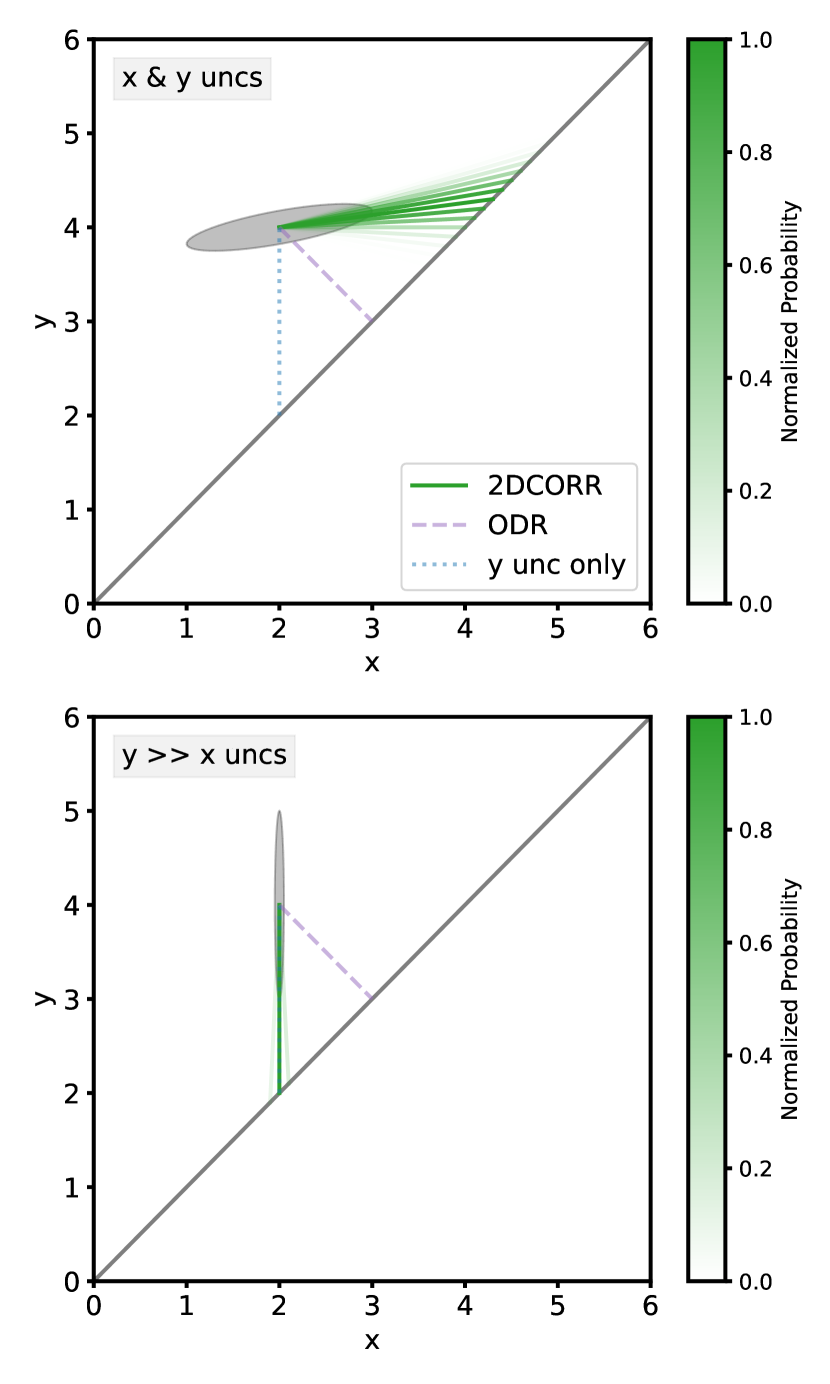
- 測定された減光の相関不確実性を、きめ細かい統計的手法を用いてフィッティングプロセスで完全に考慮する。
- 最終的なモデルは波長領域を統合し、dust_extinction Python パッケージに G23 モデルとして実装される。
- 重複する領域の各サンプル間での比較によりモデルの妥当性を検証し、既知のキャリブレーションや測定の問題に起因するずれを特定する。
実験結果
リサーチクエスチョン
- RQ1R(V) に応じて、912 Å から 32 µm の全範囲にわたるダスト減光曲線はどのように変化するのか。これは一貫した連続的関係として記述可能か?
- RQ22175 Å のボーリング、光学的特徴、10 および 20 µm のケイ酸塩特徴といったダスト特徴のうち、R(V) に依存するものは何か、依存しないものは何か?
- RQ3既存の R(V)-依存性を持つ減光法則は、特に遠紫外および赤外域で、新しい分光的に導出された関係からどの程度ずれているのか?
- RQ4減光の R(V) 依存性は R(V)⁻¹ に対して線形であるか。特に紫外域で非線形性の兆候があるか?
- RQ5この新しい減光モデルは、全スペクトル範囲にわたる多波長天文学的研究におけるダスト減光補正に正確に使用可能か?
主な発見
- G23 モデルは、912 Å から 32 µm まで、分光的に導出された最初の連続的 R(V)-依存性を持つ減光法則であり、完全な不確実性伝播を備えている。
- 2175 Å のボーリングと3つの広帯域光学的特徴は R(V) に強く依存しており、これは小さな粒子に起因することを示唆している。
- 10 µm および 20 µm のケイ酸塩特徴は R(V) に依存しないことが判明し、平均粒子サイズに敏感でないことを示唆している。
- 既存の文献における減光関係は、データタイプの混合や波長カバー範囲の不完全さにより、特に遠紫外および赤外域で顕著なずれを示している。
- 短波長域、特に紫外域で R(V) 依存性に非線形性の兆候が見られ、R(V)⁻¹ における線形性の仮定に疑問を呈する可能性がある。
- G23 モデルは now dust_extinction Python パッケージに G23 モデルとして提供されており、天文学的データ解析における広範な利用が可能になった。
より良い研究を、今すぐ始めましょう
論文の読解から最終レビューまで、研究時間を劇的に削減しましょう。
クレジットカード登録不要
このレビューはAIが作成し、人間の編集者が確認しました。