
[論文レビュー] Robust instrumental variable methods using multiple candidate instruments with application to Mendelian randomization
この論文は、メンデルの法則に基づくランダム化における複数の候補遺伝的道具用具を用いて、頑健なインストゥルメンタル変数手法を評価し、頑健な回帰、重みペナルティ、L1ペナルティなどの拡張手法を提案・検証する。30%までの道具用具が無効であっても、頑健な回帰と単純な中央値推定が、不均一性がある状況下でも正確な第一種の誤り率を維持し、従来の手法やMR-Egger法を上回ることを明らかにした。
Mendelian randomization is the use of genetic variants to make causal inferences from observational data. The field is currently undergoing a revolution fuelled by increasing numbers of genetic variants demonstrated to be associated with exposures in genome-wide association studies, and the public availability of summarized data on genetic associations with exposures and outcomes from large consortia. A Mendelian randomization analysis with many genetic variants can be performed relatively simply using summarized data. However, a causal interpretation is only assured if each genetic variant satisfies the assumptions of an instrumental variable. To provide some protection against failure of these assumptions, robust methods for instrumental variable analysis have been proposed. Here, we develop three extensions to instrumental variable methods using: i) robust regression, ii) the penalization of weights from candidate instruments with heterogeneous causal estimates, and iii) L1 penalization. Results from a wide variety of robust methods, including the recently-proposed MR-Egger and median-based methods, are compared in an extensive simulation study. We demonstrate that two methods, robust regression in an inverse-variance weighted method and a simple median of the causal estimates from the individual variants, have considerably improved Type 1 error rates compared with conventional methods in a wide variety of scenarios when up to 30% of the genetic variants are invalid instruments. While the MR-Egger method gives unbiased estimates when its assumptions are satisfied, these estimates are less efficient than those from other methods and are highly sensitive to violations of the assumptions. Methods that make different assumptions should be used routinely to assess the robustness of findings from applied Mendelian randomization investigations with multiple genetic variants.
研究の動機と目的
- 複数の遺伝的バリアントが使用される際の、無効なインストゥルメンタル変数のリスクに対処すること。
- 道具用具の有効性と不均一性のさまざまなシナリオ下での、頑健なインストゥルメンタル変数手法のパフォーマンスを評価すること。
- MR-Egger や中央値ベースの手法といった既存の手法と、ペナルティと頑健な回帰を用いた新規に提案された拡張手法を比較すること。
- インストゥルメンタル変数の仮定が破綻した場合でも統計的妥当性を保つ手法の選択に関する実用的指針を提供すること。
- 大規模コンsortiumから得た要約遺伝データを用いて、これらの手法の有効性を評価し、観察研究への広範な応用を可能にすること。
提案手法
- 逆分散加重法を用い、候補道具用具の重みをペナルティ付きで推定する頑健な回帰を適用して因果効果を推定する。
- 不均一な因果推定を生じる道具用具の重みをペナルティ処理し、潜在的に無効な道具用具の重みを低減する。
- L1ペナルティ(lasso型)を用いて、一貫した因果推定を示す道具用具のサブセットを選択し、効率性と頑健性を向上させる。
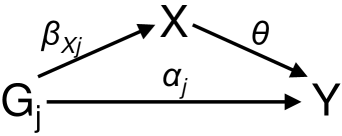
- 大規模な遺伝コンソーシアムからの要約データ(回帰係数βと標準誤差)を用いた二標本メンドルの法則に基づくランダム化フレームワークを採用する。
- 無効な道具用具の割合(0–30%)や異なる因果効果サイズの下で、多数のシミュレーションスタディを実施して手法を比較する。
- 複数のシミュレーションシナリオにおいて、第一種の誤り率、パワー、バイアス、平均二乗誤差を用いてパフォーマンスを評価する。
実験結果
リサーチクエスチョン
- RQ1最大30%の候補道具用具が無効である状況下で、頑健なインストゥルメンタル変数手法はどのように機能するか?
- RQ2インストゥルメンタル変数の仮定が破綻した場合、どの手法が適切な第一種の誤り率を維持するか?
- RQ3バイアスと効率性の観点から、MR-Egger法は単純な中央値ベース手法や頑健な回帰法と比べてどのように異なるか?
- RQ4道具用具の不均一性や無効性がある状況下で、ペナルティ技術は因果推定の信頼性を向上させられるか?
- RQ5実世界のメンドルの法則に基づくランダム化の応用において、頑健性、効率性、正確性のバランスが最も優れている手法はどれか?
主な発見
- 逆分散加重フレームワーク内での頑健な回帰は、最大30%の道具用具が無効であっても、正確な第一種の誤り率(約5%)を維持する。
- 個々のバリアントの因果推定の単純な中央値は、特に無効な道具用具の割合が高い状況下で、従来の手法よりも優れた第一種の誤り率制御(シミュレーションで3.0–8.4%)を示す。
- 仮定が満たされている場合、MR-Eggerはバイアスのない推定を行うが、高い第一種の誤り率(最大20%)と低い効率性を示し、実務では信頼性に欠ける。
- 道具用具の不均一性が存在する場合、重みのペナルティ処理やL1ペナルティを施した手法は、標準的な逆分散加重法よりも優れたパフォーマンスを示す。
- 重み付き中央値法は中程度のパフォーマンスを示すが、第一種の誤り率(最大11.0%)が高く、頑健な回帰法や中央値ベース手法よりもパワーが低い。
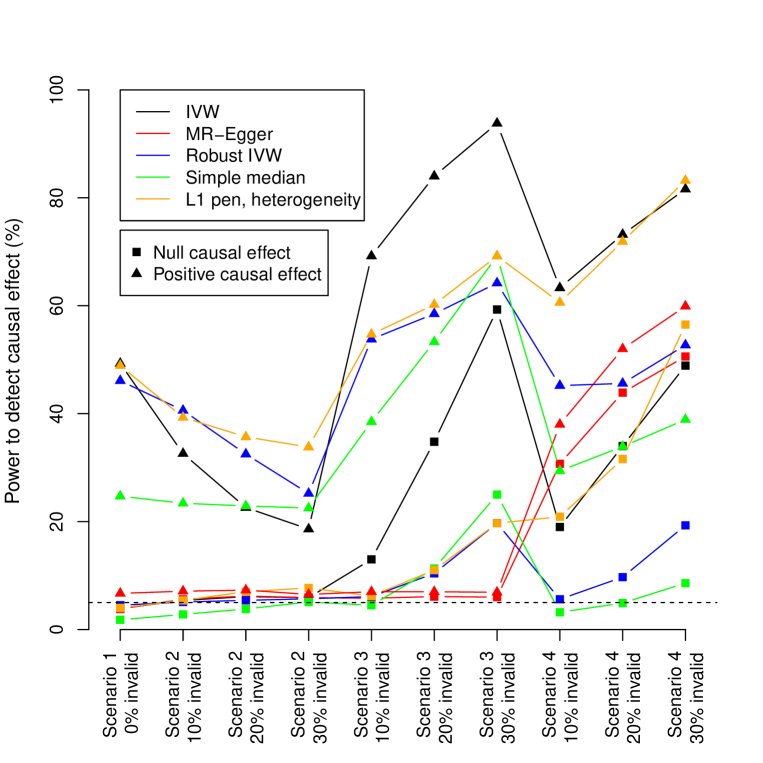
- 因果効果が正である状況(θ = 0.1)では、頑健な回帰法や中央値ベース手法が、無効な道具用具の条件下でも高い統計的パワー(25–37%)を維持するが、従来手法では6–13%にとどまる。
より良い研究を、今すぐ始めましょう
論文設計から論文執筆まで、研究時間を劇的に削減しましょう。
クレジットカード登録不要
このレビューはAIが作成し、人間の編集者が確認しました。