
[Paper Review] The Poynting vector field singularities: Effects of symmetry and its violation
This paper presents a phenomenological theory explaining how symmetry and its violation affect singularities in the Poynting vector field during scattering of a linearly polarized plane wave by a subwavelength cylinder. It demonstrates that topological changes occur via finite-order pitchfork bifurcations, ensuring robustness of energy flow patterns to weak symmetry breaking, with exact solutions for a germanium cylinder confirming bifurcation scenarios and topological stability.
The phenomenological theory revealing the generic effects of the problem symmetry, its violation, and energy conservation law on the singularities of the Poynting vector field is presented. The bifurcation scenario of their formation (annihilation) under variations of the problem parameters is elucidated. The results describe the singularities in scattering a linearly polarized plane electromagnetic wave. However, they are valid for any configuration of the incident beam at its scattering by a subwavelength particle. The author shows that topological changes in the pattern of the Poynting vector field occur through a finite number of pitchfork bifurcations. It means that the patterns are topologically stable under variations of the problem parameter(s) that lie between the bifurcation values. The latter ensures that the discussed topological properties of the problem are robust to weak symmetry violation, which is inevitable in any actual experiment. The general consideration is illustrated by a detailed study of singularities in scattering by an infinite right circular germanium cylinder. The results open the possibility of fitting and controlling radiation patterns on subwavelength scales important for various nanotechnologies.
Motivation & Objective
- To understand how symmetry and its violation influence the topological structure of Poynting vector field singularities in electromagnetic scattering.
- To identify the bifurcation mechanisms through which singularities form or annihilate as system parameters vary.
- To establish the robustness of topological features under weak symmetry-breaking, relevant to real-world experimental conditions.
- To validate the theoretical framework using exact solutions for scattering by a germanium cylinder.
- To demonstrate the potential for controlling subwavelength energy flow patterns for nanotechnological applications.
Proposed method
- Develops a phenomenological theory based on power-series expansion of Poynting vector components around characteristic singular points.
- Incorporates constraints from electromagnetic symmetry and energy conservation to classify possible singularity types.
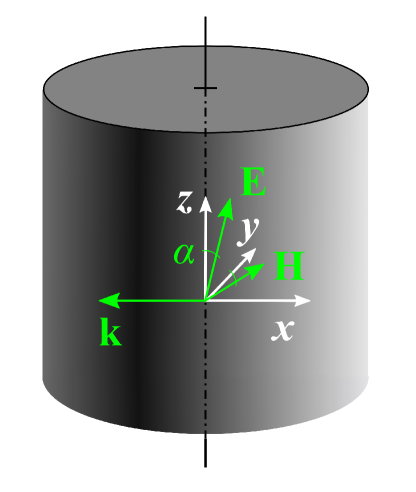
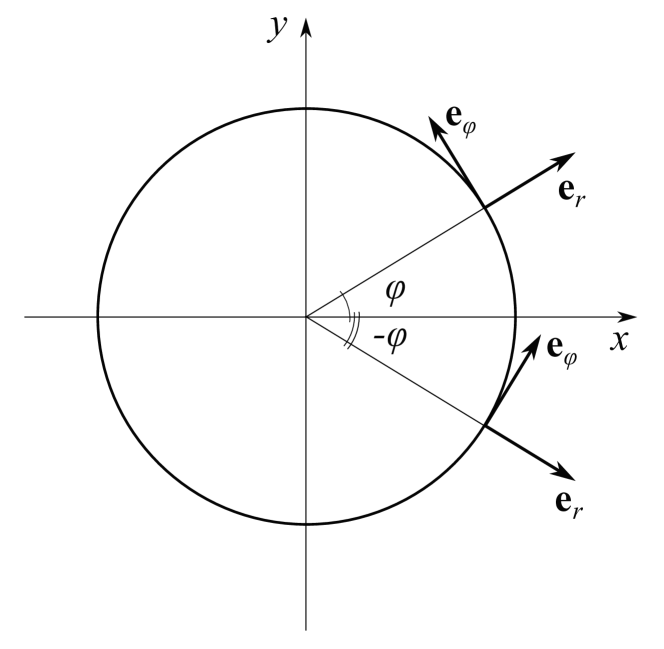
- Applies the theory to analyze singularities in the two-dimensional projection of Poynting vector streamlines for an infinite germanium cylinder.
- Uses exact Mie-type solutions for scattering by a right circular germanium cylinder to verify bifurcation scenarios.
- Traces the evolution of singular points (foci, nodes, saddles) as control parameters—such as polarization angle α or size parameter kR—are varied.
- Performs numerical simulations to confirm predicted scaling laws and bifurcation sequences near maxima and saddle points of Sx(x,y).
Experimental results
Research questions
- RQ1How do singularities in the Poynting vector field form or annihilate as scattering parameters vary?
- RQ2What is the role of symmetry and its violation in shaping the topological structure of Poynting vector field lines?
- RQ3How robust are the topological features of Poynting vector singularities to weak symmetry-breaking perturbations?
- RQ4What bifurcation scenarios govern the transition between different types of singular points (e.g., foci to nodes, merging and annihilation)?
- RQ5Can the topological stability of Poynting vector patterns be guaranteed between bifurcation points under continuous parameter variation?
Key findings
- Topological changes in the Poynting vector field occur exclusively through a finite number of pitchfork bifurcations, ensuring topological stability between bifurcation values.
- Under symmetry violation (e.g., oblique polarization), the Poynting vector streamlines become three-dimensional, and most singular points in the 2D projection become regular in 3D space.
- False singular points—appearing in 2D projections but not in 3D—emerge due to symmetry breaking, indicating that 2D projections can misrepresent the true field topology.
- For a germanium cylinder, bifurcations at kR = 1.57311, 1.573091, and 1.573000 demonstrate the transition from two to four to two singular points, with type changes from saddles to stable nodes and back.
- At α = 45.40405°, the two stable foci (r₃,₄) merge and annihilate, transferring their topological charge to a single stable node at r₁, while r₂ remains a saddle, confirming a pitchfork bifurcation.
- Numerical verification confirms predicted scaling laws for singular point evolution near maxima and saddle points of Sx(x,y) within the employed numerical accuracy.
Read this paper
Open the full text in the Nubint reader and ask about any passage as you read.
Read this paper on NubintThis review was generated by AI from the original paper. Please check the paper before citing it.