
[论文解读] Noise-assisted digital quantum simulation of open systems
本文提出了一种噪声辅助的数字量子模拟框架,利用NISQ设备中的固有噪声,更高效地模拟开放量子系统。通过结合随机编译和泡利误差缓解技术,该方法选择性地控制退相干速率,在真实和模拟的IBM Quantum设备上实现了开放系统动力学的精确模拟,与经典Lindblad方程解结果具有良好一致性。
Quantum systems are inherently open and susceptible to environmental noise, which can have both detrimental and beneficial effects on their dynamics. This phenomenon has been observed in bio-molecular systems, where noise enables novel functionalities, making the simulation of their dynamics a crucial target for digital and analog quantum simulation. Nevertheless, the computational capabilities of current quantum devices are often limited due to their inherent noise. In this work, we present a novel approach that capitalizes on the intrinsic noise of quantum devices to reduce the computational resources required for simulating open quantum systems. Our approach combines quantum noise characterization methods with quantum error mitigation techniques, enabling us to manipulate and control the intrinsic noise in a quantum circuit. Specifically, we selectively enhance or reduce decoherence rates in the quantum circuit to achieve the desired simulation of open system dynamics. We provide a detailed description of our methods and report on the results of noise characterization and quantum error mitigation experiments conducted on both real and emulated IBM Quantum computers. Additionally, we estimate the experimental resource requirements for our techniques. Our approach holds the potential to unlock new simulation techniques in Noisy Intermediate-Scale Quantum (NISQ) devices, harnessing their intrinsic noise to enhance quantum computations.
研究动机与目标
- 为解决在噪声中等规模量子(NISQ)设备上模拟开放量子系统的挑战,其中标准误差纠正方法不切实际。
- 探索是否可以将设备固有噪声作为资源而非障碍来利用于量子模拟。
- 开发一种方法,实现对量子线路中退相干速率的精确控制,以模拟期望的开放系统动力学。
- 在真实和模拟的IBM Quantum硬件上展示噪声控制量子模拟的可行性。
提出的方法
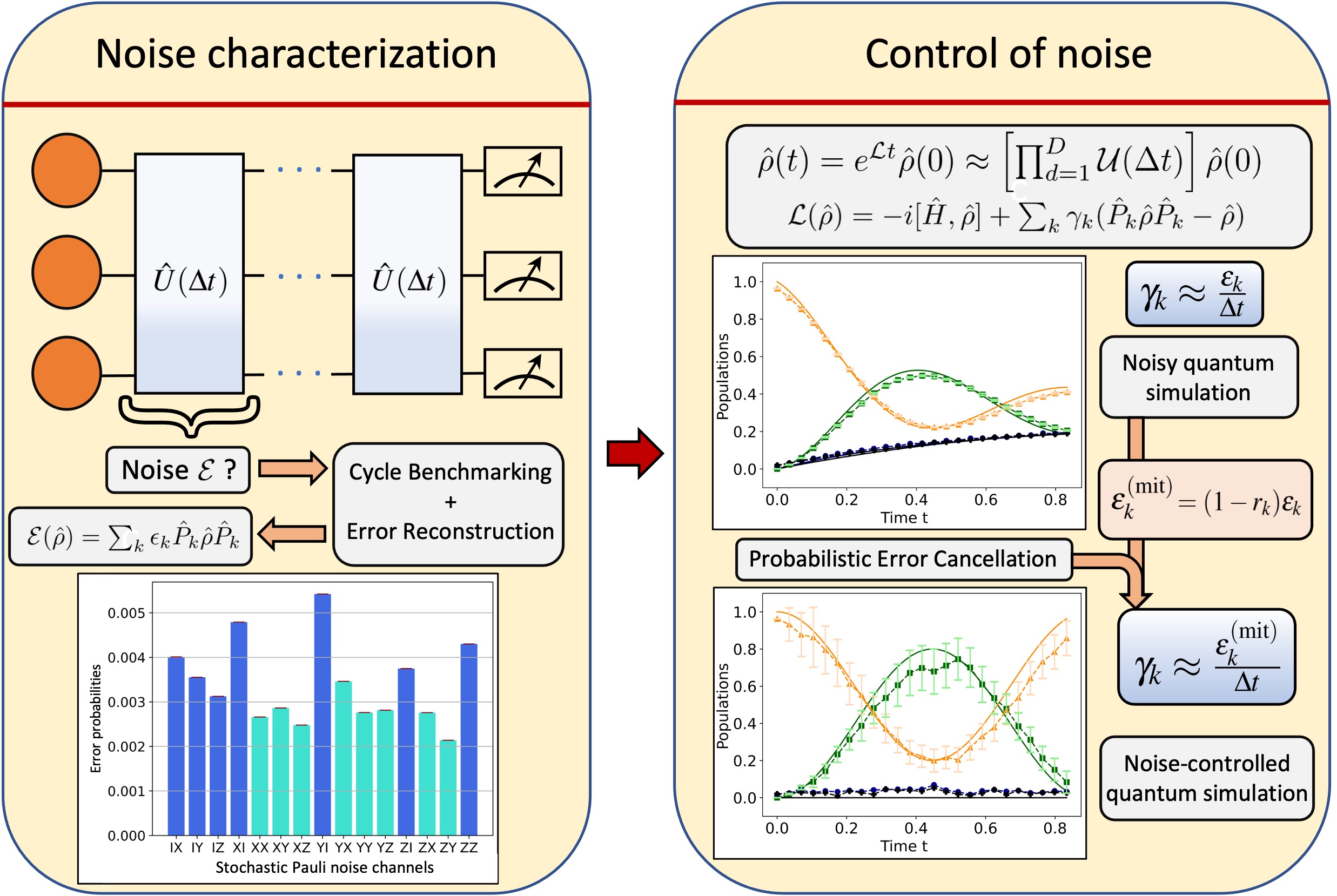
- 该方法采用随机编译将相干噪声转化为随机泡利噪声,从而通过泡利误差缓解(PEM)方案实现高效误差缓解。
- 对不同的随机泡利通道应用非均匀的缓解因子,从而在量子线路中选择性地增强或降低退相干速率。
- 采用一阶Trotter-Suzuki分解方法,在4量子比特系统上模拟Lindbladian主方程下的时间演化。
- 在真实和模拟的IBM Quantum设备(如ibmq lagos)上进行噪声表征,结果与Lindblad方程的经典模拟结果进行验证。
- 该技术利用了随机泡利通道可通过概率误差补偿(PEC)方法高效抵消的特性,使其成为控制的理想选择。
- 电路被编译为使添加的泡利字符串被整合到单量子比特门中,从而在保持电路结构的同时实现噪声操控。
实验结果
研究问题
- RQ1是否可以系统性地控制NISQ设备中的固有噪声,以更高效地模拟开放量子系统动力学?
- RQ2随机编译和泡利误差缓解在多大程度上可用于调节量子线路中的退相干速率?
- RQ3与经典解相比,噪声辅助模拟在多大程度上能准确再现开放系统的动力学?
- RQ4在当前量子硬件上实现噪声控制量子模拟的实验资源需求是什么?
主要发现
- 4量子比特开放系统量子模拟结果与对应Lindblad方程的经典解在定性上具有良好一致性,特别是在约化两量子比特密度矩阵的布居动力学方面。
- 非均匀缓解因子(r_k = 0.5用于主导退相干通道,r_k' = 0.1用于较弱通道)实现了对退相干速率的有效控制。
- 该方法成功通过随机编译将相干噪声转化为随机泡利噪声,从而利用PEC实现高效误差缓解。
- 在真实和模拟的IBM Quantum设备上的实验表明,在现实NISQ约束下,噪声辅助模拟是可行且准确的。
- 该技术仅使用90C_tot^2条电路即在PEC协议中实现精确的动力学模拟,表明资源开销较低。

更好的研究,从现在开始
从阅读论文到最终审阅,大幅缩短您的研究时间。
无需绑定信用卡
本解读由 AI 生成,并经人工编辑审核。