
[論文レビュー] A Comprehensive Survey of Deep Transfer Learning for Anomaly Detection in Industrial Time Series: Methods, Applications, and Directions
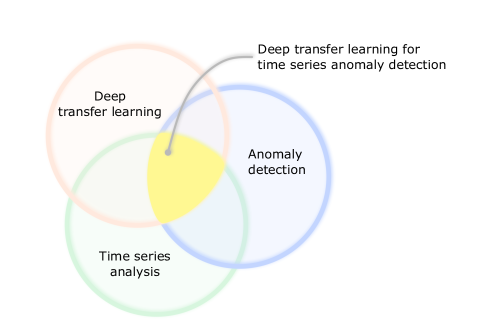
包括的でアプリケーション志向の産業用時系列データの異常検知に関する深層転移学習の総説。問題設定、手法、課題、将来の方向性を詳述。
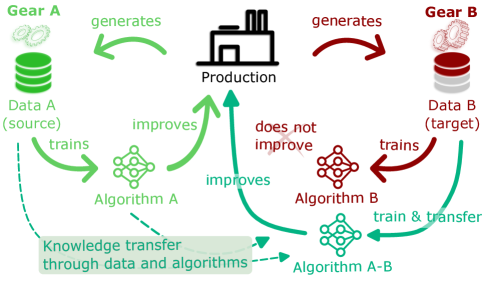
Automating the monitoring of industrial processes has the potential to enhance efficiency and optimize quality by promptly detecting abnormal events and thus facilitating timely interventions. Deep learning, with its capacity to discern non-trivial patterns within large datasets, plays a pivotal role in this process. Standard deep learning methods are suitable to solve a specific task given a specific type of data. During training, deep learning demands large volumes of labeled data. However, due to the dynamic nature of the industrial processes and environment, it is impractical to acquire large-scale labeled data for standard deep learning training for every slightly different case anew. Deep transfer learning offers a solution to this problem. By leveraging knowledge from related tasks and accounting for variations in data distributions, the transfer learning framework solves new tasks with little or even no additional labeled data. The approach bypasses the need to retrain a model from scratch for every new setup and dramatically reduces the labeled data requirement. This survey first provides an in-depth review of deep transfer learning, examining the problem settings of transfer learning and classifying the prevailing deep transfer learning methods. Moreover, we delve into applications of deep transfer learning in the context of a broad spectrum of time series anomaly detection tasks prevalent in primary industrial domains, e.g., manufacturing process monitoring, predictive maintenance, energy management, and infrastructure facility monitoring. We discuss the challenges and limitations of deep transfer learning in industrial contexts and conclude the survey with practical directions and actionable suggestions to address the need to leverage diverse time series data for anomaly detection in an increasingly dynamic production environment.
研究の動機と目的
- 産業用時系列データの異常検知における深層転移学習の詳細なレビューを提供する。
- 転移学習の問題設定と深層転移学習アプローチを分類する。
- 製造、予知保全、エネルギー、インフラストラクチャーにおける応用を要約する。
- 実務家のための課題、制約、実践的な方向性を議論する。
提案手法
- 転移学習の問題設定を誘導学習と転導学習に分類する。
- 深層転移学習を4つのカテゴリ(インスタンス転移、パラメータ転移、マッピング転移、ドメイン対向転移)に分ける。
- 異常検知におけるドメイン、タスク、学習目的の形式的定義を提供する。
- リテラチャーを調査・統合し、含有基準(2013年以降、深層転移学習、産業用時系列異常検知)を設定する。
- AI実務家に向けた分類法と実践的な推奨を提供する。
実験結果
リサーチクエスチョン
- RQ1産業用時系列データの異常検知に適用される主要な深層転移学習手法は何か。
- RQ2転移学習の問題設定(誘導学習 vs. 転導学習)とタスク/ドメイン間の関係はどのように特徴づけられるか。
- RQ3深層転移学習を用いた産業用途(製造、予知保全、エネルギー、インフラ)にはどんなものがあるか。
- RQ4ダイナミックな産業環境で深層転移学習を展開する際の主な課題と将来の方向性は何か。
主な発見
- 総説には深層転移学習に関する論文が45件、産業用時系列異常検知の深層転移学習に特化した論文が37件含まれる。
- 深層転移学習の手法は、インスタンス転移、パラメータ転移、マッピング転移、ドメイン対向転移の4つの主要なアプローチに分類される。
- 実務環境におけるデータ分布のシフト、非定常性、ラベル付きデータの必要性といった現実的な課題を論じる。
- ダイナミックな生産環境における異常検知のために、多様な時系列データを活用するための実践的な方向性と推奨を提供する。
- 方法論にはGoogle Scholar、Scopus、Elsevier、IEEEを横断した文献調査が含まれ、産業界の時系列異常検知に深層転移学習を用いた研究を対象として2013年以降を基準とする。
この論文を読む
Nubintのビューアで原文を開き、読みながら気になる箇所をすぐに質問できます。
Nubintでこの論文を読むこのレビューはAIが論文の原文をもとに作成しました。引用する前に原文をご確認ください。