
[論文レビュー] A Prompt Array Keeps the Bias Away: Debiasing Vision-Language Models with Adversarial Learning
本論文は、視覚言語モデルの代表的バイアスを軽減するためのプロンプトベースの敵対的デバイアス化手法を提案する。テキストクエリの末尾に学習可能な「デバイアス化」トークンを付加し、対照的損失を併用して、ジェンダーおよび人種的バイアスを画像・テキスト表現から低減する。このアプローチは、代表的バイアスの低減を顕著に実現し、MaxSkewおよびNDKLという複数の指標で効果を示したが、表現品質の低下は最小限に抑えられた。また、訓練データに使用された属性ラベル付き顔データセットのみを監視信号として用いた。
Vision-language models can encode societal biases and stereotypes, but there are challenges to measuring and mitigating these multimodal harms due to lacking measurement robustness and feature degradation. To address these challenges, we investigate bias measures and apply ranking metrics for image-text representations. We then investigate debiasing methods and show that prepending learned embeddings to text queries that are jointly trained with adversarial debiasing and a contrastive loss reduces various bias measures with minimal degradation to the image-text representation.
研究の動機と目的
- 視覚言語モデルにおける代表的バイアスの測定と軽減のための、強固で効率的な手法の開発。
- 既存のバイアス測定手法を評価し、マルチモーダル表現に最も適した手法を同定すること。
- 再訓練や元の事前学習データへのアクセスが制限される状況でも、バイアス軽減を実現する挑戦への対処。
- デバイアス化の過程で画像・テキスト表現品質が低下するのを最小限に抑えること。
- 既存の事前学習モデルに適用可能な軽量で実装可能なデバイアス化プロトコルの提供。
提案手法
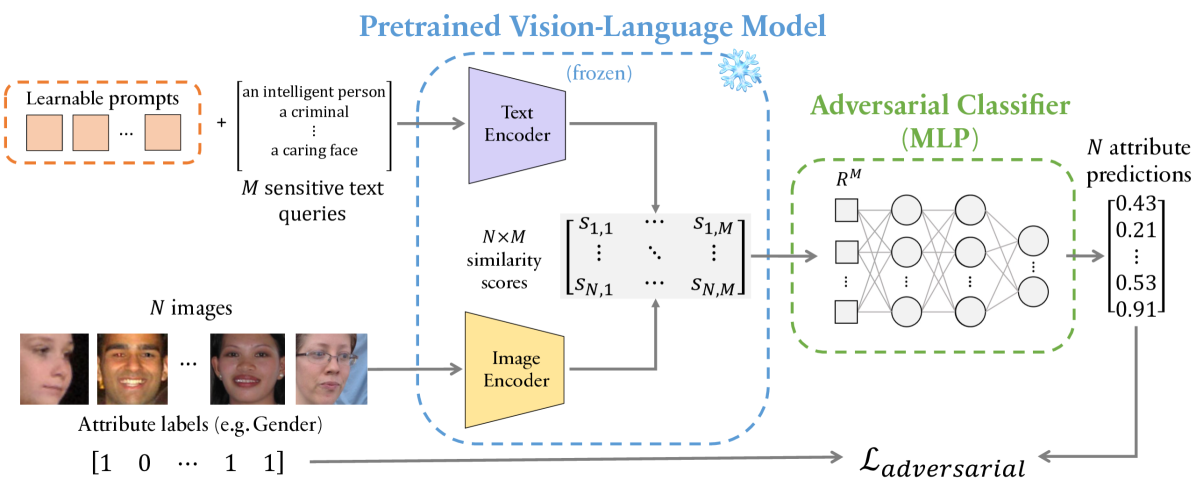
- 画像・テキスト類似度スコアから画像属性ラベル(例:性別、人種)を予測する敵対的分類器を導入する。
- 感受性のあるテキストクエリの末尾に学習可能な「デバイアス化」プロンプトトークンを追加し、敵対分類器の誤差を最大化することで、バイアスの強い相関を低減する。
- 一般化された画像・テキストペアにおける対照的損失と併用して、デバイアス化目的関数を同時に最適化することで、表現品質を維持する。
- 再訓練や元の学習データへのアクセスを一切不要とし、画像属性ラベルのみを監視信号として用いる。
- 保護される属性(属性)がアノテートされた顔データセット(FairFaceおよびUTKFace)を対象に適用する。
- 視覚的および言語的エンコーダーを固定したまま、プロンプトトークンをエンドツーエンドで訓練する。
実験結果
リサーチクエスチョン
- RQ1視覚言語モデルにおいて、特に代表的害を検出するうえで、どのバイアス測定指標が最も効果的か。
- RQ2提案手法であるプロンプトベースの敵対的デバイアス化法は、従来のデバイアス化手法と比較して、バイアス低減と表現保持の両面でどの程度優れているか。
- RQ3軽量でプロンプトベースの手法が、主なエンコーダーのファインチューニングなしに、視覚言語モデルのバイアスを効果的に低減できるか。
- RQ4対照的損失と併用した共同最適化が、デバイアス化の過程で画像・テキスト表現品質の低下をどの程度防げるか。
- RQ5交差属性(例:人種と性別)がバイアスおよび軽減性能に与える影響はどの程度か。
主な発見
- MaxSkewおよびNDKLは、視覚言語モデルにおける有効なバイアス指標であると特定されたが、WEATはこのマルチモーダル設定には不適切であることが判明した。
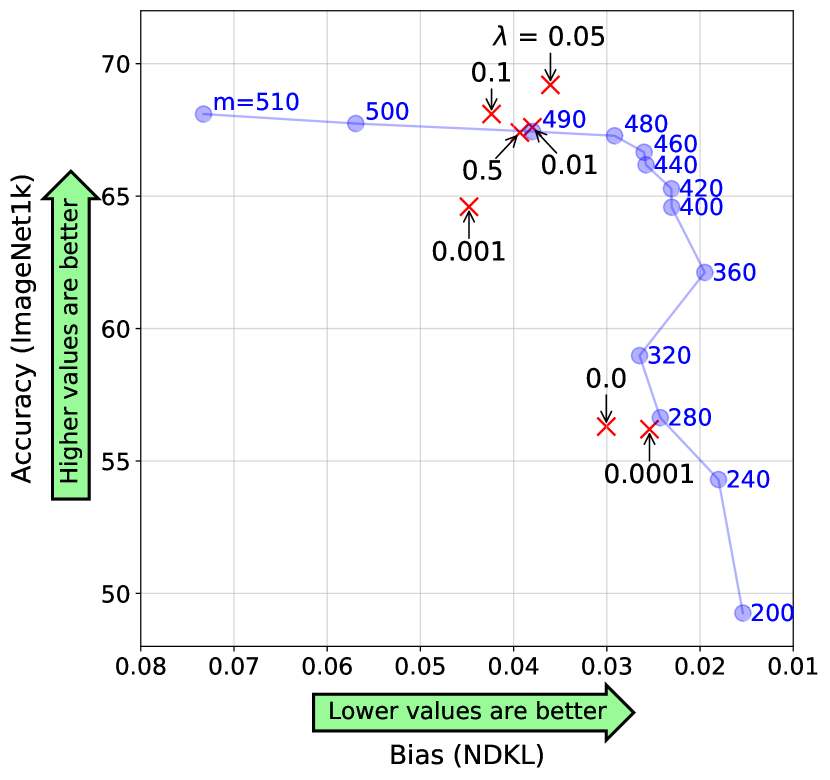
- 提案手法は、性別および人種属性の両方において、FairFaceおよびUTKFaceデータセットでMaxSkewおよびNDKLを顕著に低減した。
- 対照的損失との共同学習のおかげで、画像・テキスト表現品質への低下が最小限に抑えられ、バイアス低減が達成された。
- より大きなデータセットで事前学習されたモデル、または自己教師あり学習(SSL)を用いたモデルは、低いベースラインバイアスを示した。これは、関連分野の先行研究を裏付ける結果であった。
- 属性を組み合わせた場合(例:人種と性別)でも本手法は有効であったため、交差バイアスの軽減への応用可能性が示唆された。
- 本手法は計算的にも効率的であり、再訓練が不要なため、既存のモデルに適用可能で、実世界の展開に適している。
より良い研究を、今すぐ始めましょう
論文の読解から最終レビューまで、研究時間を劇的に削減しましょう。
クレジットカード登録不要
このレビューはAIが作成し、人間の編集者が確認しました。