
[論文レビュー] A Survey for Foundation Models in Autonomous Driving
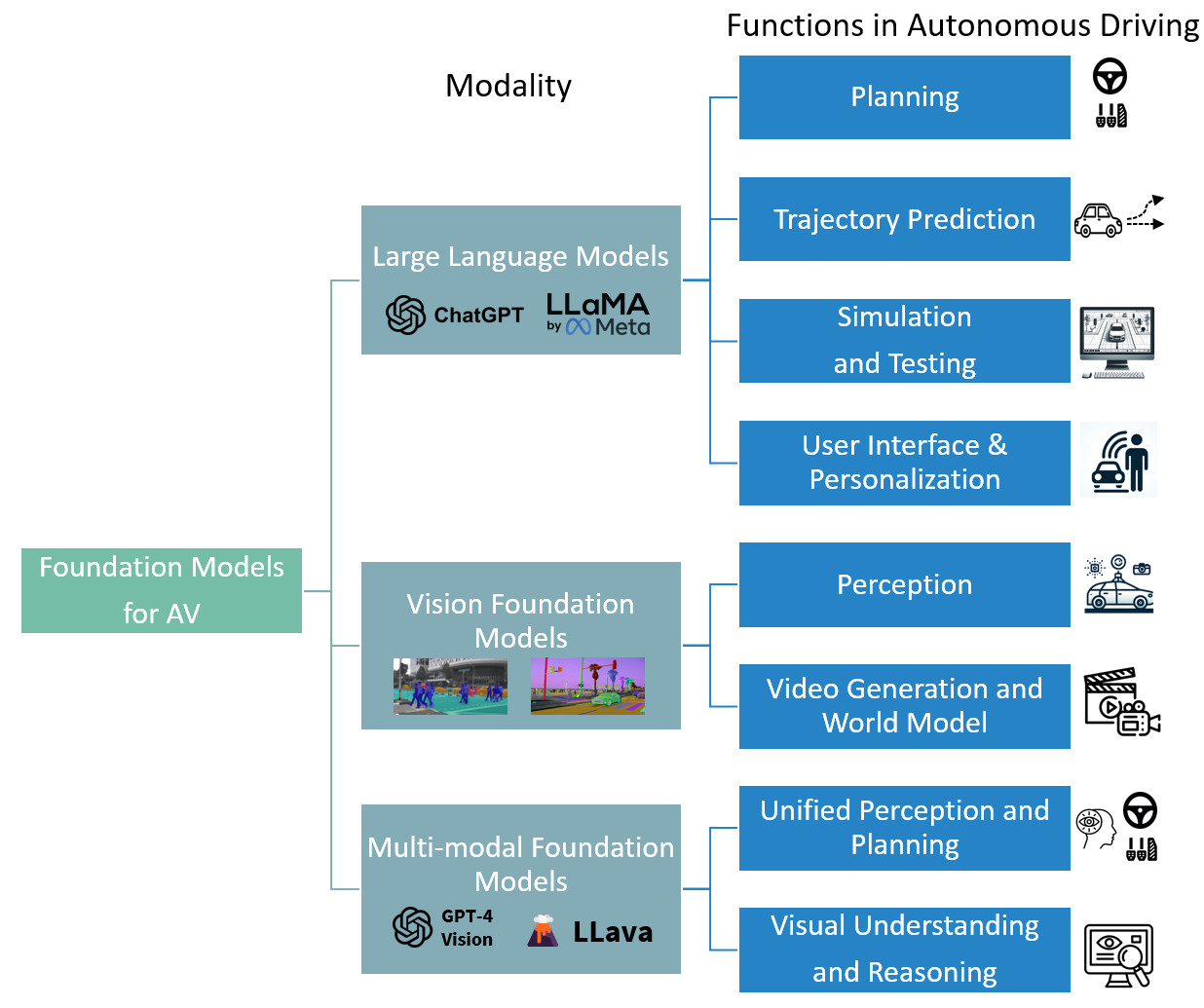
この調査は、基盤モデル――特に大規模言語モデル、ビジョン基盤モデル、そしてマルチモーダルモデル――が自動運転にどのように適用されているかを概説し、分類法、手法、限界、および今後の方向性を示す。
The advent of foundation models has revolutionized the fields of natural language processing and computer vision, paving the way for their application in autonomous driving (AD). This survey presents a comprehensive review of more than 40 research papers, demonstrating the role of foundation models in enhancing AD. Large language models contribute to planning and simulation in AD, particularly through their proficiency in reasoning, code generation and translation. In parallel, vision foundation models are increasingly adapted for critical tasks such as 3D object detection and tracking, as well as creating realistic driving scenarios for simulation and testing. Multi-modal foundation models, integrating diverse inputs, exhibit exceptional visual understanding and spatial reasoning, crucial for end-to-end AD. This survey not only provides a structured taxonomy, categorizing foundation models based on their modalities and functionalities within the AD domain but also delves into the methods employed in current research. It identifies the gaps between existing foundation models and cutting-edge AD approaches, thereby charting future research directions and proposing a roadmap for bridging these gaps.
研究の動機と目的
- 自動運転(AD)における基盤モデルの役割を、認識、予測、計画の各領域で調査する。
- 大規模言語モデル、ビジョン基盤モデル、マルチモーダルモデルがADタスクへどのように適用されているかを分析する。
- 基盤モデルと既存のADアプローチの間のギャップを特定し、今後の研究方向を提案する。
- モーダル性と機能的役割に基づくADの基盤モデルの分類法を提案する。
提案手法
- モード別(LLM、ビジョン、マルチモーダル)およびADにおける機能で基盤モデルを分類する。
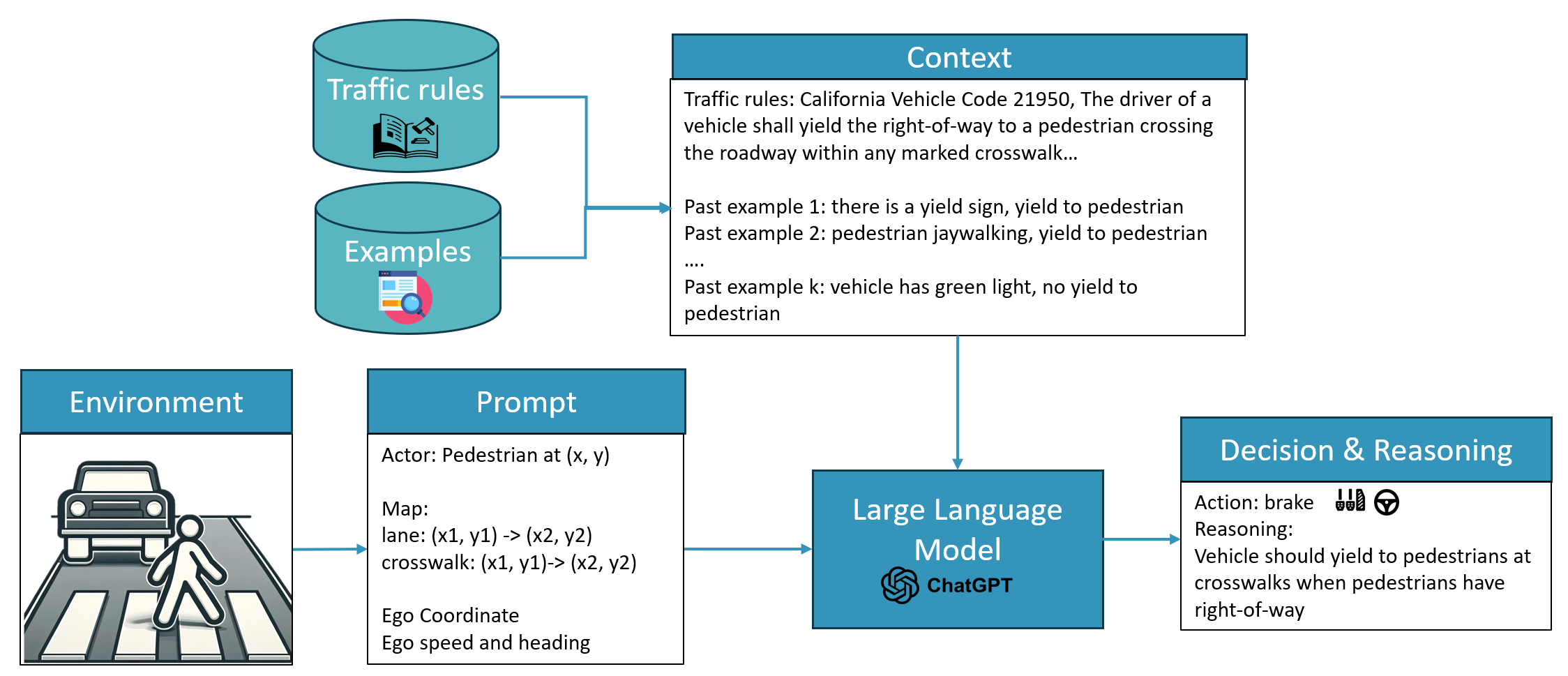
- 主要手法を要約する:プロンプトエンジニアリング、インコンテキスト学習、ファインチューニング、人間のフィードバックによる強化学習、視覚的指令適応。
- 計画、予測、認識、シミュレーション、検証への応用を論じる。
- 幻覚、待機時間、認識依存性などの限界を検討し、今後の研究方向を概説する。
実験結果
リサーチクエスチョン
- RQ1自動運転において大規模言語モデルは推論、計画、対話にどのように活用されているのか。
- RQ2ビジョン基盤モデルおよびマルチモーダル基盤モデルは、認識、予測、意思決定においてどんな役割を果たしているのか。
- RQ3基盤モデルが自動運転に実世界展開する際の主な制限とギャップは何か。
- RQ4基盤モデルと現在のADシステムを橋渡しするロードマップと研究方向は何か。
主な発見
- LLMsは、環境を説明するプロンプトと構造化プロンプトを通じて、ADにおける推論、計画、ユーザーとの対話を可能にする。
- ビジョン基盤モデルは、3D認識、動画生成、ADシーン理解のためのドメイン適応に適用されている。
- マルチモーダル基盤モデルは、視覚理解、空間推論、統合的な認識-計画をサポートし、ADタスクへ適合させるための指令調整が用いられている。
- 幻覚、遅延、上流の認識依存、ADアプリケーションのシムtoリアルギャップといった顕著な限界が存在する。
- 論文は段階的なロードマップを提案しており、域特化データの徐々の収集、3Dデータとライダーの組み込み、ヒューマン・イン・ザ・ループによる安全性の整合を行う。
この論文を読む
Nubintのビューアで原文を開き、読みながら気になる箇所をすぐに質問できます。
Nubintでこの論文を読むこのレビューはAIが論文の原文をもとに作成しました。引用する前に原文をご確認ください。