
[論文レビュー] A Survey on Large Language Models with some Insights on their Capabilities and Limitations
この調査はLLMの基盤、スケーリング法則、アーキテクチャ、出現能力をレビューし、CoT/PoT、RAG、ドメイン適用を議論し、能力と限界を強調します。
The rapid advancement of artificial intelligence, particularly with the development of Large Language Models (LLMs) built on the transformer architecture, has redefined the capabilities of natural language processing. These models now exhibit remarkable performance across various language-related tasks, such as text generation, question answering, translation, and summarization, often rivaling human-like comprehension. More intriguingly, LLMs have demonstrated emergent abilities extending beyond their core functions, showing proficiency in tasks like commonsense reasoning, code generation, and arithmetic. This survey paper explores the foundational components, scaling mechanisms, and architectural strategies that drive these capabilities. Emphasizing models like GPT and LLaMA, we analyze the impact of exponential data and computational growth on LLM performance, while also addressing the trade-offs associated with scaling. We also examine LLM applications across sectors, such as healthcare, finance, education, and law, highlighting their adaptability and potential to solve domain-specific challenges. Central to this work are the questions of how LLMs generalize across diverse tasks, exhibit planning, and reasoning abilities, and whether these emergent abilities can be systematically elicited or enhanced. In particular, we provide some insights into the CoT (Chain of Thought) and PoT (Plan of Thought) abilities within LLMs, focusing on how pre-training data influences their emergence. Additionally, we investigate LLM-modulo frameworks that integrate external systems, allowing LLMs to handle complex, dynamic tasks. By analyzing these factors, this paper aims to foster the ongoing discussion on the capabilities and limits of LLMs, promoting their responsible development and application in novel and increasingly complex environments.
研究の動機と目的
- 大規模言語モデル(LLMs)の開発と主要な要素、およびそれらがさまざまな分野に与える変革的影響を評価する。
- スケーリング法則(KMとChinchilla)と、モデルサイズ・データ・計算資源が性能に与える影響を分析する。
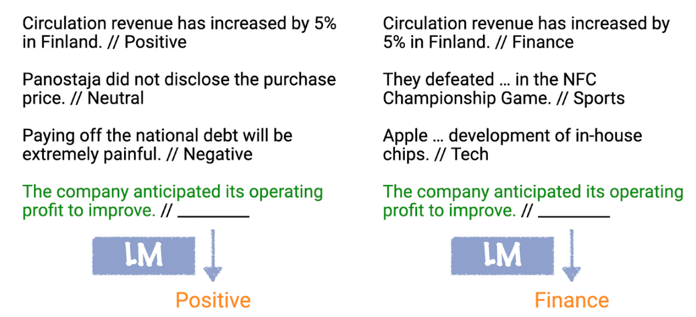
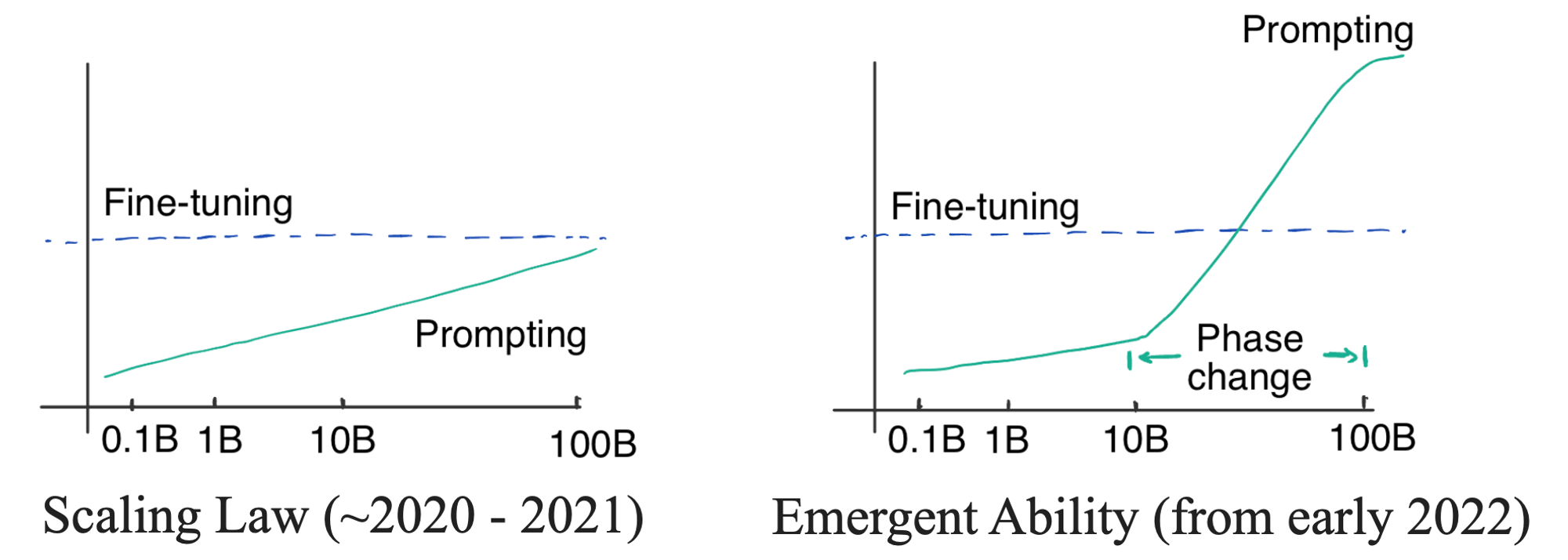
- 出現能力(インコンテキスト学習、チェーン・オブ・思考、計画ベースの推論)とそれらがどのように生じるかを検討する。
- さまざまな分野におけるLLMsの実用的な適用、適応戦略、および倫理・運用上の限界を論じる。
提案手法
- 基礎的なLLMの概念とトランスフォーマーをベースとしたアーキテクチャ(BERT、GPT、LLaMA、T5 など)を調査する。
- スケーリング法則と、それらがモデルサイズ・データ・計算資源にもたらす含意を説明する。
- 事前学習、データソース、および適応技術(指示チューニング、アラインメント)を分析する。
- インコンテキスト学習、チェーン・オブ・思考プロンプト、プログラム・オブ・思考、LLM-moduloフレームワークを探る。
- GSM8kデータセット上のLlama-family modelsを用いた実験からCoT起源に関する経験的洞察を提示する。
- ヘルスケア、金融、教育、法務におけるドメイン適用を論じ、倫理的・環境的課題を考慮する。
実験結果
リサーチクエスチョン
- RQ1LLMsは多様なタスクや領域に跨ってどのように一般化し、計画・推論能力を示すのか?
- RQ2出現能力を駆動する要因(サイズ、データ、アーキテクチャ)は何か、体系的に呼び起こすことや強化は可能か?
- RQ3LLMsのスケーリングのトレードオフと制約は何か、実践的にどのように緩和できるか?
- RQ4外部システム(リトリーブ、プラグイン)を統合して複雑なタスクを扱うにはどうすればよいか(LLM-moduloフレームワーク)?
主な発見
- インコンテキスト学習やチェーン・オブ・思考 prompting のような出現能力は、モデル規模の拡大とともに現れ、タスクやモデルサイズによって異なる。
- 指示チューニングとアラインメント戦略は、より大きなモデルでタスク遵守を改善し、性能向上はパラメータ数が数十億規模から始まる。
- スケーリング法則(KMとChinchilla)は、性能を最適化するためにモデルサイズとデータ間の計算資源配分の指針を提供する。
- Retrieval-Augmented Generation (RAG) および外部知識統合は、事実性とタスク能力を向上させる。
- LLMsは、ヘルスケア、金融、教育、法務、科学研究など多岐にわたる適用可能性を示す一方で、倫理・環境・バイアス関連の懸念を提起する。
この論文を読む
Nubintのビューアで原文を開き、読みながら気になる箇所をすぐに質問できます。
Nubintでこの論文を読むこのレビューはAIが論文の原文をもとに作成しました。引用する前に原文をご確認ください。