
[論文レビュー] Accurate and efficient structure elucidation from routine one-dimensional NMR spectra using multitask machine learning
本論文は、分子式やフラグメントの事前知識が不要な、生の1次元1Hおよび13C NMRス toward からの正確なエンドツーエンドの構造解明を可能にするマルチタスク機械学習フレームワークを提示する。サブス トラクチャから構造へのマッピングで事前学習されたトランスフォーマー・アーキテクチャと、スペクトル符号化に用いられるCNNを統合したモデルは、19個までの重原子を有する分子について、正しく構造を予測する上位15位以内の正答率が69.6%に達し、探索空間を最大11桁まで圧縮する。
Rapid determination of molecular structures can greatly accelerate workflows across many chemical disciplines. However, elucidating structure using only one-dimensional (1D) NMR spectra, the most readily accessible data, remains an extremely challenging problem because of the combinatorial explosion of the number of possible molecules as the number of constituent atoms is increased. Here, we introduce a multitask machine learning framework that predicts the molecular structure (formula and connectivity) of an unknown compound solely based on its 1D 1H and/or 13C NMR spectra. First, we show how a transformer architecture can be constructed to efficiently solve the task, traditionally performed by chemists, of assembling large numbers of molecular fragments into molecular structures. Integrating this capability with a convolutional neural network (CNN), we build an end-to-end model for predicting structure from spectra that is fast and accurate. We demonstrate the effectiveness of this framework on molecules with up to 19 heavy (non-hydrogen) atoms, a size for which there are trillions of possible structures. Without relying on any prior chemical knowledge such as the molecular formula, we show that our approach predicts the exact molecule 69.6% of the time within the first 15 predictions, reducing the search space by up to 11 orders of magnitude.
研究の動機と目的
- 日常的な1次元NMRス toward からの非教師ありで正確な構造解明を、分子式やフラグメント情報に依存せずに実現すること。
- 分子サイズが10〜19個の重原子を超えて増加するに従い、可能な構造の組み合わせが爆発的に増加する問題を克服すること。
- 生のNMRス toward から分子の結合性および分子式への直接的なマッピングを可能にするエンドツーエンドのディープラーニングフレームワークを構築すること。
- 高速でスケーラブルかつ広範な化学的・教育的・産業的プロセスに適用可能な構造解明を実現すること。
- 将来の立体化学、より大きな分子、広範な元素多様性への応用の基盤を築くこと。
提案手法
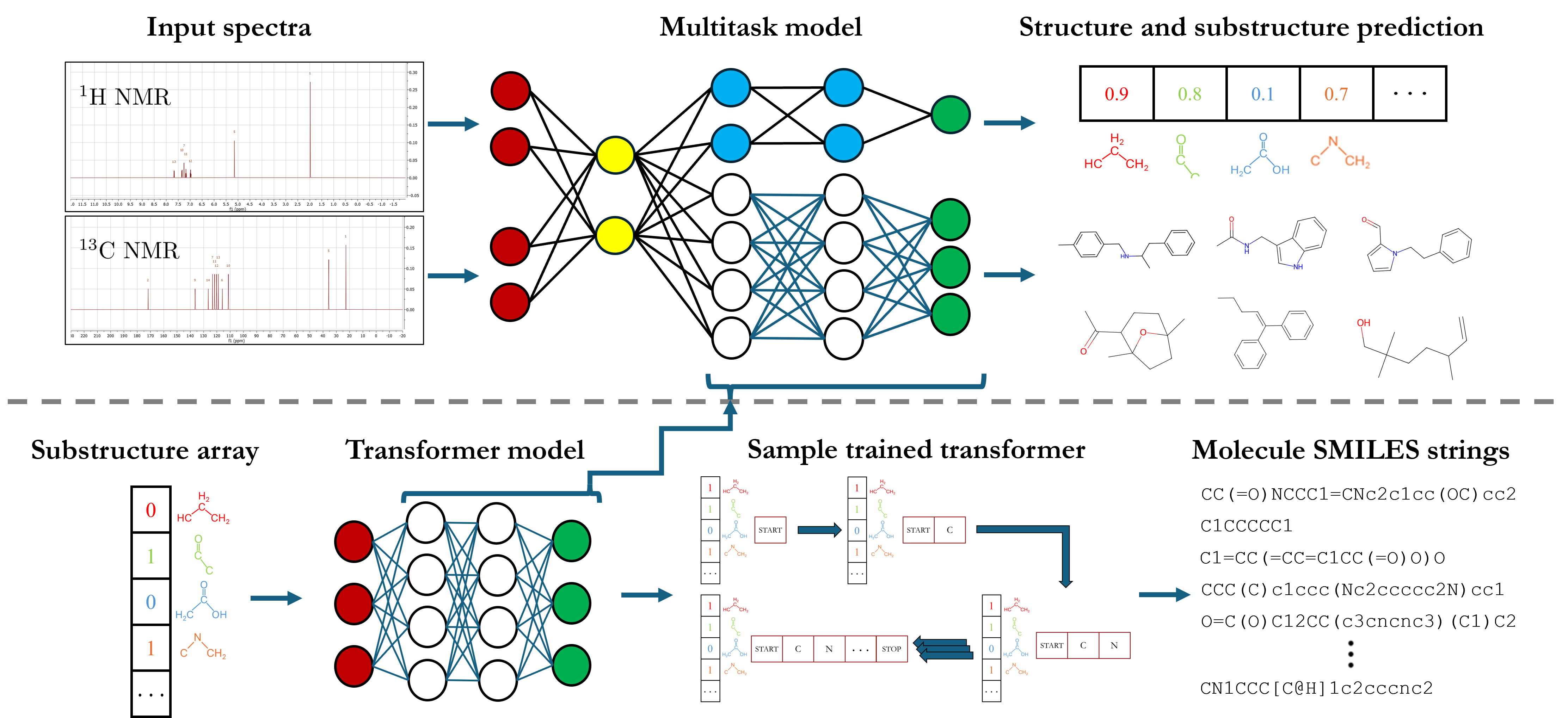
- 957種の単純なサブス トラクチャ(7原子以下)の存在・非存在から分子構造を再構築するように事前学習されたトランスフォーマーが、効率的な構造組み立てを可能にする。
- 畳み込みニューラルネットワーク(CNN)が、広範な事前処理を伴わずに、生の1次元1Hおよび13C NMRス toward を潜在表現に符号化する。
- 事前学習済みのトランスフォーマーとCNNを統合したマルチタスク学習フレームワークを構築し、スペクトルからサブス トラクチャおよび完全な分子構造を同時に予測する。
- 19個までの重原子を有する分子のシミュレートされたNMRス toward に対して、スペクトルデータのみを入力として、エンドツーエンドで学習する。
- 候補構造の生成とランク付けにビームサーチ戦略を採用し、上位予測結果の正答率を評価する。
- 10〜19個の重原子を有する分子のベンチマークを用いて評価し、上位1位および上位15位の正答率を測定する。
実験結果
リサーチクエスチョン
- RQ1生の1次元NMRス toward から分子構造を予測するマルチタスクディープラーニングモデルは、分子式やフラグメントの事前知識なしに正確に機能するか?
- RQ2分子サイズの増加に伴い、構造の組み合わせが爆発的に増加する中で、モデルの性能はどのようにスケーリングするか?
- RQ3トランスフォーマー基盤のアーキテクチャは、サブス トラクチャの存在/非存在信号から分子結合性を効果的に再構築できるか?
- RQ4CNNによるスペクトル符号化とトランスフォーマーによる構造生成を統合することで、従来手法と比較して予測精度がどの程度向上するか?
- RQ5多様な分子スケルトンに一般化可能であり、スペクトル解釈の複雑さにもかかわらず高い正答率を維持できるか?
主な発見
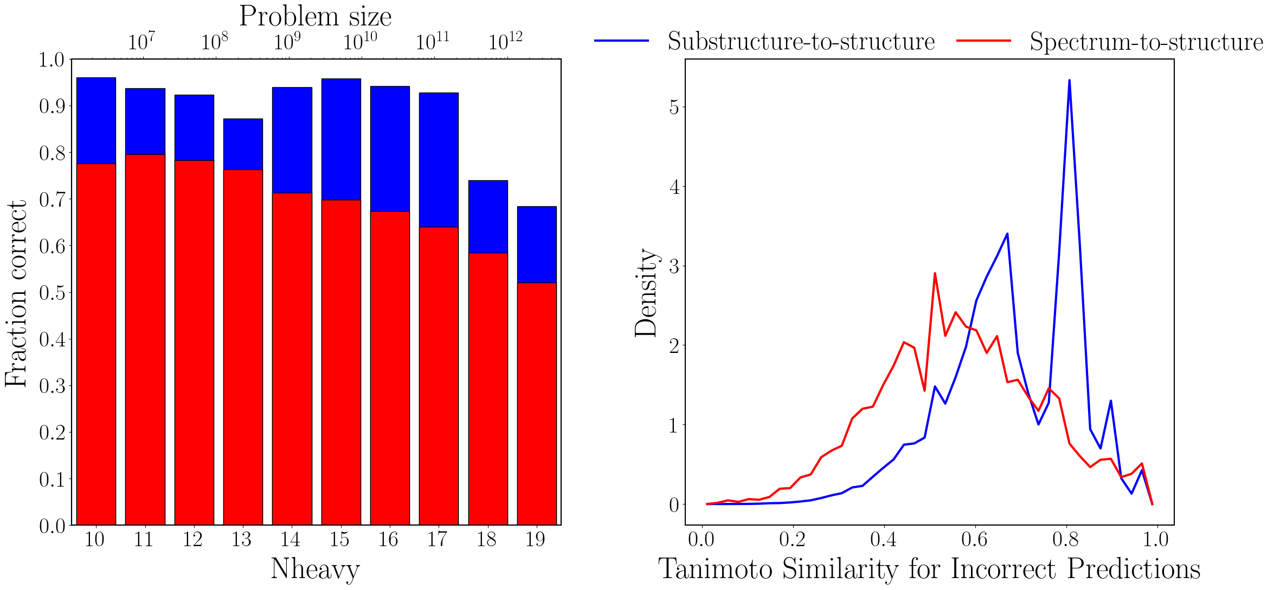
- 19個までの重原子を有する分子について、生の1Hおよび13C NMRス toward のみを入力として、正しく構造を予測する上位15位以内の正答率が69.6%に達する。
- フレームワークにより、有効な探索空間が最大11桁まで圧縮され、何兆もの可能な構造の探索が効率的に行える。
- 分子サイズにかかわらず高い性能を維持し、可能な分子数が5桁増加しても正答率が25.5%しか低下しない。
- 事前学習済みのトランスフォーマー単体でも、サブス トラクチャ入力からの構造再構築で93.2%の上位15位以内正答率を達成し、分子組み立てに優れた耐性を示す。
- 標準CPU(AMD Ryzen 7 3700X)で3秒未満で完全な構造予測が完了し、実世界での利用に非常にアクセス可能で実用的である。
- モデルは一般化可能であり、トレーニングデータに立体センターおよび二重結合配置の情報を組み込むことで、立体化学の予測へ拡張可能である。
より良い研究を、今すぐ始めましょう
論文の読解から最終レビューまで、研究時間を劇的に削減しましょう。
クレジットカード登録不要
このレビューはAIが作成し、人間の編集者が確認しました。