
[論文レビュー] AI-Powered Augmented Reality for Satellite Assembly, Integration and Test
本論文では、Microsoft HoloLens 2を用いて、コンピュータビジョンベースのオブジェクト検出、6次元ポーズ推定、OCRを活用し、リアルタイムで文脈に即したガイダンスを提供するAI駆動の拡張現実(AR)システムを、衛星の組立・統合・試験(AIT)に適用する。本システムは、合成データと独創的な自動アノテーションモデル(SAMAL)を活用し、オブジェクト検出で95%以上の精度、数値OCRで最大98.36%の精度を達成しており、データラベリングの速度を最大20倍に加速した。
The integration of Artificial Intelligence (AI) and Augmented Reality (AR) is set to transform satellite Assembly, Integration, and Testing (AIT) processes by enhancing precision, minimizing human error, and improving operational efficiency in cleanroom environments. This paper presents a technical description of the European Space Agency's (ESA) project "AI for AR in Satellite AIT," which combines real-time computer vision and AR systems to assist technicians during satellite assembly. Leveraging Microsoft HoloLens 2 as the AR interface, the system delivers context-aware instructions and real-time feedback, tackling the complexities of object recognition and 6D pose estimation in AIT workflows. All AI models demonstrated over 70% accuracy, with the detection model exceeding 95% accuracy, indicating a high level of performance and reliability. A key contribution of this work lies in the effective use of synthetic data for training AI models in AR applications, addressing the significant challenges of obtaining real-world datasets in highly dynamic satellite environments, as well as the creation of the Segmented Anything Model for Automatic Labelling (SAMAL), which facilitates the automatic annotation of real data, achieving speeds up to 20 times faster than manual human annotation. The findings demonstrate the efficacy of AI-driven AR systems in automating critical satellite assembly tasks, setting a foundation for future innovations in the space industry.
研究の動機と目的
- クリーンルーム環境における衛星AITプロセスにおける人的ミスの低減と効率化を図ること。
- 動的な衛星製造環境において、AIモデルのための実世界データの不足に取り組むこと。
- 衛星組立作業中の技術者向けに、リアルタイムかつオフライン対応のARシステムを構築すること。
- 独創的な合成データと自動ラベリングパイプラインを用いて、データラベリングの速度を加速すること。
- 複雑で変化し続ける衛星作業環境において、オブジェクト検出、6次元ポーズ推定、OCRのための堅牢で正確なAI推論を実現すること。
提案手法
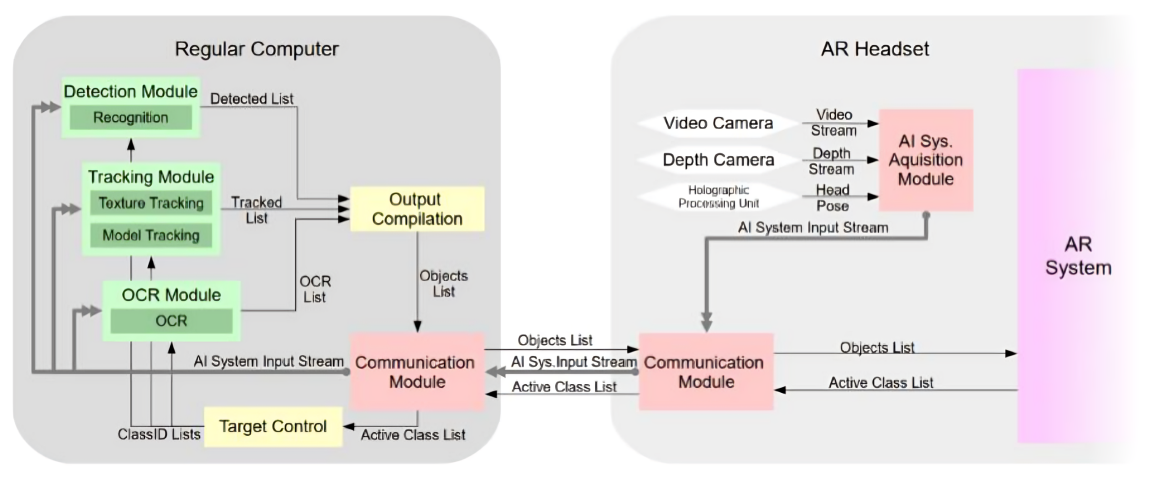
- 本システムは、Microsoft HoloLens 2を用いて、リアルタイムでRGB、深度、慣性センサデータを取得し、デバイス内および外部での処理を実行する。
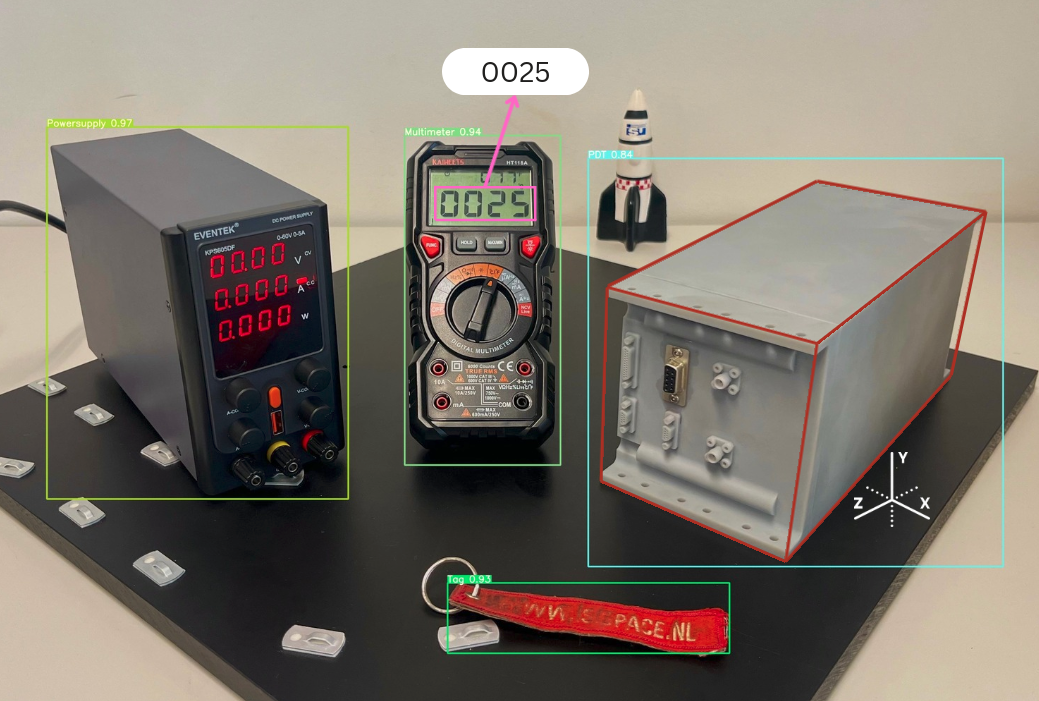
- 2段階のコンピュータビジョンパイプラインにより、YOLOv5ベースのモデルを用いたオブジェクト検出と、専用の回帰ヘッドを用いた6次元ポーズ推定を実施する。
- 光学的文字認識(OCR)は、数値およびアルファヌメリック文字の読み取りを目的とした、合成データで訓練されたCRNNベースのモデルを採用する。
- 合成データは、衛星部品の3Dモデルを用いて生成され、多様な照明条件や視点を模擬することで、モデルの汎化性能を高める。
- セグメンテーションのためのアノテーションモデル(SAMAL)により、インスタンスセグメンテーションとバウンディングボックスの自動アノテーションが可能となり、ラベリング時間を最大20倍短縮した。
- 本システムはオフライン動作を設計しており、セキュアで制御されたクリーンルーム環境での信頼性を確保する。
実験結果
リサーチクエスチョン
- RQ1AI駆動のARシステムは、衛星AITワークフローにおいて、リアルタイムで高精度なオブジェクト検出と6次元ポーズ推定を達成できるか?
- RQ2実世界データが不足する動的な衛星部品認識のためのAIモデルを訓練する際、合成データはどの程度有効か?
- RQ3SAMALによる自動データラベリングは、モデル性能に悪影響を及げることなく、ラベリング時間をどの程度短縮できるか?
- RQ4静的またはゆっくり変化する計器ディスプレイの文字認識において、OCRモデルは実環境条件下で高い精度を達成できるか?
- RQ5リアルタイムコンピュータビジョンとARヘッドセットの統合は、衛星組立における技術者支援とミス低減をどの程度向上できるか?
主な発見
- オブジェクト検出モデルは95.3%の精度を達成し、信頼できるAITアプリケーションのための70%の閾値を大きく上回った。
- 6次元ポーズ推定モデルは70%以上の精度を示し、リアルタイム制約下でも優れた性能を発揮した。
- OCRパイプラインは、数値読み取りにおいて96.03%の精度を達成した。また、正解バウンディングボックス上で訓練されたCRNNモデルは98.36%の精度に達した。
- SAMALモデルにより、人的な手動ラベリングに比べ最大20倍の高速化が実現され、データパイプラインの効率が著しく向上した。
- OCR認識の推論速度は188.82 FPSに達し、高い精度を維持しながらもリアルタイム要件を満たした。
- 訓練済みOCRモデルは、事前学習済みのEasyOCRモデルを96ポイント以上上回る精度を示し、合成データによるファインチューニングの有効性を裏付けた。
この論文を読む
Nubintのビューアで原文を開き、読みながら気になる箇所をすぐに質問できます。
Nubintでこの論文を読むこのレビューはAIが論文の原文をもとに作成しました。引用する前に原文をご確認ください。