
[論文レビュー] Binary black hole spins: model selection with GWTC-3
本研究では、GWTC-3に含まれる59件の信頼性の高い二重ブラックホール合体事象を用いて、質量星における角運動量輸送に基づくスピンモデルを階層ベイズ推論で検証した。その結果、スピンがほとんどゼロに近いモデルは観測データと整合しないことが判明した一方で、潮汐的にスピンアップしたブラックホールの小規模なサブポピュレーションを含むモデルは良好なフィットを示し、予備的スピンパラメータが形成メカニズムを制約する上で極めて重要な役割を果たすことが明らかになった。
The origin of the spins of stellar-mass black holes is still controversial, and angular momentum transport inside massive stars is one of the main sources of uncertainty. Here, we apply hierarchical Bayesian inference to derive constraints on spin models from the 59 most confident binary black hole merger events in the third gravitational-wave transient catalogue (GWTC-3). We consider up to five parameters: chirp mass, mass ratio, redshift, effective spin, and precessing spin. For model selection, we use a set of binary population synthesis simulations spanning drastically different assumptions for black hole spins and natal kicks. In particular, our spin models range from maximal to minimal efficiency of angular momentum transport in stars. We find that, if we include the precessing spin parameter into our analysis, models predicting only vanishingly small spins are in tension with GWTC-3 data. On the other hand, models in which most spins are vanishingly small, but that also include a sub-population of tidally spun-up black holes are a good match to the data. Our results show that the precessing spin parameter has a crucial impact on model selection.
研究の動機と目的
- 第3期カタログ(GWTC-3)の重力波データを用いてブラックホールスピンモデルを制約すること。
- 質量星における角運動量輸送効率がブラックホールスピン分布に与える影響を検証すること。
- すべてのスピンがほとんどゼロに近いと予測するモデルが、観測された二重ブラックホール合体と整合するか評価すること。
- 初期スピンと予備的スピンの役割がモデル選択に与える影響を評価すること。
提案手法
- GWTC-3に含まれる59件の信頼性の高い二重ブラックホール合体事象に対して階層ベイズ推論を適用した。
- 5つのパラメータをモデル化した:チルプ質量、質量比、赤方偏移、有効スピン、予備的スピン。
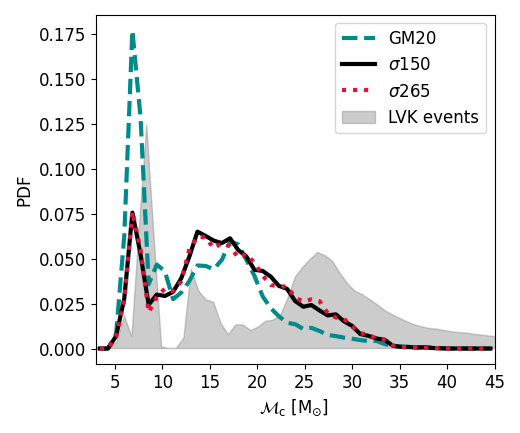
- 異なる角運動量輸送(非効率的から非常に効率的)および初期キックモデルを想定した、バイナリープーピュレーションシミュレーションのスイートを用いた。
- 最小スピン(F)から効率的輸送(M、Max)までのモデルを想定し、一部のケースでは潮汐的にスピンアップしたブラックホール(B21)を含めた。
- スピンおよびキック仮定の下で、対数尤度値の比較を用いてモデル選択を行った。
- モデル識別に与える影響を評価するために、予備的スピンパラメータ χp を明示的に含めた。
実験結果
リサーチクエスチョン
- RQ1どのブラックホールスピンモデルがGWTC-3の観測スピン分布と最も整合性を持つのか?
- RQ2予備的スピンパラメータ χp の導入は、モデル選択の結果に顕著な影響を及ぼすか?
- RQ3すべてのブラックホールスピンがほとんどゼロに近いと予測するモデルは、GWTC-3のデータと整合するか?
- RQ4異なる初期キックモデル(σ=150, 265 km/s、および G20)は、観測データへのフィットにどのように影響するか?
- RQ5潮汐的にスピンアップしたブラックホールは、観測スピン分布を説明する上で果たす役割は何か?
主な発見
- すべてのスピンがほとんどゼロに近いと予測するモデル(F)は、GWTC-3のデータと矛盾しており、棄却された。
- 主に低スピンだが、潮汐的にスピンアップしたブラックホールのサブポピュレーションを含むモデル(F_B21)は、観測データと良好なフィットを示した。
- 角運動量輸送が非効率なモデル(G および G_21)は、効率的輸送モデル(M、M_B21、Max、Max_B21)に比べて顕著に低い対数尤度値を示した。
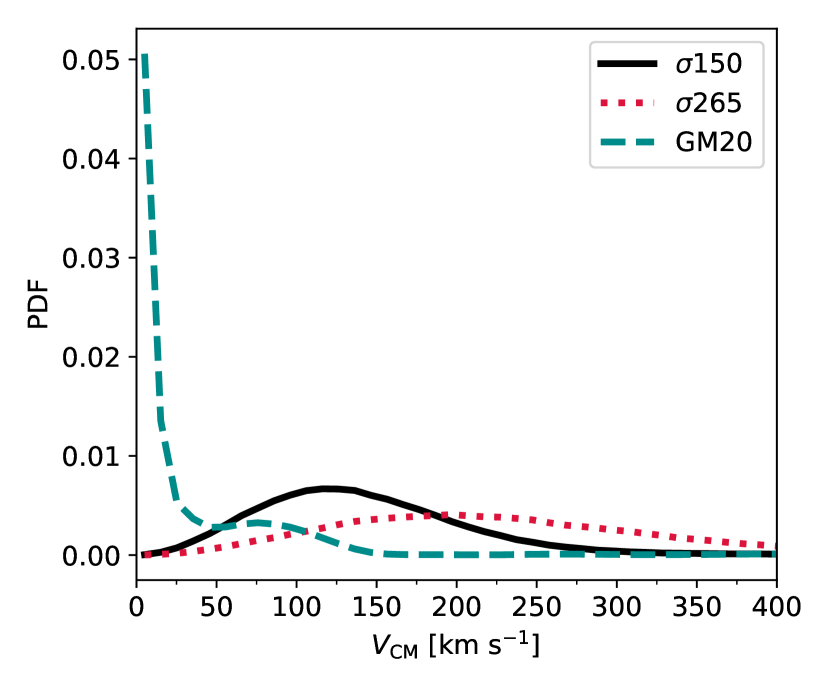
- 大きな初期キック(σ=265 および σ=150 km/s)を想定するモデルは、低キックの G20 モデルよりも好まれた。
- 予備的スピンパラメータ χp は、スピンモデル間の区別に重要な役割を果たし、モデル選択の感度を向上させた。
- データはスピン-軌道の不整合性に関するやや強い証拠を示しており、分析に予備的スピンを含めることが支持された。
この論文を読む
Nubintのビューアで原文を開き、読みながら気になる箇所をすぐに質問できます。
Nubintでこの論文を読むこのレビューはAIが論文の原文をもとに作成しました。引用する前に原文をご確認ください。