
[論文レビュー] Bootstrapping LLM-based Task-Oriented Dialogue Agents via Self-Talk
本稿では、タスク指向対話におけるクライアントとエージェントを模倣する2つのLLMを用いて、高品質な学習データを生成する自己対話フレームワークを提案する。自動化された指標を用いて成功した会話をフィルタリングすることで、最小限の人的データで対話ポリシー学習を著しく向上させ、自動評価および人的評価の両面でベースラインの微調整よりも優れた性能を達成する。
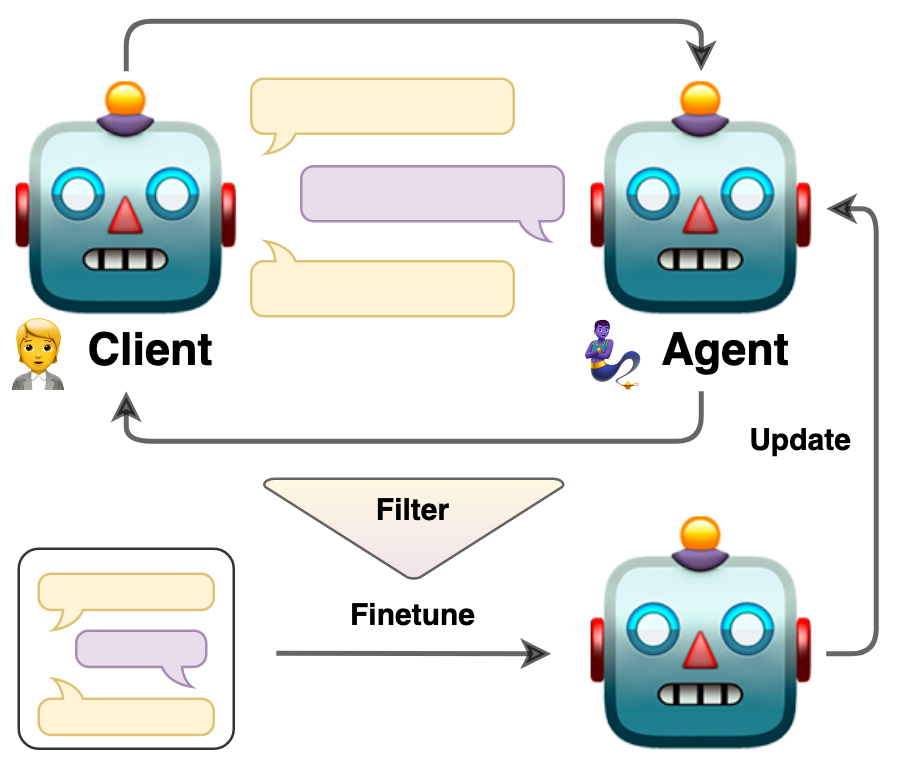
Large language models (LLMs) are powerful dialogue agents, but specializing them towards fulfilling a specific function can be challenging. Instructing tuning, i.e. tuning models on instruction and sample responses generated by humans (Ouyang et al., 2022), has proven as an effective method to do so, yet requires a number of data samples that a) might not be available or b) costly to generate. Furthermore, this cost increases when the goal is to make the LLM follow a specific workflow within a dialogue instead of single instructions. Inspired by the self-play technique in reinforcement learning and the use of LLMs to simulate human agents, we propose a more effective method for data collection through LLMs engaging in a conversation in various roles. This approach generates a training data via "self-talk" of LLMs that can be refined and utilized for supervised fine-tuning. We introduce an automated way to measure the (partial) success of a dialogue. This metric is used to filter the generated conversational data that is fed back in LLM for training. Based on our automated and human evaluations of conversation quality, we demonstrate that such self-talk data improves results. In addition, we examine the various characteristics that showcase the quality of generated dialogues and how they can be connected to their potential utility as training data.
研究の動機と目的
- 人的アノテーションデータが不足または高価である状況において、高品質でタスク固有の対話データを取得する課題に対処すること。
- LLMがクライアントとエージェントのロールプレイによる会話を自律的に生成することで、有用で構造的な対話データを生成できるかどうかを検討すること。
- 会話の成功と一貫性を評価するための自動指標を開発し、低品質または話題から外れた会話をフィルタリングすること。
- 自己対話で生成されたデータの有効性を、教師あり微調整を用いてタスク指向対話エージェントの性能向上にどのように寄与するかを評価すること。
- 訓練データのキュレーションに役立つ、部分目標の順守度と会話構造に基づく異なるフィルタリング戦略の有効性を評価すること。
提案手法
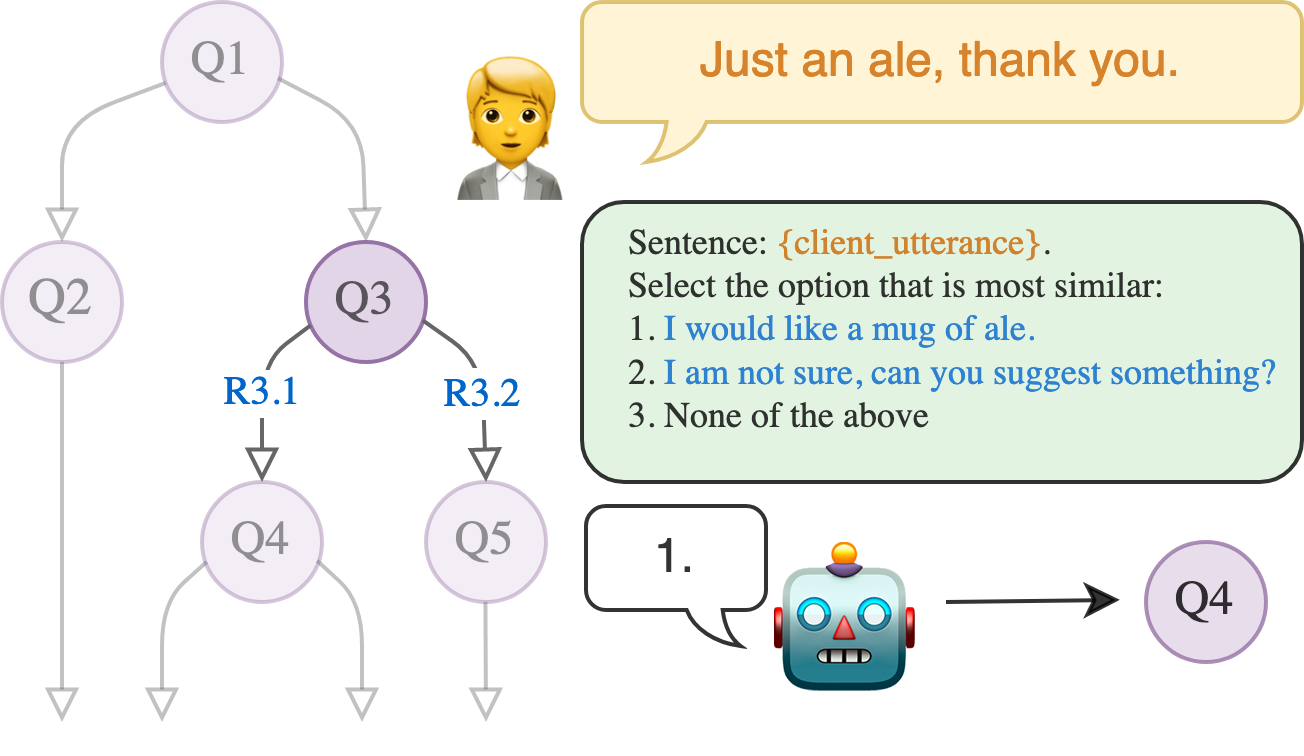
- 2つのLLMを、人物像と目的を持つクライアント(ロール)と、固定された対話ポリシーを持つエージェント(ロール)としてプロンプトし、タスク指向対話のシミュレーションを行う。
- 各会話は、部分目標の達成度と会話の一貫性に基づく成功指標を用いて自動的に評価され、高品質なサンプルをフィルタリング可能となる。
- フィルタリングされた会話は、教師あり微調整を用いてエージェントモデルに適用され、意図された対話ワークフローへの適合性が向上する。
- 部分目標の達成割合や絶対的達成数といった複数のフィルタリング戦略を検討し、モデル性能に与える影響を評価する。
- 自動指標と人的評価の両方を用いて、人的データで微調整したベースラインと比較して、モデルの行動を評価する。
- 本手法は、希望の実現、呪いの行使、商品の販売、富の授与といった多様なタスクシナリオに適用され、汎用性が示された。
実験結果
リサーチクエスチョン
- RQ1LLMは、クライアントとエージェントのロールプレイによる自己対話によって、人的アノテーションデータに依存せずに高品質でタスク固有の対話データを生成できるか?
- RQ2自動指標は、LLMが生成する会話から成功した会話および一貫性のある会話を特定するためにどの程度有効か?
- RQ3部分目標の達成に基づいて自己対話データをフィルタリングすることで、微調整された対話エージェントの性能が向上するか?
- RQ4自己対話データで微調整されたエージェントの性能は、人的アノテーションデータで微調整されたエージェントと比較して、自動評価および人的評価の両方で優れているか?
- RQ5タスク指向対話エージェントの訓練データとしての有効性と相関する、生成された会話の特徴は何か?
主な発見
- 自己対話手法は、人的アノテーションデータが存在しない状況でも、多様で構造的な会話を成功裏に生成し、意図されたタスクワークフローと整合する。
- 自動成功指標を用いた会話のフィルタリングにより、訓練データの品質が著しく向上し、一般化性能が向上し、幻覚の発生が減少する。
- 部分目標に基づくフィルタリングを用いた自己対話データで微調整されたエージェントは、人的データで微調整されたベースラインモデルよりも、会話の成功度と一貫性の両面で優れた性能を示す。
- 人的評価では、フィルタリングされた自己対話データで訓練されたモデルが、フィルタリングなしまたは人的アノテーションデータのみで訓練されたモデルよりも、より自然で目標指向的かつ一貫性のある会話を生成することが確認された。
- 会話中の部分目標達成率は、訓練データの品質を予測する強力な指標であり、高い部分目標達成率は、下流タスクでの優れた性能と相関していた。
- 本手法は、希望の実現、呪いの行使、商品の販売、富の授与といった複数のタスクタイプにわたり、強固な性能を示し、広範な適用可能性を示した。
この論文を読む
Nubintのビューアで原文を開き、読みながら気になる箇所をすぐに質問できます。
Nubintでこの論文を読むこのレビューはAIが論文の原文をもとに作成しました。引用する前に原文をご確認ください。