
[論文レビュー] Challenges and Practices of Deep Learning Model Reengineering: A Case Study on Computer Vision
本論文は、コンピュータビジョン分野におけるディープラーニングモデル再設計を、混合手法の事例研究を通じて調査している。348件の欠陥をオープンソースプロジェクトから分析し、2年間の再設計作業に従事した実務家らのインタビューも実施した。主な課題として、モデル運用化、パフォーマンスデバッグ、操作のポータビリティ、カスタムデータパイプラインが特定され、欠陥頻度とベストプラクティスを注釈した新しい再設計ワークフローが提案された。
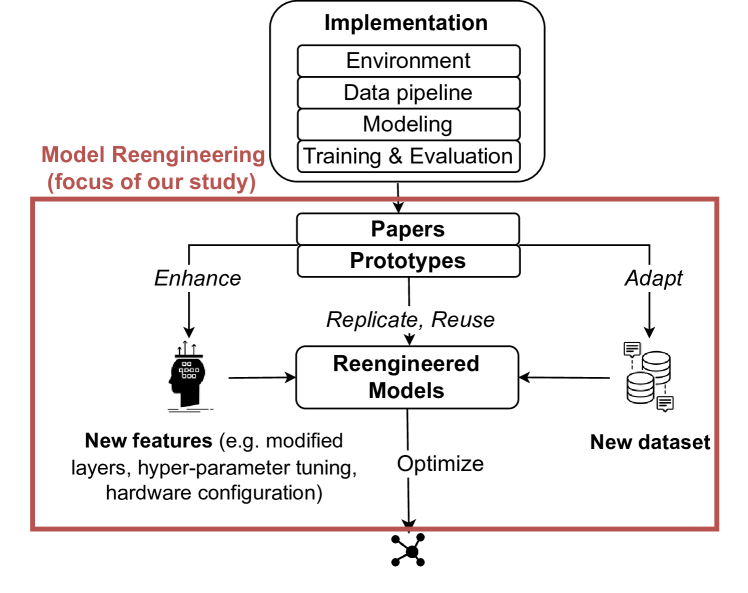
Many engineering organizations are reimplementing and extending deep neural networks from the research community. We describe this process as deep learning model reengineering. Deep learning model reengineering - reusing, reproducing, adapting, and enhancing state-of-the-art deep learning approaches - is challenging for reasons including under-documented reference models, changing requirements, and the cost of implementation and testing. In addition, individual engineers may lack expertise in software engineering, yet teams must apply knowledge of software engineering and deep learning to succeed. Prior work has examined on DL systems from a "product" view, examining defects from projects regardless of the engineers' purpose. Our study is focused on reengineering activities from a "process" view, and focuses on engineers specifically engaged in the reengineering process. Our goal is to understand the characteristics and challenges of deep learning model reengineering. We conducted a case study of this phenomenon, focusing on the context of computer vision. Our results draw from two data sources: defects reported in open-source reeengineering projects, and interviews conducted with open-source project contributors and the leaders of a reengineering team. Our results describe how deep learning-based computer vision techniques are reengineered, analyze the distribution of defects in this process, and discuss challenges and practices. Integrating our quantitative and qualitative data, we proposed a novel reengineering workflow. Our findings inform several future directions, including: measuring additional unknown aspects of model reengineering; standardizing engineering practices to facilitate reengineering; and developing tools to support model reengineering and model reuse.
研究の動機と目的
- ディープラーニングモデル再設計における課題と実務手法を理解すること。特に、コンピュータビジョン分野における再設計を対象とする。
- ディープラーニング再設計プロジェクトにおける欠陥の特性と根本原因を分析すること。
- 再現性や信頼性の低下を引き起こす、環境構成、学習、モデルデプロイメントに関する繰り返し発生する問題を同定すること。
- オープンソースプロジェクトおよび実務チームからの実証的データに基づき、プロセス指向のフレームワークを構築すること。
- 現在の実務におけるギャップを特定することで、将来のツール開発および標準化作業を支援すること。
提案手法
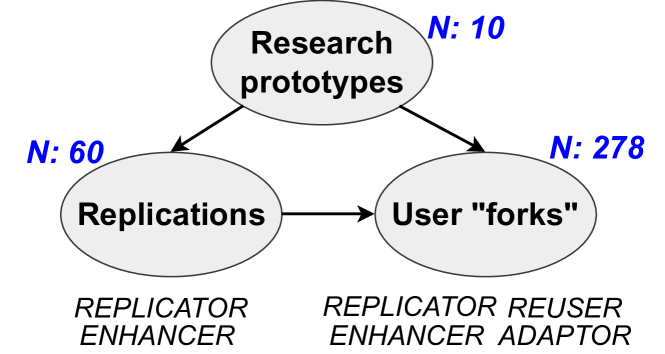
- 27件のオープンソースコンピュータビジョンプロジェクトからの定量的欠陥分析と、定性的なインサイトを統合した混合手法の事例研究を実施した。
- オープンソース再設計プロジェクトで報告された348件の欠陥を、欠陥タイプ、DLライフサイクルの段階、根本原因ごとに分類分析した。
- 2年間のディープラーニングモデル再設計作業に従事した実務家2名とチームリーダー6名のインタビューを通じて、現実世界の課題と実務手法を理解した。
- 既存の欠陥分類体系を適応・適用し、信頼性を確保するための評価者間整合性とキャリブレーションを実施した。
- 定量的欠陥データと定性的インサイトを統合し、課題、実務手法、欠陥頻度を注釈した新しい再設計ワークフローを構築した。
- チームリーダーによるメンバー確認を通じて発見結果を検証し、反復的フレームワークの洗練と外部検証により潜在的なバイアスを低減した。
実験結果
リサーチクエスチョン
- RQ1コンピュータビジョン分野におけるディープラーニングモデル再設計プロジェクトで、最も一般的な欠陥の種別と根本原因は何か?
- RQ2欠陥のパターンは、DLライフサイクルの異なる段階(例:環境設定、学習、推論)でどのように変化するか?
- RQ3事前学習済みディープラーニングモデルの再設計において、エンジニアリングチームが直面する主な課題は何か?
- RQ4特にインターフェースおよびAPI関連の欠陥は、再設計失敗にどのように寄与しているか?
- RQ5長期的なディープラーニングモデル再設計に従事する経験豊富なチームから、どのような実務手法とワークフローのパターンが浮き彫りになるか?
主な発見
- ディープラーニング再設計における58%の欠陥が再利用者によって報告されており、再利用が失敗の主要因であることが示された。
- 再現性関連欠陥の68%が学習段階で発見されたことから、学習段階が重大な失敗要因であることが浮き彫りになった。
- 環境関連欠陥の88%がインターフェース関連であり、46%がAPI欠陥に起因していたことから、ライブラリおよびフレームワーク統合の脆さが浮き彫りになった。
- 学習段階の欠陥は多様な症状と根本原因を示しており、ハイパーパramータチューニングの問題やデータ品質の問題が顕著であり、過去の製品中心の研究と比較してより顕著であった。
- 4つの核心的課題が浮き彫りになった:モデル運用化、パフォーマンスデバッグ、ディープラーニング操作のポータビリティ、カスタムデータパイプライン管理。
- 本研究では、定量的欠陥頻度と定性的実務手法を統合した新しい再設計ワークフローを構築し、DL再設計のためのプロセス指向フレームワークを提供した。
この論文を読む
Nubintのビューアで原文を開き、読みながら気になる箇所をすぐに質問できます。
Nubintでこの論文を読むこのレビューはAIが論文の原文をもとに作成しました。引用する前に原文をご確認ください。