
[論文レビュー] Chebyshev Polynomial-Based Kolmogorov-Arnold Networks: An Efficient Architecture for Nonlinear Function Approximation
本論文は、Kolmogorov-Arnold 表現定理に導かれた多変量関数を近似するために Chebyshev 多項式を用いるネットワーク層 Chebyshev KAN を導入し、 MNIST に類似したタスクとフラクタル様の 2D 関数で有効性を示す。
Accurate approximation of complex nonlinear functions is a fundamental challenge across many scientific and engineering domains. Traditional neural network architectures, such as Multi-Layer Perceptrons (MLPs), often struggle to efficiently capture intricate patterns and irregularities present in high-dimensional functions. This paper presents the Chebyshev Kolmogorov-Arnold Network (Chebyshev KAN), a new neural network architecture inspired by the Kolmogorov-Arnold representation theorem, incorporating the powerful approximation capabilities of Chebyshev polynomials. By utilizing learnable functions parametrized by Chebyshev polynomials on the network's edges, Chebyshev KANs enhance flexibility, efficiency, and interpretability in function approximation tasks. We demonstrate the efficacy of Chebyshev KANs through experiments on digit classification, synthetic function approximation, and fractal function generation, highlighting their superiority over traditional MLPs in terms of parameter efficiency and interpretability. Our comprehensive evaluation, including ablation studies, confirms the potential of Chebyshev KANs to address longstanding challenges in nonlinear function approximation, paving the way for further advancements in various scientific and engineering applications.
研究の動機と目的
- 高次元設定において改良された非線形関数近似の必要性を動機づける。
- Chebyshev に基づく Kolmogorov-Arnold 表現を実装する Chebyshev KAN 層を提案する。
- 画像のようなデータ(MNIST)とフラクタル風の 2D 関数で手法を実証し、近似能力を評価する。
- 多項式次数と入力正規化に関するアブレーション研究を検討し、性能への影響を理解する。
- 今後の方向性と、より広範なニューラルネットワークアーキテクチャへの統合の可能性を概説する。
提案手法
- Kolmogorov-Arnold フレームワークに従い、多変量関数を一変数 Chebyshev 補間関数の重ね合わせとして表現する。
- Chebyshev 評価の前に、入力を tanh 活性化を用いて [-1,1] 区間に正規化する。
- 再帰 T_n(x)=2xT_{n-1}(x)-T_{n-2}(x) を用いて次数 n までの Chebyshev 多項式を計算し、学習可能な係数テンソル Θ を介して出力を組み立てる。
- 出力 Y を、入力次元と多項式次数を跨ぐ Chebyshev 多項式の加重和として形成する: Y= sum_{k=0}^{n} sum_{j=1}^{d_in} T_{j,k} ⊙ Θ_{j,:,k}。
- 選択した損失関数を最小化するように Backpropagation によって Θ を学習する(回帰には MSE、分類には交差エントロピーなど)。
- 機能近似を強化するために、Chebyshev KAN 層をより大きなアーキテクチャ(CNN、RNN など)に組み込むことも検討する。
実験結果
リサーチクエスチョン
- RQ1Chebyshev ベースの KAN 層は、従来の MLP と比較して高次元の連続関数を効果的に近似できるか?
- RQ2多項式次数と入力正規化が近似精度とモデルの複雑さに与える影響は何か?
- RQ3Chebyshev KAN は画像のようなデータ(例: MNIST)および複雑な非線形の 2D/フラクタル風関数でどのように性能を示すか?
主な発見
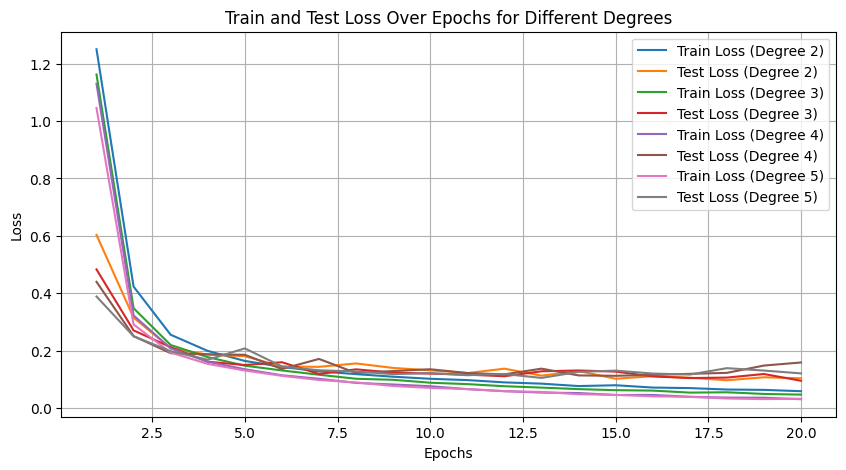
- MNIST 相当の分類では、試験した次数の中で次数 3 の Chebyshev 多項式が最良の精度を達成した(0.9718)、パラメータ数は適度(103,136)。
- 次数 4 はパラメータ数が多いにもかかわらず精度が顕著に低下した(0.9553)。
- 次数 5 は 0.9646 の精度にとどまり、MNIST では次数 3 を超えると収益減少を示唆。
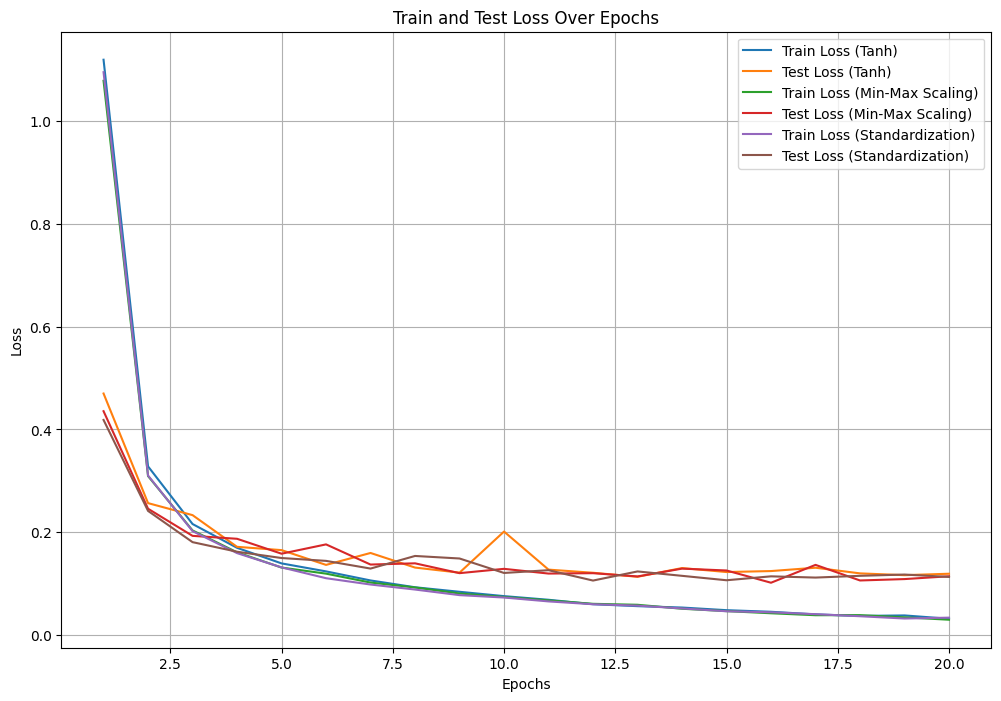
- 入力正規化としての標準化は、MNIST 実験でわずかに tanh および min-max を上回った(0.9692 対 0.9680–0.9683)。
- フラクタル風の 2D 関数の実験は、2D 入力を 8 特徴、次に 16 特徴、最後に 1 出力へとマッピングする 3 層構成で、各層の次数がそれぞれ 8 と 4 の下で、複雑なパターンを捕捉できることを示している。
この論文を読む
Nubintのビューアで原文を開き、読みながら気になる箇所をすぐに質問できます。
Nubintでこの論文を読むこのレビューはAIが論文の原文をもとに作成しました。引用する前に原文をご確認ください。