
[論文レビュー] DAS-N2N: Machine learning Distributed Acoustic Sensing (DAS) signal denoising without clean data
DAS-N2N は、清浄な訓練データを必要とせずに、分散音響センシング(DAS)信号のノイズ除去を実現する弱教師付き深層学習手法である。1本のケーブル内の2本の接続されたファイバーを用いてペairedなノイズあり入力を得ることで、モデルは不整合なノイズを抑制しながら真の信号を保持する学習を行う。これにより、30秒間の985チャネル分のデータに対して1秒未塔のほぼ即時のノイズ除去が可能となり、南極の現場データにおける微小地震イベントの信号対雑音比が顕著に向上する。
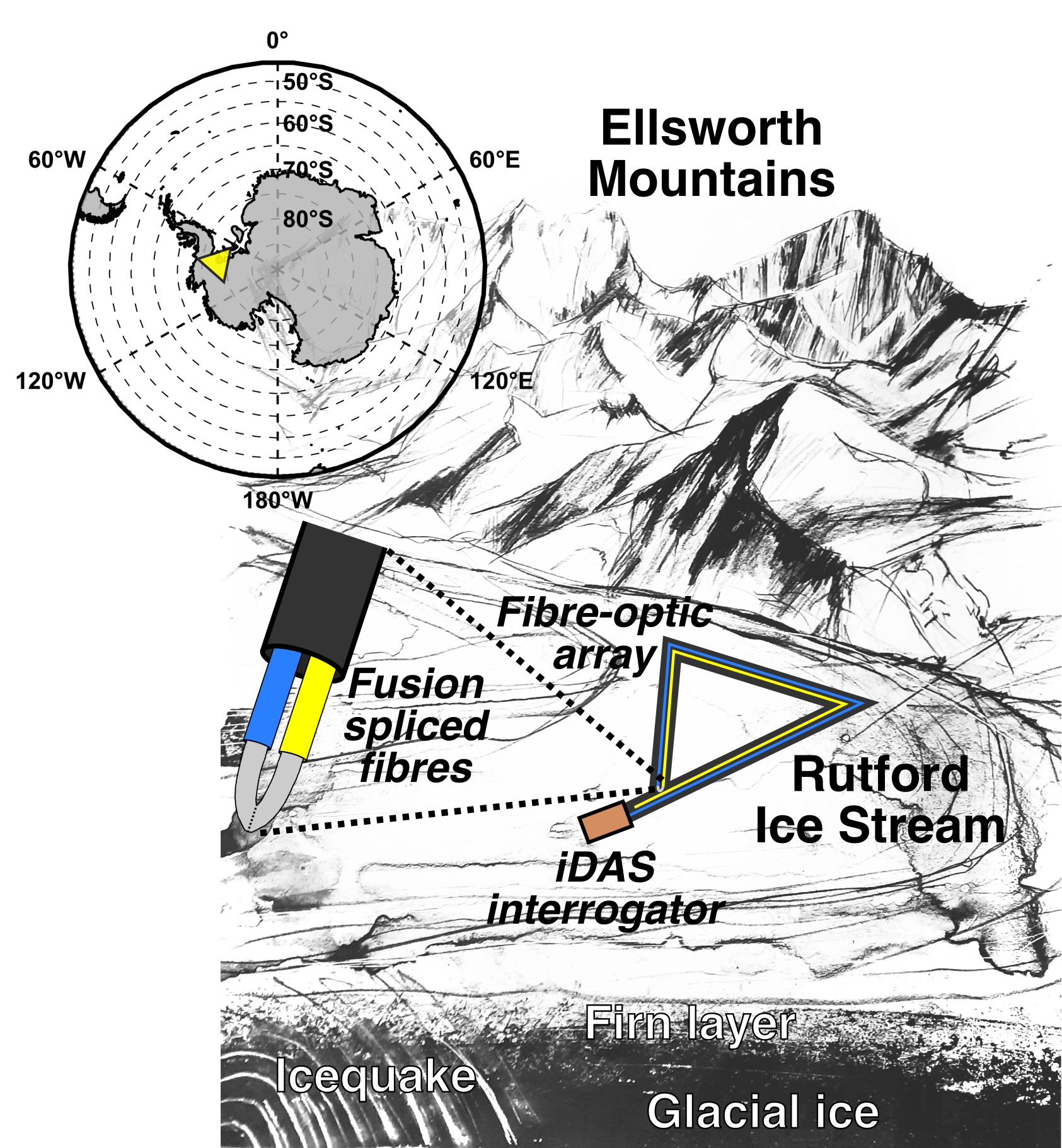
This article presents a weakly supervised machine learning method, which we call DAS-N2N, for suppressing strong random noise in distributed acoustic sensing (DAS) recordings. DAS-N2N requires no manually produced labels (i.e., pre-determined examples of clean event signals or sections of noise) for training and aims to map random noise processes to a chosen summary statistic, such as the distribution mean, median or mode, whilst retaining the true underlying signal. This is achieved by splicing (joining together) two fibres hosted within a single optical cable, recording two noisy copies of the same underlying signal corrupted by different independent realizations of random observational noise. A deep learning model can then be trained using only these two noisy copies of the data to produce a near fully-denoised copy. Once the model is trained, only noisy data from a single fibre is required. Using a dataset from a DAS array deployed on the surface of the Rutford Ice Stream in Antarctica, we demonstrate that DAS-N2N greatly suppresses incoherent noise and enhances the signal-to-noise ratios (SNR) of natural microseismic icequake events. We further show that this approach is inherently more efficient and effective than standard stop/pass band and white noise (e.g., Wiener) filtering routines, as well as a comparable self-supervised learning method based on masking individual DAS channels. Our preferred model for this task is lightweight, processing 30 seconds of data recorded at a sampling frequency of 1000 Hz over 985 channels (approx. 1 km of fiber) in $<$1 s. Due to the high noise levels in DAS recordings, efficient data-driven denoising methods, such as DAS-N2N, will prove essential to time-critical DAS earthquake detection, particularly in the case of microseismic monitoring.
研究の動機と目的
- 遠隔地や過酷な環境において、DAS記録に含まれる高いランダムノイズが、微弱な微小地震信号の検出を困難にしているという課題に対処すること。
- 手動で整備された清浄信号例やラベルを必要としないノイズ除去手法を開発し、スケーラブルな展開を可能とすること。
- 既存の光ケーブルに内蔵された二重ファイバー構成の内在的冗長性を活用し、2つの独立したノイズ実現からのみのノイズありデータを用いて、モデルを訓練すること。
- エッジデプロイメントに適したリアルタイムで効率的かつ軽量なノイズ除去を実現し、地震観測や条約適合性確認などの時間的に重要な応用に適すること。
- 南極のルトフード氷河流で得られた実世界のDASデータを用いて、環境ノイズによって著しく劣化した信号対雑音比において、本手法の有効性を実証すること。
提案手法
- 同じ地下地震信号の2つの独立したノイズありコピーを、1本の光ケーブル内の2本の接続ファイバーで記録する。各コピーは異なるランダムノイズ実現によって汚染されている。
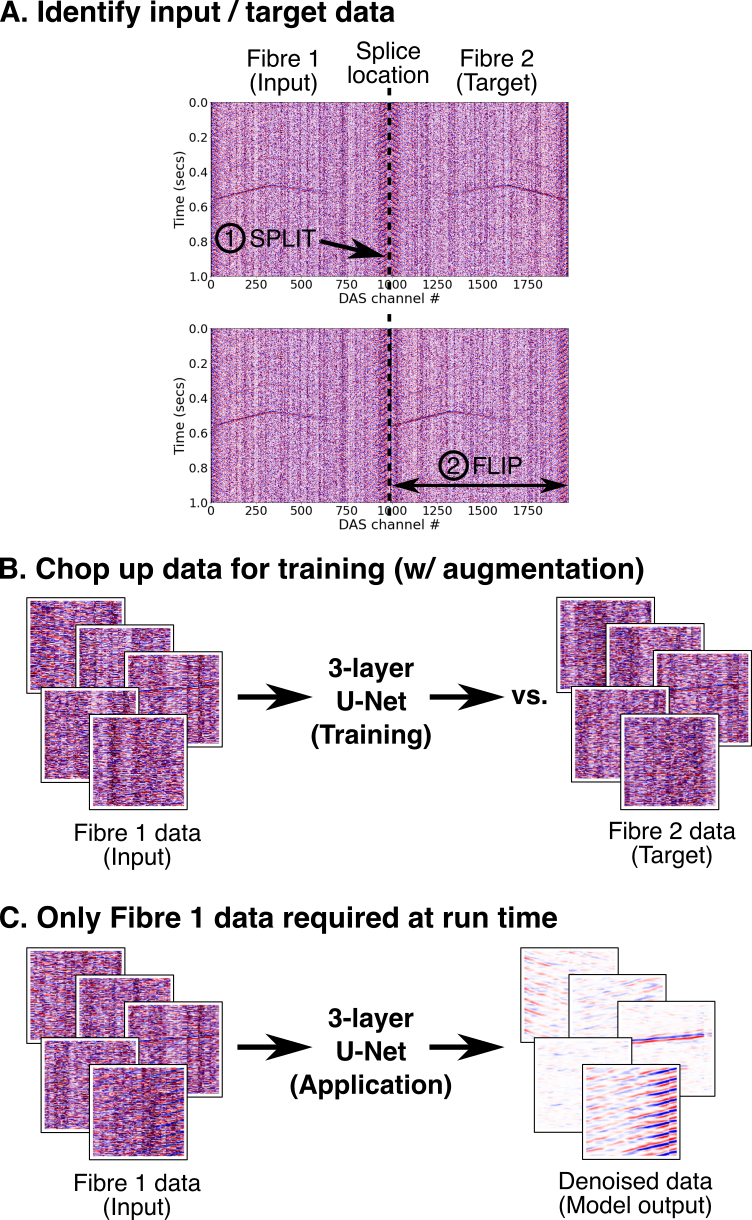
- 2つのノイズありファイバー記録を入力およびターゲットとして用い、清浄信号ラベルが一切不要なエンドツーエンド学習を可能にする深層ニューラルネットワークを訓練する。
- 1対1マッピング戦略を採用し、1つのノイズあり入力を、もう一方のノイズありコピーとの差分を最小化するように変換することで、ノイズ分布を効果的に学習する。
- 高速性と低計算コストを最適化した軽量で浅いネットワークアーキテクチャ(例:3層)を用い、標準ハードウェア上でのリアルタイム推論を可能にする。
- 1 kmのファイバー・セグメントに属する985チャネルのデータ(1000 Hzでサンプリング)を、スライディング・ウィンドウ方式で処理し、推論時間を1秒未塔に抑える。
- 訓練後、二重ファイバー記録を必要としない単一ファイバーデータに対しても、訓練済みモデルをデプロイ可能であり、運用時の追加のデータ保存や処理コストが不要となる。
実験結果
リサーチクエスチョン
- RQ1機械学習モデルは、手動でラベル付けされた清浄データや信号例が一切不要な状況でも、DAS信号のノイズ除去を効果的に行えるか?
- RQ2DAS-N2N の性能は、帯域内ノイズを抑制するという点で、従来のフィルタリング手法(例:バンドパス、ウィーナー)と比較してどうなるか?
- RQ3高ノイズ環境下において、チャンネルマスキングに基づく自己教師付き学習手法と比較して、DAS-N2N はスピード、精度、ノイズ抑制の面で優れているか?
- RQ4軽量なDAS-N2Nモデルが、微小地震監視や早期警報システムなどの時間的に重要な応用に、リアルタイム処理をどの程度達成できるか?
- RQ5DAS-N2Nアプローチは、スプライス構成を用いたリトレーニングにより、スプライスのない既存のDAS展開に対しても一般化可能で適用可能か?
主な発見
- DAS-N2N は、南極のルトフード氷河流から得られたDAS記録において、不整合なノイズを効果的に抑制し、自然発生の微小地震氷河地震イベントの信号対雑音比を顕著に向上させた。
- DAS-N2N は、1枚のGPU上で985チャネル、1000 Hz、30秒分のデータを1秒未塔で処理でき、リアルタイムまたはほぼリアルタイムの応用に適している。
- マスキングと再構築プロセスが不要なため、マスキングに基づく類似の自己教師付き学習手法と比較して、10倍以上も高速である。
- 周波数ベースのフィルタとは異なり、信号の周波数帯域内に存在するノイズも効果的に抑制できる。これは、従来のフィルタリング手法の限界である。
- ノイズレベルが上昇する中で生じる自己教師付きマスキングアプローチに内在する補間の課題を回避するため、1対1マッピングにより真の信号を保持している。
- 訓練済みモデルは、訓練後、追加のデータ保存や処理コストが不要な単一ファイバーデータに対してもデプロイ可能である。
より良い研究を、今すぐ始めましょう
論文の読解から最終レビューまで、研究時間を劇的に削減しましょう。
クレジットカード登録不要
このレビューはAIが作成し、人間の編集者が確認しました。