
[論文レビュー] DisDet: Exploring Detectability of Backdoor Attack on Diffusion Models
本稿では、汚染済みのノイズ入力と健全なノイズ入力の間の分布の差異を活用することで、拡散モデルにおけるバックドアトレインの検出と回避を可能にする、新しいフレームワークであるDisDetを紹介する。低コストの検出メカニズムを提案し、100%の検出精度を達成するとともに、近似的に100%の通過率で検出を回避するステルス性の高いトレイン設計を実現。複数のデータセットおよびモデルにおいて、高い攻撃性能と健全な生成品質を維持する。
In the exciting generative AI era, the diffusion model has emerged as a very powerful and widely adopted content generation and editing tool for various data modalities, making the study of their potential security risks very necessary and critical. Very recently, some pioneering works have shown the vulnerability of the diffusion model against backdoor attacks, calling for in-depth analysis and investigation of the security challenges of this popular and fundamental AI technique. In this paper, for the first time, we systematically explore the detectability of the poisoned noise input for the backdoored diffusion models, an important performance metric yet little explored in the existing works. Starting from the perspective of a defender, we first analyze the properties of the trigger pattern in the existing diffusion backdoor attacks, discovering the important role of distribution discrepancy in Trojan detection. Based on this finding, we propose a low-cost trigger detection mechanism that can effectively identify the poisoned input noise. We then take a further step to study the same problem from the attack side, proposing a backdoor attack strategy that can learn the unnoticeable trigger to evade our proposed detection scheme. Empirical evaluations across various diffusion models and datasets demonstrate the effectiveness of the proposed trigger detection and detection-evading attack strategy. For trigger detection, our distribution discrepancy-based solution can achieve a 100\% detection rate for the Trojan triggers used in the existing works. For evading trigger detection, our proposed stealthy trigger design approach performs end-to-end learning to make the distribution of poisoned noise input approach that of benign noise, enabling nearly 100\% detection pass rate with very high attack and benign performance for the backdoored diffusion models.
研究の動機と目的
- 既存の研究においてあまり検討が行われていないが、極めて重要な指標である、拡散モデルにおけるバックドアトレインの検出可能性を体系的かつ包括的に調査すること。
- 入力ノイズの分布差異に基づく、低コストで効果的なトレイン検出メカニズムの開発。バックドア攻撃に対する防御を目的とする。
- 健全なノイズとの分布差異を最小限に抑えることで、検出を回避するステルス性の高いバックドアトレインの設計。
- 提案された検出および回避戦略が、多様な拡散モデルおよびデータセットにおいて評価され、耐障害性および一般化性能が保証されること。
提案手法
- 入力ノイズの統計的分布を比較することで、汚染済み入力を同定する、分布差異に基づく検出メカニズムを提案。勾配ベース最適化を可能にするため、微分可能なヒストグラム近似を用いる。
- トレイン学習中に汚染済みノイズとクリーンノイズの間の分布ギャップを最小化するためのPDD(ペアワイズ分布差異)損失関数を導入。
- 非微分可能な分布差異測定の代わりに、微分可能なヒストグラム関数 $ h_d(\cdot) $ をサーヴィレートとして用い、トレインのエンドツーエンド学習を可能にする。
- 汚染済み入力におけるノイズ予測能力を向上させるために、ノイズ一貫性(NC)損失を組み込む。これにより、画像品質および生成忠実度が向上する。
- PDDおよびNC損失を併用して、トレインパターンをエンドツーエンドで学習。同時に、ステルス性と性能最適化を実現。
- CIFAR-10、CelebA、ImageNetのデータセットを用い、複数の拡散モデルアーキテクチャにおいて、検出および回避性能を評価。
実験結果
リサーチクエスチョン
- RQ1入力ノイズにおける分布差異は、拡散モデルにおけるバックドアトレインの検出に信頼性のあるマーカーとして機能するか?
- RQ2分布差異に基づく検出メカニズムは、既存のバックドア攻撃から汚染済み入力を同定するのにどの程度有効か?
- RQ3健全なノイズとの分布差異を最小限に抑えることで、検出を回避するバックドアトレインを設計可能か?
- RQ4ステルス性のあるトレインは、検出を回避しつつ、どの程度高い攻撃成功率と健全な生成品質を維持できるか?
主な発見
- 提案された分布差異に基づく検出メカニズムは、先行研究で使用されたすべてのバックドアトレインに対して100%の検出率を達成し、高い信頼性を示した。
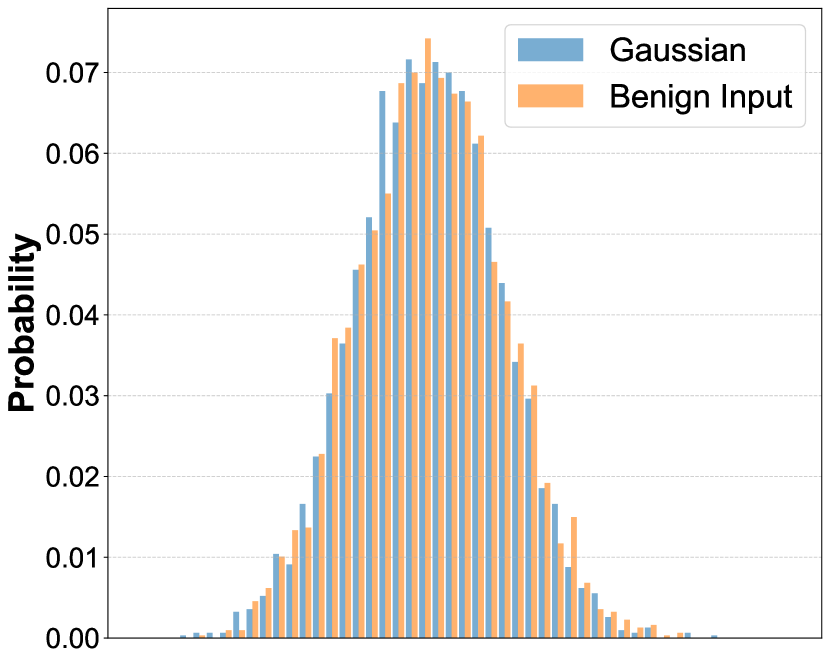
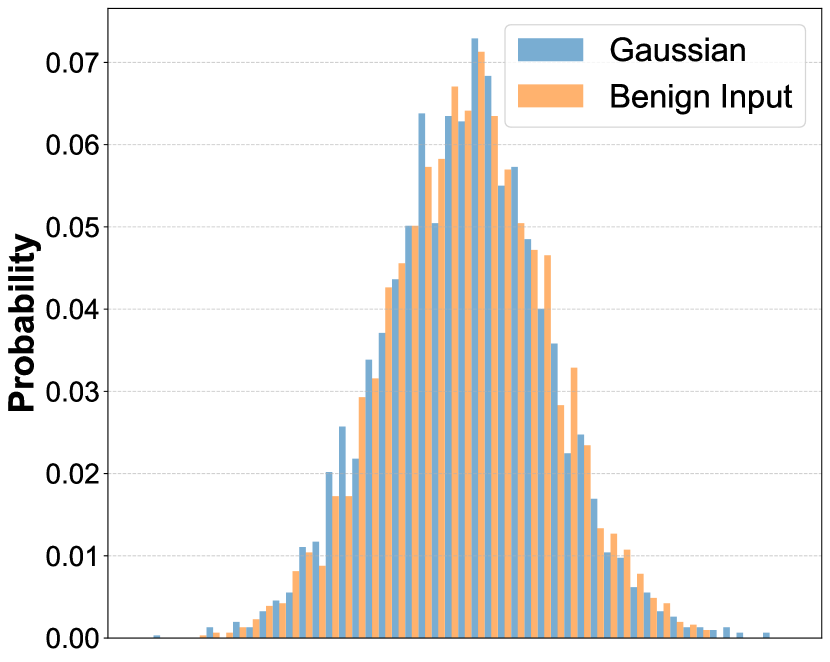
- PDD最適化によるトレイン設計により、CIFAR-10ではPDDスコアが0.023にまで低下し、分布差異が著しく低減され、ステルス性が向上した。
- トレイン中、トレイン値の絶対平均が増加し、ガウス分布に近づく傾向を示し、検出可能性が低下した。
- NC損失の導入により、ベースラインと比較してFIDスコアが最大130.8ポイント低下し、健全および攻撃設定の両方で画像品質が著しく向上した。
- ステルス性のあるトレインの検出通過率はほぼ100%に達し、検出を効果的に回避しつつ、高い性能を維持していることが確認された。
- 可視化結果から、PDD最適化トレインは、分布的に健全なガウスノイズと区別がつかない汚染済み入力を生成することが確認された。
この論文を読む
Nubintのビューアで原文を開き、読みながら気になる箇所をすぐに質問できます。
Nubintでこの論文を読むこのレビューはAIが論文の原文をもとに作成しました。引用する前に原文をご確認ください。