
[論文レビュー] DPAdapter: Improving Differentially Private Deep Learning through Noise Tolerance Pre-training
DPAdapterは、2バッチ戦略を用いた変更版Sharpness-Aware Minimization(SAM)を用いて、ノイズ耐性の高い事前学習を行うことで、微分プライバシー(DP)ディープラーニングを向上させる。これにより、モデルのロバストネスと精度が著しく向上し、ε=4の条件下で平均精度を72.92%から77.09%まで向上させる。これは、既存のDPML手法に即座に統合可能なプラグアンドプレイ型の向上手法である。
Recent developments have underscored the critical role of extit{differential privacy} (DP) in safeguarding individual data for training machine learning models. However, integrating DP oftentimes incurs significant model performance degradation due to the perturbation introduced into the training process, presenting a formidable challenge in the {differentially private machine learning} (DPML) field. To this end, several mitigative efforts have been proposed, typically revolving around formulating new DPML algorithms or relaxing DP definitions to harmonize with distinct contexts. In spite of these initiatives, the diminishment induced by DP on models, particularly large-scale models, remains substantial and thus, necessitates an innovative solution that adeptly circumnavigates the consequential impairment of model utility. In response, we introduce DPAdapter, a pioneering technique designed to amplify the model performance of DPML algorithms by enhancing parameter robustness. The fundamental intuition behind this strategy is that models with robust parameters are inherently more resistant to the noise introduced by DP, thereby retaining better performance despite the perturbations. DPAdapter modifies and enhances the sharpness-aware minimization (SAM) technique, utilizing a two-batch strategy to provide a more accurate perturbation estimate and an efficient gradient descent, thereby improving parameter robustness against noise. Notably, DPAdapter can act as a plug-and-play component and be combined with existing DPML algorithms to further improve their performance. Our experiments show that DPAdapter vastly enhances state-of-the-art DPML algorithms, increasing average accuracy from 72.92\% to 77.09\% with a privacy budget of $ε=4$.
研究の動機と目的
- ディファレンシャルプライバシー(DP)ノイズがディープラーニングモデルに引き起こす顕著な性能低下を是正すること。
- アルゴリズム的変更や緩和されたプライバシー定義に依存する既存のDPML手法の限界を克服すること。
- DPノイズに対する直接的な防御メカニズムとして、パラメータのロバストネスを活用し、モデルの有用性を維持すること。
- 下流のDP学習パイプラインを変更せずに、ノイズに強い耐性を持つモデルの耐性を高めるための事前学習技術を開発すること。
- 既存のDPMLアルゴリズムに即座に統合可能であり、多様な下流タスクにおいて一貫した性能向上を実現するようにすること。
提案手法
- 2バッチ戦略を導入したSharpness-Aware Minimization(SAM)フレームワークを変更:大規模バッチで正確な最悪ケースの摂動推定を行い、小規模バッチで効率的な勾配降下を実行する。
- SAMの目的関数を見直し、ノイズに対するパラメータのロバストネスを優先することで、摂動下でもパラメータが安定するように保証する。
- 強化されたSAMバージョンを用いて、公開データ上でモデルを事前学習することで、ノイズへの感受性を低減し、その後のDPファインチューニング段階での耐性を高める。
- 下流のプライベートファインチューニング用に、DP-SGD や DP-FedAvg パイプラインに統合可能な、事前学習済みのDPAdapterモデルをプラグイン部品として統合する。
- 理論的分析により、2バッチアプローチが最悪ケース摂動の推定をより正確に可能にすることで、パラメータのロバストネスが向上することを示している。
- フェデレーテッドラーニング環境にも対応可能であり、DP-FedAvg においてモデル集約時にノイズを適用する際の応用が可能である。
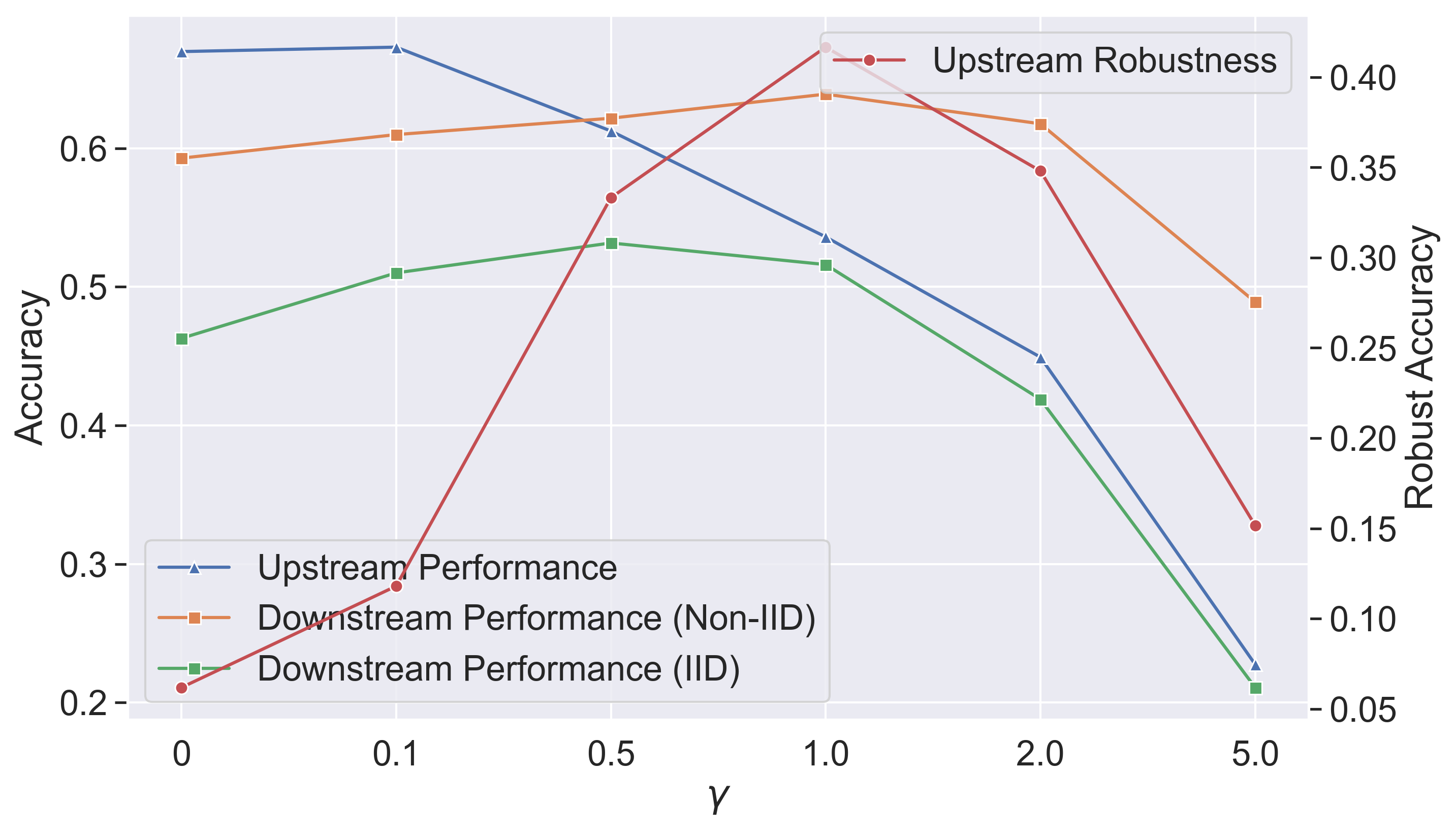
実験結果
リサーチクエスチョン
- RQ1パラメータのロバストネスを事前学習で向上させることで、ディファレンシャルプライバシー(DP)ノイズが引き起こす性能低下を顕著に低減できるか?
- RQ22バッチによるSAMの最適化は、標準的なSAMと比較して、微分プライバシー(DP)モデルの精度をどのように向上させるか?
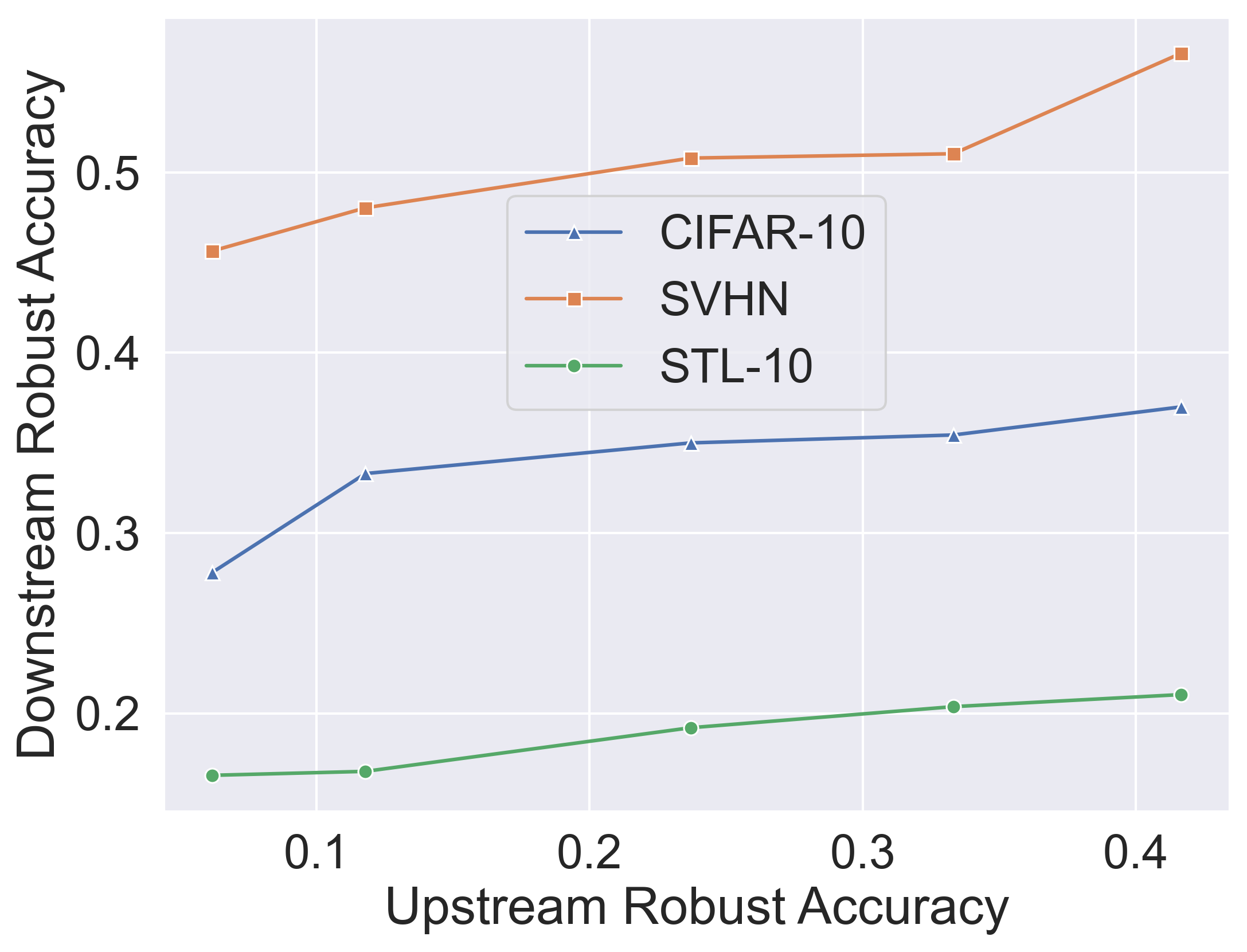
- RQ3ノイズ耐性を持つ事前学習済みモデルは、CIFAR-10、SVHN、STL-10などの多様なプライベートデータセットにおいて、下流タスクの性能をどの程度向上できるか?
- RQ4DPAdapterは、アーキテクチャの変更なしに、DP-SGD や DP-FedAvg などの既存のDPMLフレームワークに効果的に統合可能か?
- RQ5事前学習段階で明示的に最適化されたパラメータのロバストネスは、入力のロバストネスやアルゴリズムの再設計に比べ、より効果的な防御メカニズムとなるか?
主な発見
- DPAdapterは、CIFAR-10、SVHN、STL-10の全データセットにおいて、ε=4のプライバシー予算下で平均精度を72.92%から77.09%まで向上させる。
- DPAdapterにおける2バッチ戦略により、最悪ケース摂動の推定がより正確に可能となり、顕著に向上したパラメータのロバストネスが実現される。
- 本手法は、複数の下流タスクにわたり一貫した性能向上を達成しており、特定の1つのデータセットに限定されない広範な適用可能性を示している。
- DPAdapterはプラグアンドプレイ部品として機能し、下流の学習パイプラインを変更することなく、最先端のDPMLアルゴリズムを効果的に向上させる。
- 理論的分析により、2バッチ設計が摂動推定の分散を低減することで、より安定したパラメータ更新が可能になることが確認され、ロバストネスの向上が裏付けられている。
- 本アプローチはフェデレーテッドラーニングへも拡張可能であり、DP-FedAvg に適用することで、モデル更新の集約段階での保護が可能となる。
この論文を読む
Nubintのビューアで原文を開き、読みながら気になる箇所をすぐに質問できます。
Nubintでこの論文を読むこのレビューはAIが論文の原文をもとに作成しました。引用する前に原文をご確認ください。