
[論文レビュー] Emotion Analysis in NLP: Trends, Gaps and Roadmap for Future Directions
154 NLP論文(2014–2022)における感情分析(EA)に関する包括的レビューで、定義、フレームワーク、データセット、応用、ギャップ、および今後の作業のロードマップを特定。
Emotions are a central aspect of communication. Consequently, emotion analysis (EA) is a rapidly growing field in natural language processing (NLP). However, there is no consensus on scope, direction, or methods. In this paper, we conduct a thorough review of 154 relevant NLP publications from the last decade. Based on this review, we address four different questions: (1) How are EA tasks defined in NLP? (2) What are the most prominent emotion frameworks and which emotions are modeled? (3) Is the subjectivity of emotions considered in terms of demographics and cultural factors? and (4) What are the primary NLP applications for EA? We take stock of trends in EA and tasks, emotion frameworks used, existing datasets, methods, and applications. We then discuss four lacunae: (1) the absence of demographic and cultural aspects does not account for the variation in how emotions are perceived, but instead assumes they are universally experienced in the same manner; (2) the poor fit of emotion categories from the two main emotion theories to the task; (3) the lack of standardized EA terminology hinders gap identification, comparison, and future goals; and (4) the absence of interdisciplinary research isolates EA from insights in other fields. Our work will enable more focused research into EA and a more holistic approach to modeling emotions in NLP.
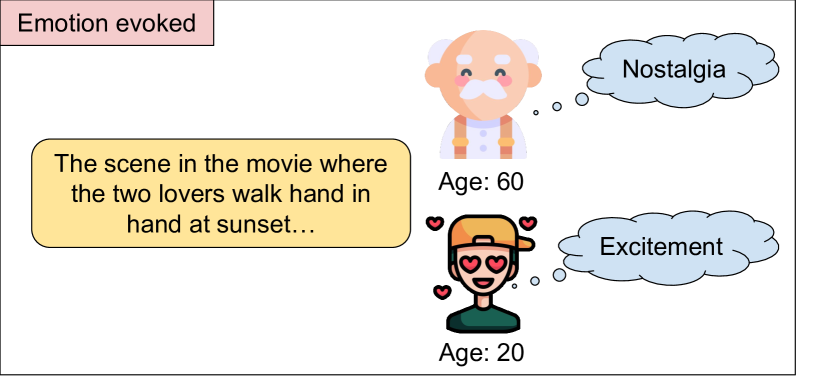
研究の動機と目的
- EAタスクがNLPでどのように定義され、ラベル付けされているかを評価する。
- 主要な感情フレームワークとどの感情がモデル化されているかを特定する。
- EAにおける人口統計学的および文化的主観性への配慮を評価する。
- EAで使用される主要なNLPアプリケーションとデータセットを整理する。
- ギャップに対処しNLPのEAモデリングを改善するロードマップを提案する。
提案手法
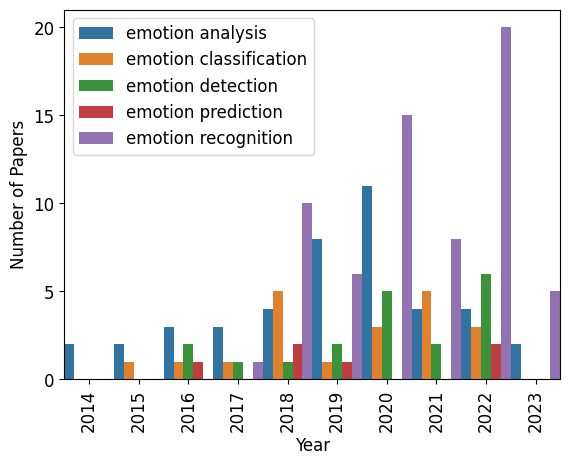
- ACL AnthologyからEAに関連するキーワードを用いて2014–2022年の154件のNLP論文を調査する。
- 使用される感情、モデル、言語、データソース、モダリティ、用語法、応用によって論文を分類する。
- EkmanおよびPlutchikモデルの優位性と離散感情カテゴリの普及を分析する。
- データの多様性、注釈スキーム、用語の一貫性、学際性を評価する。
- 実証的な推奨を含むロードマップに所見を統合する。
実験結果
リサーチクエスチョン
- RQ1How are EA tasks defined in NLP and what terminology is used?
- RQ2What emotion frameworks dominate EA in NLP and which emotions are modeled?
- RQ3Do EA studies account for demographic or cultural subjectivity in data or labels?
- RQ4What are the primary NLP applications and datasets used for EA?
- RQ5What gaps exist and what directions are proposed for future EA research?
主な発見
- EAタスクの用語は多様で、分類/認識が最も一般的で、用語はしばしば同義で使われる。
- Ekmanの離散感情が最もよく使われるフレームワークで、Plutchikのモデルが次に一般的である;次元的および成分的モデルはあまり表れていない。
- 多くの研究はデータやモデリングに人口統計的または文化的要因を組み込んでおらず、主観性のギャップを浮き彫りにしている。
- 会話における感情認識が最も顕著なEAアプリケーションで、次いで物語テキスト分析と医療関連の用途である。
- ほとんどのデータセットは英語で、映画/テレビから出典され、Ekman型カテゴリで注釈されている;多言語でよりニュアンスのあるデータセットが現れてきているが依然として限られている。
- 標準化された用語法の欠如、学際性の限定、実世界の応用とタスクの整合性不足が主要な短所として指摘されている。
この論文を読む
Nubintのビューアで原文を開き、読みながら気になる箇所をすぐに質問できます。
Nubintでこの論文を読むこのレビューはAIが論文の原文をもとに作成しました。引用する前に原文をご確認ください。