
[論文レビュー] Enhancing Autonomous Vehicle Training with Language Model Integration and Critical Scenario Generation
本論文は、実世界の交通動態、サーヴィレートドライビングメトリクス、および大規模言語モデル(LLMs)を統合することで、自律走行車(AV)の学習を強化するクローズド・ループフレームワークであるCRITICALを提案する。LLMを用いた失敗パターンの繰り返し特定と訓練シナリオの最適化により、学習効率と安全性が向上し、PPOベースのAV学習において平均報酬が76.886、クラッシュ数が89件(ベースライン比)に低下した。
This paper introduces CRITICAL, a novel closed-loop framework for autonomous vehicle (AV) training and testing. CRITICAL stands out for its ability to generate diverse scenarios, focusing on critical driving situations that target specific learning and performance gaps identified in the Reinforcement Learning (RL) agent. The framework achieves this by integrating real-world traffic dynamics, driving behavior analysis, surrogate safety measures, and an optional Large Language Model (LLM) component. It is proven that the establishment of a closed feedback loop between the data generation pipeline and the training process can enhance the learning rate during training, elevate overall system performance, and augment safety resilience. Our evaluations, conducted using the Proximal Policy Optimization (PPO) and the HighwayEnv simulation environment, demonstrate noticeable performance improvements with the integration of critical case generation and LLM analysis, indicating CRITICAL's potential to improve the robustness of AV systems and streamline the generation of critical scenarios. This ultimately serves to hasten the development of AV agents, expand the general scope of RL training, and ameliorate validation efforts for AV safety.
研究の動機と目的
- オープンソースの強化学習ベースのAV訓練フレームワークにおいて、解釈可能で多様かつ安全に重要なシナリオ生成が不足している問題に対処する。
- 繰り返し発生する非重要シナリオに依存する従来の訓練方法の限界を克服し、実世界の複雑さに対応できるようにAVを準備する。
- 失敗分析に基づいて動的に高精細な重要ドライブシナリオを生成することで、強化学習エージェントの耐性と学習効率を向上させる。
- LLMsを統合して訓練エピソードを解釈し、意味的に意味のある多様で挑戦的なシナリオ変種を生成する。
- シナリオ生成と強化学習訓練の間で継続的に改善されるフィードバックメカニズムを確立する閉ループメカニズムを構築する。
提案手法
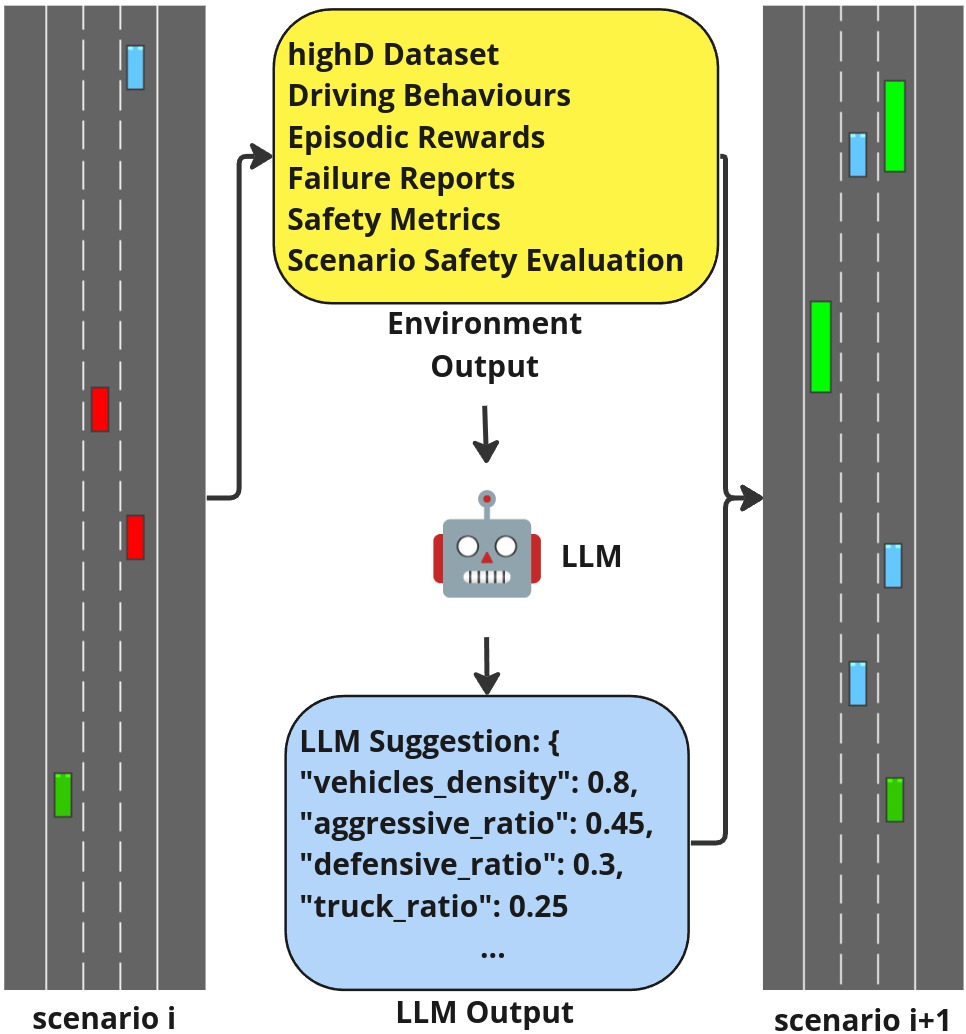
- 実世界の交通動態とドライブ行動をモデル化するため、highDデータセットを活用し、高精細なシミュレーション環境を実現する。
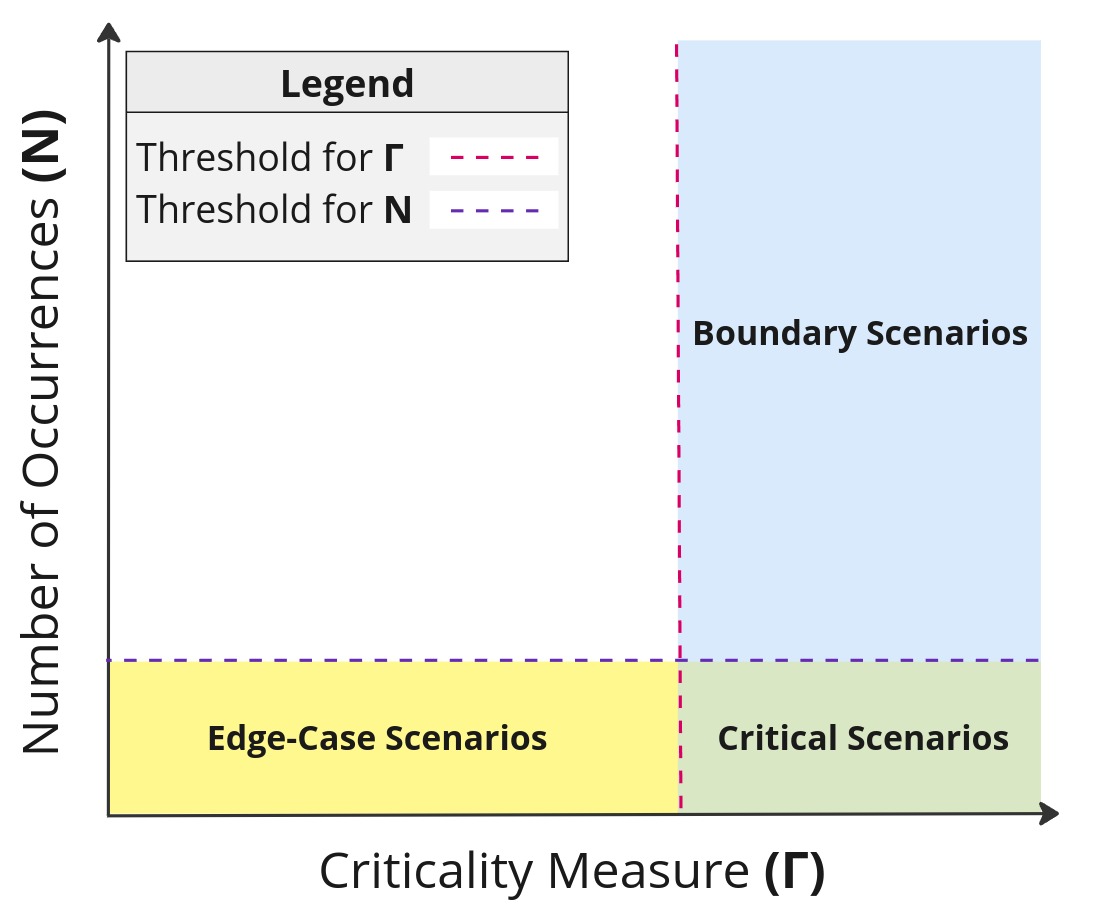
- クラスタリング手法(例:K-means、HCA)を適用して、実世界データからエッジケースのシナリオを同定し、高リスクな構成に焦点を当てる。
- シナリオの重要度を定量化し、シナリオ選択を支援する2つのサーヴィレートドライビングメトリクス(TTCと統合リスクインデックスr)を導入する。
- エピソードの出力を大規模言語モデル(LLM)に供給し、失敗パターンを解析し、意味的に豊富で新規のシナリオ構成を生成する。
- LLMが生成したシナリオを強化学習訓練ループにフィードバックすることで、反復的改善を可能にする閉ループフレームワークを構築する。
- HighwayEnvシミュレーション環境でPPOを用いて、動的に豊かにされたシナリオ分布下での強化学習エージェントの訓練と評価を実施する。
実験結果
リサーチクエスチョン
- RQ1実世界データ、安全メトリクス、LLMsを統合した閉ループフレームワークは、AV訓練のための多様で重要なドライブシナリオを効果的に生成できるか?
- RQ2LLM強化型シナリオ生成は、ベースラインおよび非LLMの重要シナリオ生成と比較して、強化学習ベースのAVエージェントの学習速度とパフォーマンスにどのように寄与するか?
- RQ3サーヴィレートドライビングメトリクス(TTCと統合リスクインデックス)は、訓練中にシナリオの重要度の変化をどれほど的確に反映し、エージェントのパフォーマンスと相関するか?
- RQ4LLMsをシナリオ生成パイプラインに統合することで、より意味的に意味のある複雑なシナリオが生成され、実世界のドライブ課題をよりよく反映するようになるか?
- RQ5このフレームワークは、異なる交通状況や道路レイアウトに一般化可能か?また、クラッシュ頻度とエピソード長にどのような影響を与えるか?
主な発見
- LLM強化型の重要シナリオ生成の統合により、平均エピソード報酬がベースラインの50.068から76.886に上昇し、顕著なパフォーマンス向上が確認された。
- LLM強化型生成による平均エピソード長は、55.760から93.019に上昇し、ナビゲーションの安定性向上とより長い成功トラジェクトリの達成を示した。
- クラッシュ数はベースラインの89件からLLM強化型生成の61件に減少し、安全性のレジリエンス向上が確認された。
- 統合リスクインデックス(r)とTTC近接事故カウントは、特にLLM強化型設定において平均の重要度スコアが著しく低下し、高リスクシナリオの処理能力の向上を示した。
- 閉ループフィードバックメカニズムにより、エージェントが次第に複雑で重要度の高いシナリオにさらされるようになり、学習が著しく加速され、エージェントの耐性が向上した。
- LLM解析により、クラスタリングのみでは捉えきれなかった意味的に豊富で失敗に基づいたシナリオが発見・生成され、データ駆動型エッジケースを超えた訓練分布の拡張が達成された。
この論文を読む
Nubintのビューアで原文を開き、読みながら気になる箇所をすぐに質問できます。
Nubintでこの論文を読むこのレビューはAIが論文の原文をもとに作成しました。引用する前に原文をご確認ください。