
[論文レビュー] Epic-Sounds: A Large-scale Dataset of Actions That Sound
EPIC-SOUNDSは、エゴセントリックなキッチン動画から収集した78.4kの分類済み音声イベントと39.2kの分類未済みセグメントを含む大規模で音声に特化したデータセットを提供する。音声に特化したラベルは、視覚的ラベルとは独立して、音声に焦点を当てた人間のラベラーによって付与されている。これにより、音声のみの認識と検出が正確に行えるようになり、最先端のモデルが最大84.3%のトップ1精度を達成した。これは、視覚的ラベルを音声学習に用いることで、時間的および意味的不一致が生じるため、その限界を示している。
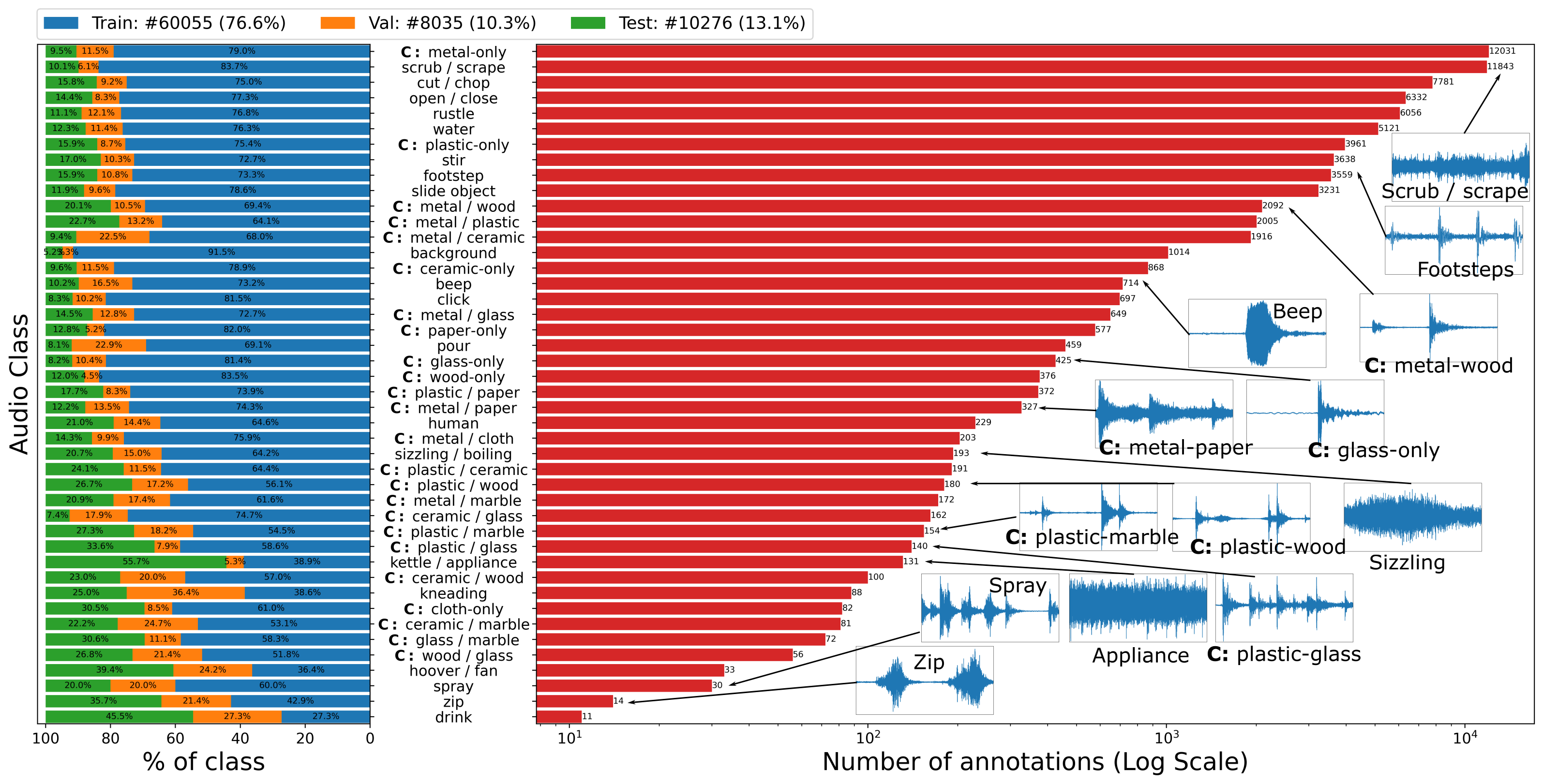
We introduce EPIC-SOUNDS, a large-scale dataset of audio annotations capturing temporal extents and class labels within the audio stream of the egocentric videos. We propose an annotation pipeline where annotators temporally label distinguishable audio segments and describe the action that could have caused this sound. We identify actions that can be discriminated purely from audio, through grouping these free-form descriptions of audio into classes. For actions that involve objects colliding, we collect human annotations of the materials of these objects (e.g. a glass object being placed on a wooden surface), which we verify from video, discarding ambiguities. Overall, EPIC-SOUNDS includes 78.4k categorised segments of audible events and actions, distributed across 44 classes as well as 39.2k non-categorised segments. We train and evaluate state-of-the-art audio recognition and detection models on our dataset, for both audio-only and audio-visual methods. We also conduct analysis on: the temporal overlap between audio events, the temporal and label correlations between audio and visual modalities, the ambiguities in annotating materials from audio-only input, the importance of audio-only labels and the limitations of current models to understand actions that sound.
研究の動機と目的
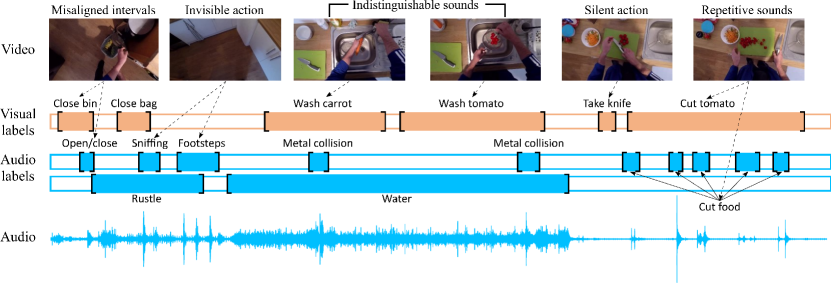
- エゴセントリック動画データセットにおける視覚的および音声的イベントラベルの不一致に取り組む。音声的および視覚的イベントはしばしばタイミングやクラス意味論において異なる。
- 視覚的ラベルとは独立して、人間の聴取に基づき時間的に正確で意味的に根拠のあるラベルを有する、大規模で音声に特化したデータセットを構築する。
- 音声固有のクラスラベルと物体衝突のマテリアルアノテーションを提供することで、音声のみのモデルの信頼性ある評価を可能にする。
- 現実世界の音声課題(例:区別がつかない音や沈黙した行動)を反映したデータセット上で、最先端の音声認識モデルをベンチマーク化する。
- 視覚的ラベルでは、時間的および意味的不一致のため一般化性能が著しく低下するため、音声のみのラベルが、強力な音声分類器を訓練するために不可欠であることを示す。
提案手法
- ラベラーはEPIC-KITCHENS-100の音声を聴取し、明確な音声イベントを時間的にセグメント化し、原因行動の自由記述を用いて発生時刻と終了時刻をラベル付けした。
- 記述は、知覚的類似性に基づき44の音声固有クラスにクラスタリングされ、視覚的ラベルとは独立した聴覚的イベントの分類体系が構築された。
- 衝突イベントに関しては、相互作用する物体の素材(例:ガラスと木)を特定した。これは視覚的真値と照合され、誤りを排除した。
- 2段階の評価プロトコルを採用:最先端の音声モデル(ASFおよびSSAST)を音声のみのデータセット上で微調整および線形プローブする。
- データ拡張としてSpecAugmentを適用し、テスト時拡張ではサブクリップ平均化を用いてモデルの頑健性を向上させた。
- モデルは交差エントロピー損失を用い、SGD(ASF)およびAdamW(SSAST)で訓練した。ハイパーパrameterは固定され、重み減衰は0.0001に設定された。
実験結果
リサーチクエスチョン
- RQ1エゴセントリック動画において、音声的および視覚的イベントラベルは、時間的範囲および意味的クラス割り当てにおいてどの程度異なるか?
- RQ2視覚的ラベルを監視信号として用いる場合と比較して、音声のみのラベルが音声認識モデルの性能を向上させるか?
- RQ3現在の音声モデルは、特に音声が区別がつかないか沈黙している場合、どの程度動作に失敗するか?
- RQ4衝突する物体の素材特性が、現実世界の状況における音の聴取可能性および識別可能性にどのように影響するか?
- RQ5データモダリティの不一致がモデルの一般化性能に与える影響は何か?また、音声固有のデータセットはその影響をどのように軽減できるか?
主な発見
- 微調整されたASFモデルのトップ1精度は、テストセットで84.3%に達し、SSASTを1.11ポイント上回った。
- 線形プローブの結果、性能が著しく低下した—特にSSASTでは精度がほぼ半減した—これは自己教師あり事前学習のみではクラス判別可能な特徴が得られないことを示している。
- 両モデルとも、二重素材衝突クラスで困難を示し、頻繁に金属同士の衝突と誤分類した。これは、素材依存の音響的変化を捉えるのが難しいことを示している。
- 「木/ガラス衝突」の51.78%は視覚的ラベルが存在しなかったが、明確な音声が発生しており、音声のみのラベルが見逃されたイベントを捉える価値があることを示している。
- 「バスケットを取り出す」および「バジルを注ぐ」といった行動の71.43%は沈黙しており、視覚的ラベルと音声的ラベルの間で0対1の不一致が生じた。これは視覚的ラベルが重要な音声信号を欠落させることを証明している。
- 本データセットには、合計100時間の動画にわたる117,553個の音声セグメントが含まれており、そのうち78,400個が44の音声固有クラスに分類済みである。これにより、音声のみのモデルの堅牢な評価が可能になった。
この論文を読む
Nubintのビューアで原文を開き、読みながら気になる箇所をすぐに質問できます。
Nubintでこの論文を読むこのレビューはAIが論文の原文をもとに作成しました。引用する前に原文をご確認ください。