
[論文レビュー] Evaluating Similitude and Robustness of Deep Image Denoising Models via Adversarial Attack
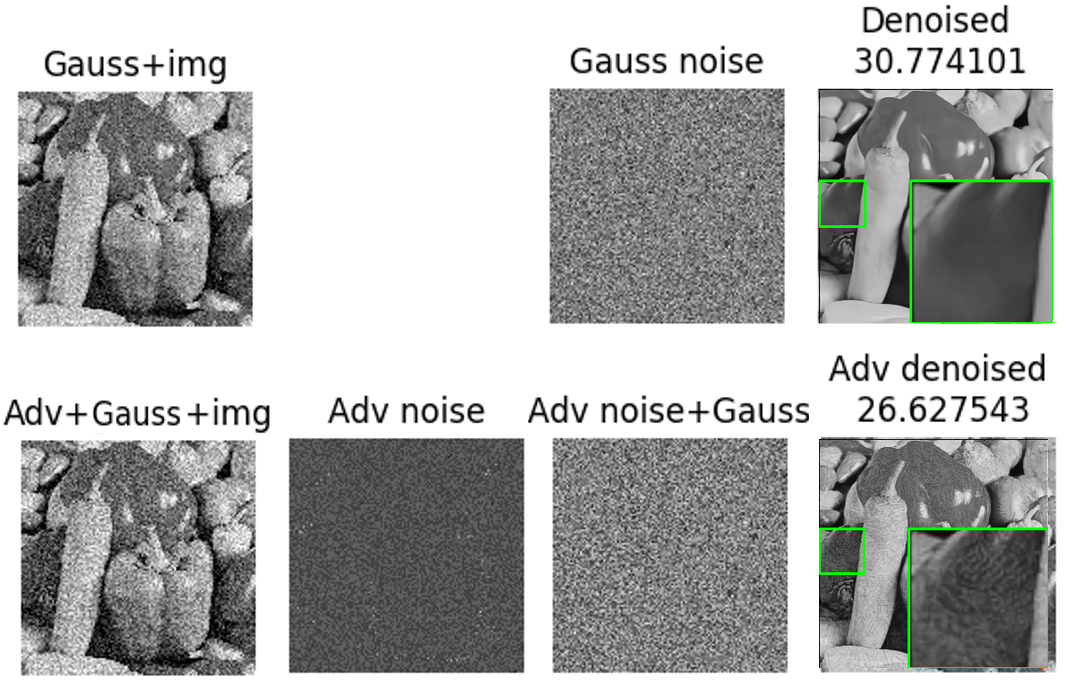
本稿では、ノイズ分布を保持するように設計されたデノイジング-PGDおよびL2デノイジング-PGDという、深層画像デノイジングモデルのロバストネスを評価するための敵対的攻撃手法を提案する。本手法により、多様なデノイジングモデル間で高い転送性が示され、強い局所的類似性が確認された。また、データ駆動型の非ブラインドモデルが最もロバストであることが判明し、BM3Dは敵対的摂動に対して本質的な耐性を示すことが明らかになった。
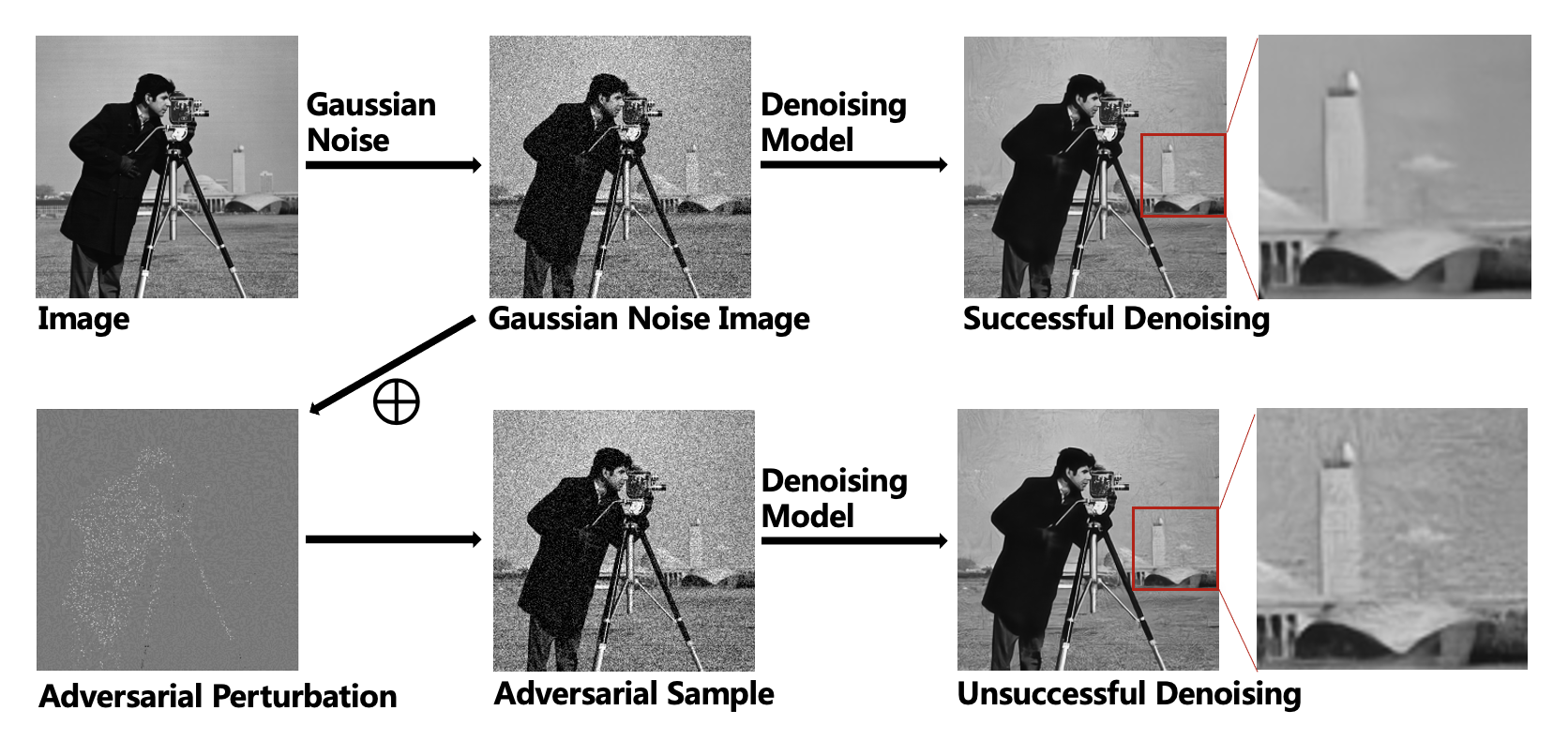
Deep neural networks (DNNs) have shown superior performance comparing to traditional image denoising algorithms. However, DNNs are inevitably vulnerable while facing adversarial attacks. In this paper, we propose an adversarial attack method named denoising-PGD which can successfully attack all the current deep denoising models while keep the noise distribution almost unchanged. We surprisingly find that the current mainstream non-blind denoising models (DnCNN, FFDNet, ECNDNet, BRDNet), blind denoising models (DnCNN-B, Noise2Noise, RDDCNN-B, FAN), plug-and-play (DPIR, CurvPnP) and unfolding denoising models (DeamNet) almost share the same adversarial sample set on both grayscale and color images, respectively. Shared adversarial sample set indicates that all these models are similar in term of local behaviors at the neighborhood of all the test samples. Thus, we further propose an indicator to measure the local similarity of models, called robustness similitude. Non-blind denoising models are found to have high robustness similitude across each other, while hybrid-driven models are also found to have high robustness similitude with pure data-driven non-blind denoising models. According to our robustness assessment, data-driven non-blind denoising models are the most robust. We use adversarial training to complement the vulnerability to adversarial attacks. Moreover, the model-driven image denoising BM3D shows resistance on adversarial attacks.
研究の動機と目的
- 深層画像デノイジングモデルが敵対的攻撃に対してどれほど脆弱であるかを調査すること。
- 元のノイズ分布を保持する敵対的攻撃手法を開発し、実験の妥当性を確保すること。
- 非ブラインド、ブラインド、プラグアンドプレイ、アンフォールディングの異なる種類のデノイジングモデル間での敵対的サンプルの転送性を評価すること。
- 敵対的摂動を用いて、デノイジングモデル間の局所的行動類似性(ロバストネス類似性)を定量化すること。
- データ駆動型手法(例:BM3D)のロバストネスを、データ駆動型およびハイブリッド駆動型モデルと比較して評価すること。
提案手法
- デノイザーの損失関数の勾配更新を用いて、ノイズ画像を繰り返し摂動させる敵対的攻撃「デノイジング-PGD」を提案する。
- 摂動にL2制約を課すことで、ガウスノイズ分布を保持し、実験の厳密性を向上させる「L2デノイジング-PGD」を導入する。
- PGDの各反復の前にランダムなガウスノイズ摂動を初期化することで、ノイズ分布の忠実性を保ちつつ転送性を向上させる。
- 摂動が画像の動的範囲内に収まるようにクリッピング処理を適用し、学習の安定性を確保する。
- 敵対的サンプルのノイズ分布と真値のガウスノイズとの差を定量的に比較するため、ワサースタイン距離を用いる。
- ロバストネス類似性を、複数のモデル間で共有される敵対的サンプルの割合として定義し、局所的行動類似性を示す。
実験結果
リサーチクエスチョン
- RQ1元のノイズ分布を保持しつつ、深層画像デノイジングモデルに効果的に敵対的攻撃を適用できるか?
- RQ2非ブラインド、ブラインド、プラグアンドプレイ、アンフォールディングの異なる種類の深層デノイジングモデル間で、どれほど敵対的サンプルが共有されるか。これは行動類似性を示す。
- RQ3データ駆動型とハイブリッド駆動型モデルの間で、ロバストネス類似性はどのように変化するか?
- RQ4BM3Dのような古典的なモデル駆動型手法は、深層学習ベースのモデルと比較して、敵対的攻撃に対して本質的な耐性を示すか?
- RQ5アーキテクチャの類似性と画像デノイジングモデルにおける敵対的転送性の関係は何か?
主な発見
- L2デノイジング-PGD攻撃はノイズ分布の忠実性を維持し、ガウスノイズとのワサースタイン距離が0.0017にまで低下した。これはデノイジング-PGDの0.0024よりも顕著に低い値であった。
- グレースケールおよびカラー画像の両方で、非ブラインド(DnCNN、FFDNetなど)、ブラインド(DnCNN-B、Noise2Noiseなど)、プラグアンドプレイ(DPIR、CurvPnP)、アンフォールディング(DeamNet)の全テスト対象深層デノイジングモデルが、ほぼ同一の敵対的サンプル集合を共有した。
- データ駆動型の非ブラインドデノイジングモデルが、最も高いロバストネス類似性を示し、モデル間で強い局所的行動類似性が確認された。
- ハイブリッド駆動型モデル(例:DPIR、CurvPnP)も、純粋なデータ駆動型非ブラインドモデルと同様に高いロバストネス類似性を示し、共通の意思決定境界を共有していることが示唆された。
- 古典的手法のモデル駆動型BM3Dは、敵対的攻撃に対して強く耐性を示し、深層学習ベースのモデルを上回るロバストネスを示した。
- 敵対的訓練によりロバストネスが向上し、敵対的サンプルの高い転送性から、敵対的領域がモデル間で連続的かつ共有される部分空間を形成していることが示唆された。
この論文を読む
Nubintのビューアで原文を開き、読みながら気になる箇所をすぐに質問できます。
Nubintでこの論文を読むこのレビューはAIが論文の原文をもとに作成しました。引用する前に原文をご確認ください。