
[論文レビュー] Exposing Provenance Metadata Using Different RDF Models
本稿では、生命科学分野の関係およびその出典メタデータを表現するため、五つのRDF出典モデル(N-ary、シングルトンプロパティ、ナノパブリケーション、およびそれらの基数アサーション変種)を評価している。化学-遺伝子-疾患関係の大量かつ統合されたデータセットを用いて、基数アサーションが不要な三元組を排除することでクエリ実行時間を顕著に短縮することを示しているが、最適なパフォーマンスはRDFストアに依存するため、すべてのシステムに普遍的に最良なモデルは存在しないことが示された。
A standard model for exposing structured provenance metadata of scientific assertions on the Semantic Web would increase interoperability, discoverability, reliability, as well as reproducibility for scientific discourse and evidence-based knowledge discovery. Several Resource Description Framework (RDF) models have been proposed to track provenance. However, provenance metadata may not only be verbose, but also significantly redundant. Therefore, an appropriate RDF provenance model should be efficient for publishing, querying, and reasoning over Linked Data. In the present work, we have collected millions of pairwise relations between chemicals, genes, and diseases from multiple data sources, and demonstrated the extent of redundancy of provenance information in the life science domain. We also evaluated the suitability of several RDF provenance models for this crowdsourced data set, including the N-ary model, the Singleton Property model, and the Nanopublication model. We examined query performance against three commonly used large RDF stores, including Virtuoso, Stardog, and Blazegraph. Our experiments demonstrate that query performance depends on both RDF store as well as the RDF provenance model.
研究の動機と目的
- 生命科学知識グラフにおけるクエリパフォーマンスとグラフサイズに及ぼす異なるRDF出典モデルの影響を評価すること。
- 数百万のペアワイズ関係を含む統合医療生物学的データセットにおける出典メタデータの冗長性問題を解決すること。
- 根拠に基づく仮説生成における計算オーバーヘッドを低減できるかどうか、基数アサーションモデルを評価すること。
- 三つの主要なRDFストアで、N-ary、シングルトンプロパティ、ナノパブリケーションモデルが基数アサーションを有する・なしでどのように性能を発揮するかを比較すること。
- 意味ウェブにおける生物医学研究の分野で、標準的で効率的かつ相互運用可能な出典モデルの設計を支援すること。
提案手法
- CIDs、GIDs、UMLS CUIsといった標準化された識別子を用いて、14の生命科学データベースから150万件の化学物質・遺伝子・疾患間のペアワイズ関係を収集・正規化した。
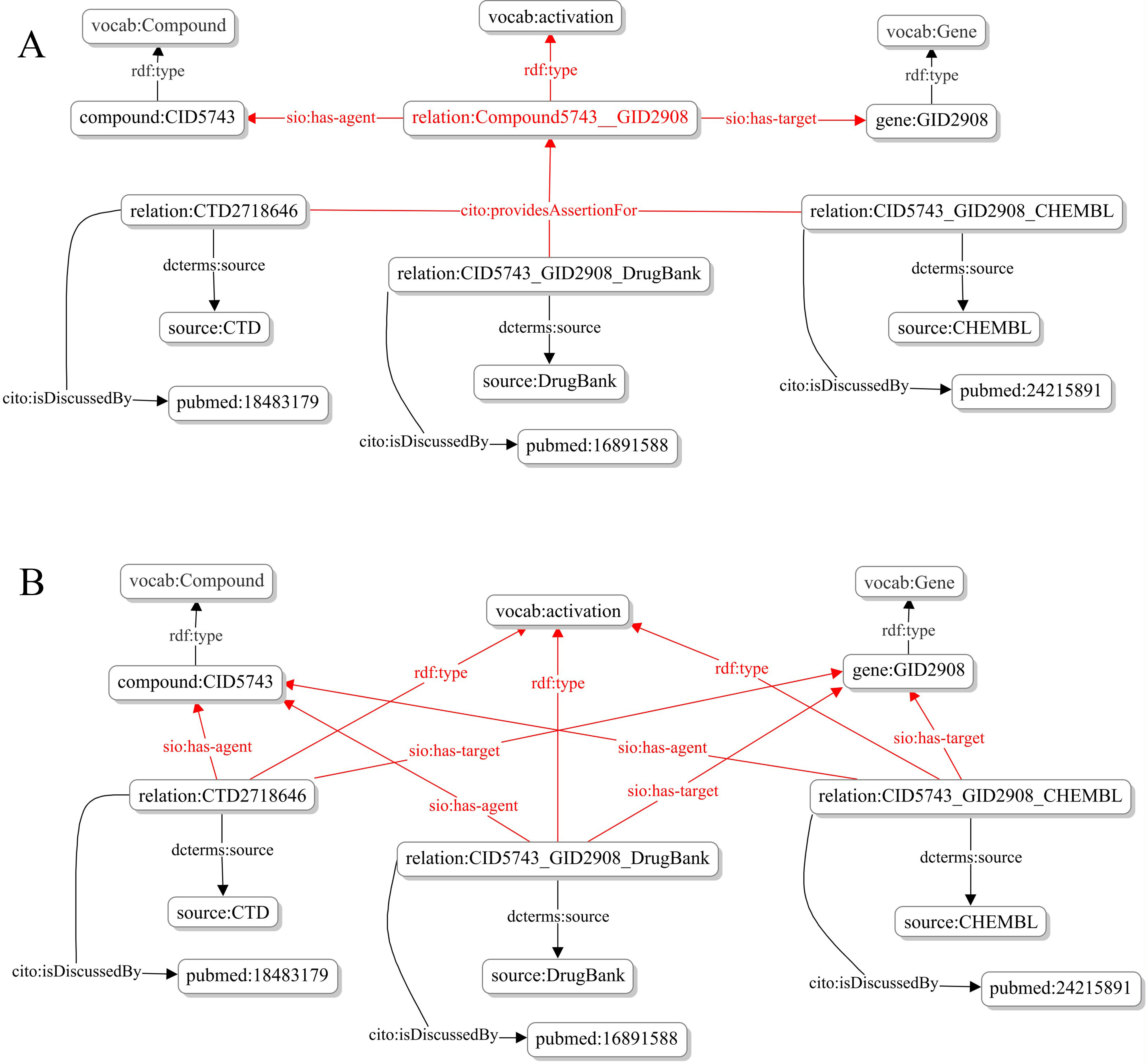
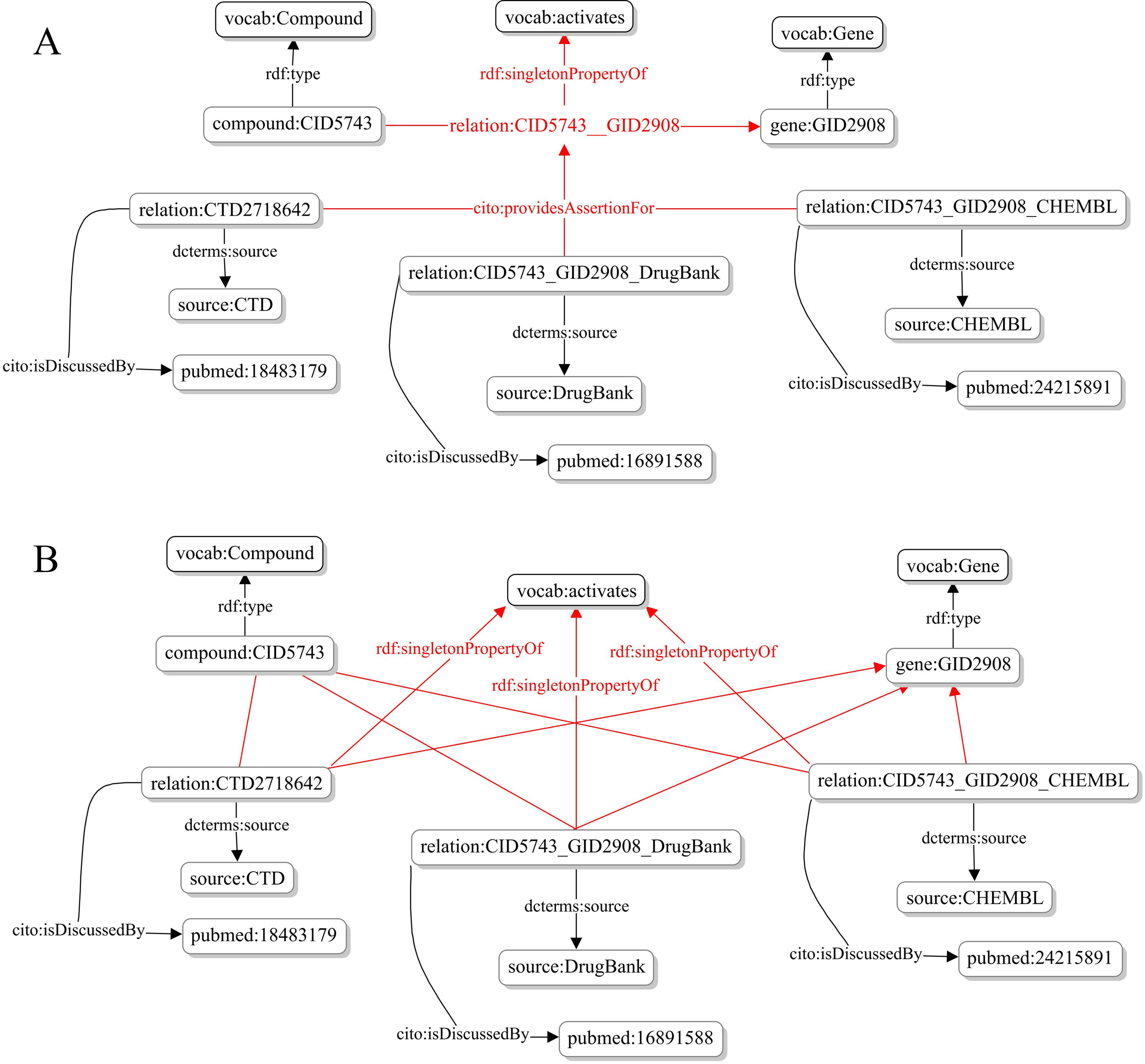
- 五つのRDF出典モデル(N-ary、シングルトンプロパティ、ナノパブリケーション)を、cito:providesAssertionForを用いてアサーションと根拠を関連付ける「基数アサーション」を有する・なしで実装した。
- 各モデルに対してRDFグラフを生成し、Virtuoso、Stardog、Blazegraphの三つのRDFストアでグラフサイズとクエリ実行時間を測定した。
- 出典と関係の走査に焦点を当てた四つのSPARQLクエリ(Q1–Q4)を設計し、さまざまなワークロード下でのパフォーマンスを評価した。
- モデルとストアごとの平均実行時間と標準偏差を統計的に比較し、基数アサーションの有無によるパフォーマンス差に注目した。
実験結果
リサーチクエスチョン
- RQ1基数アサーションの導入が、生命科学データセットにおける出典メタデータを表現するRDFグラフのサイズにどのように影響するか?
- RQ2N-ary、シングルトンプロパティ、ナノパブリケーションのうち、どのRDF出典モデルが異なるRDFストアで最も優れたクエリパフォーマンスを発揮するか?
- RQ3大規模な医療生物学的知識グラフにおいて、出典メタデータの冗長性がクエリ実行時間に及ぼす影響はどの程度か?
- RQ4基数アサーションのパフォーマンス優位性は、Virtuoso、Stardog、Blazegraphといった異なるRDFストアシステムで変化するか?
- RQ5標準的で冗長性のない出典モデルは、根拠に基づく知識発見のスケーラビリティと効率性を向上させられるか?
主な発見
- 基数アサーションなしのN-aryモデルは、VirtuosoでQ1が269.854 ± 99.266秒と最も遅く、基数アサーションを有するバージョン(モデルIII)では0.665 ± 0.263秒にまで短縮された。
- Blazegraphでは、ナノパブリケーションモデル(モデルV)がQ4で平均0.732 ± 0.133秒の最速のクエリ時間を記録し、N-aryモデル(83.384 ± 1.612秒)を顕著に上回った。
- Q3においては、Blazegraphで基数アサーションを有するSPモデル(モデルIV)が最速(0.465 ± 0.054秒)、Virtuosoでは基数アサーションを有するN-aryモデル(モデルIII)が最速(3.075 ± 0.243秒)を記録した。
- 基数アサーションモデルは、特にカルテジアン積を実行する結合クエリにおいて、不要な三元組を排除することでグラフ走査の計算オーバーヘッドを低減した。
- RDFストアごとにクエリパフォーマンスに顕著な差が見られた:Virtuosoではナノパブリケーションモデルが優位、Stardogでは基数アサーションを有するSPモデルが好まれ、Blazegraphではナノパブリケーションモデルが最適だった。
- パフォーマンスの差はあったが、出典制限を適用した場合、基数アサーションを有する・なしのモデル間でパフォーマンスに大きな差がなく、これは基数アサーションが、フィルタリングなしまたは広範な検索シナリオで最も効果的であることを示唆している。
より良い研究を、今すぐ始めましょう
論文の読解から最終レビューまで、研究時間を劇的に削減しましょう。
クレジットカード登録不要
このレビューはAIが作成し、人間の編集者が確認しました。