
[論文レビュー] Face Recognition in the age of CLIP & Billion image datasets
本稿は、CelebAデータセットおよびLAION-5BのKNNインデックスを用いて、CLIPモデルをゼロショット顔認識器として評価し、より大きなモデルであっても一貫した精度の向上が見られないことを発見した。CLIPベースの検索エンジンが意図しない顔認識システムとして機能しうることを示し、BIPAのようなバイオメトリクス法においてプライバシーと法的懸念を喚起する。
CLIP (Contrastive Language-Image Pre-training) models developed by OpenAI have achieved outstanding results on various image recognition and retrieval tasks, displaying strong zero-shot performance. This means that they are able to perform effectively on tasks for which they have not been explicitly trained. Inspired by the success of OpenAI CLIP, a new publicly available dataset called LAION-5B was collected which resulted in the development of open ViT-H/14, ViT-G/14 models that outperform the OpenAI L/14 model. The LAION-5B dataset also released an approximate nearest neighbor index, with a web interface for search & subset creation. In this paper, we evaluate the performance of various CLIP models as zero-shot face recognizers. Our findings show that CLIP models perform well on face recognition tasks, but increasing the size of the CLIP model does not necessarily lead to improved accuracy. Additionally, we investigate the robustness of CLIP models against data poisoning attacks by testing their performance on poisoned data. Through this analysis, we aim to understand the potential consequences and misuse of search engines built using CLIP models, which could potentially function as unintentional face recognition engines.
研究の動機と目的
- CelebAデータセットにおけるCLIPモデルのゼロショット顔認識性能を評価すること。
- CLIPモデルのサイズを拡大することで顔認識精度が向上するかを調査すること。
- FawkesおよびLowKeyの摂動を用いたデータ汚染攻撃に対してCLIPモデルの頑健性を評価すること。
- CLIPを搭載した検索エンジンが、意図しない顔認識システムとして機能する可能性を検討すること。
- BIPAのような法制度下でCLIP埋め込みをバイオメトリクス識別に使用する場合の法的・倫理的含みを検討すること。
提案手法
- CelebAデータセット上で、ViT-B/32、ViT-L/14、ViT-H/14、ViT-G/14のCLIPモデルを微調整し、トップ1およびトップ5の顔認識精度を評価した。
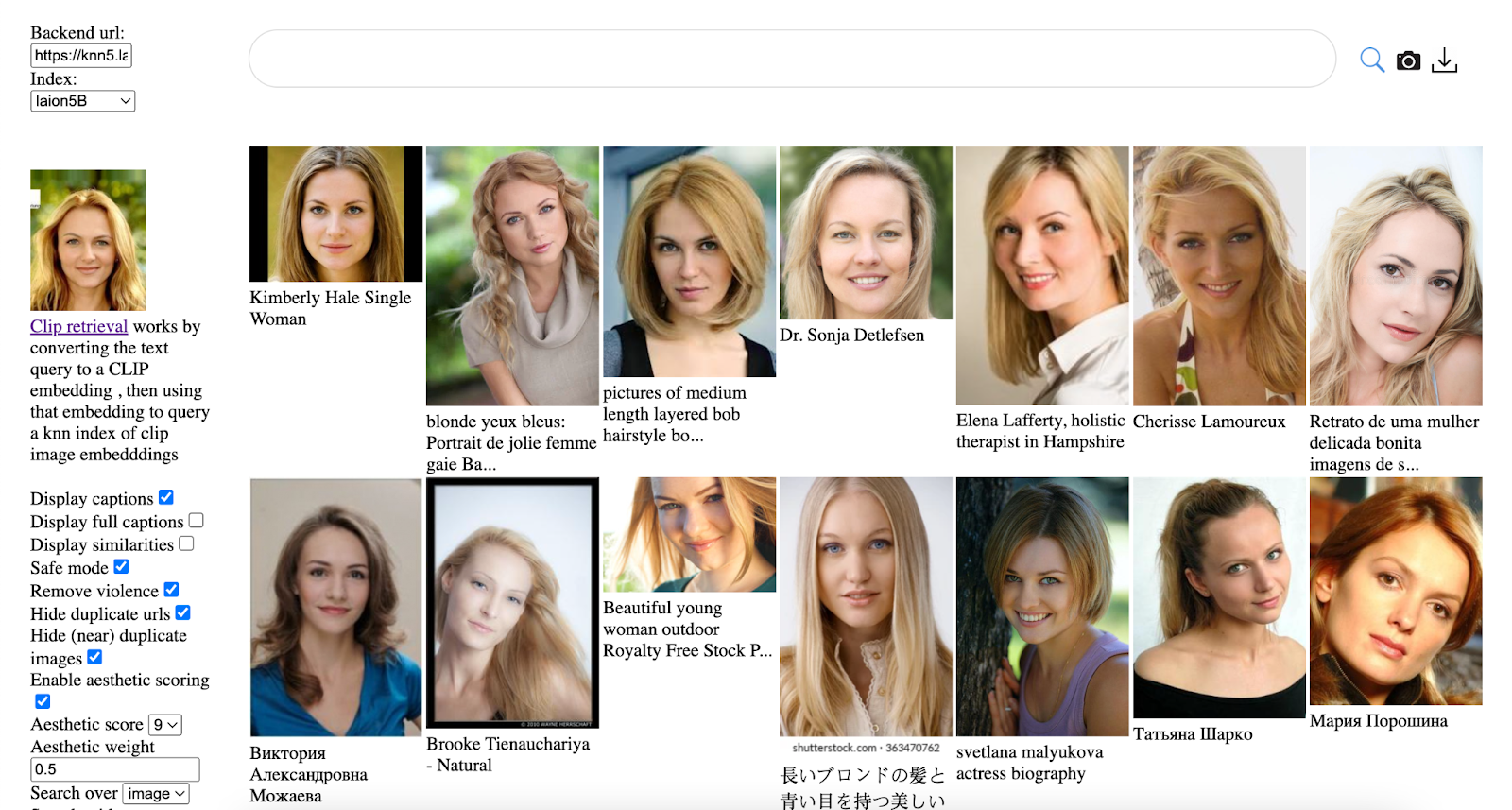
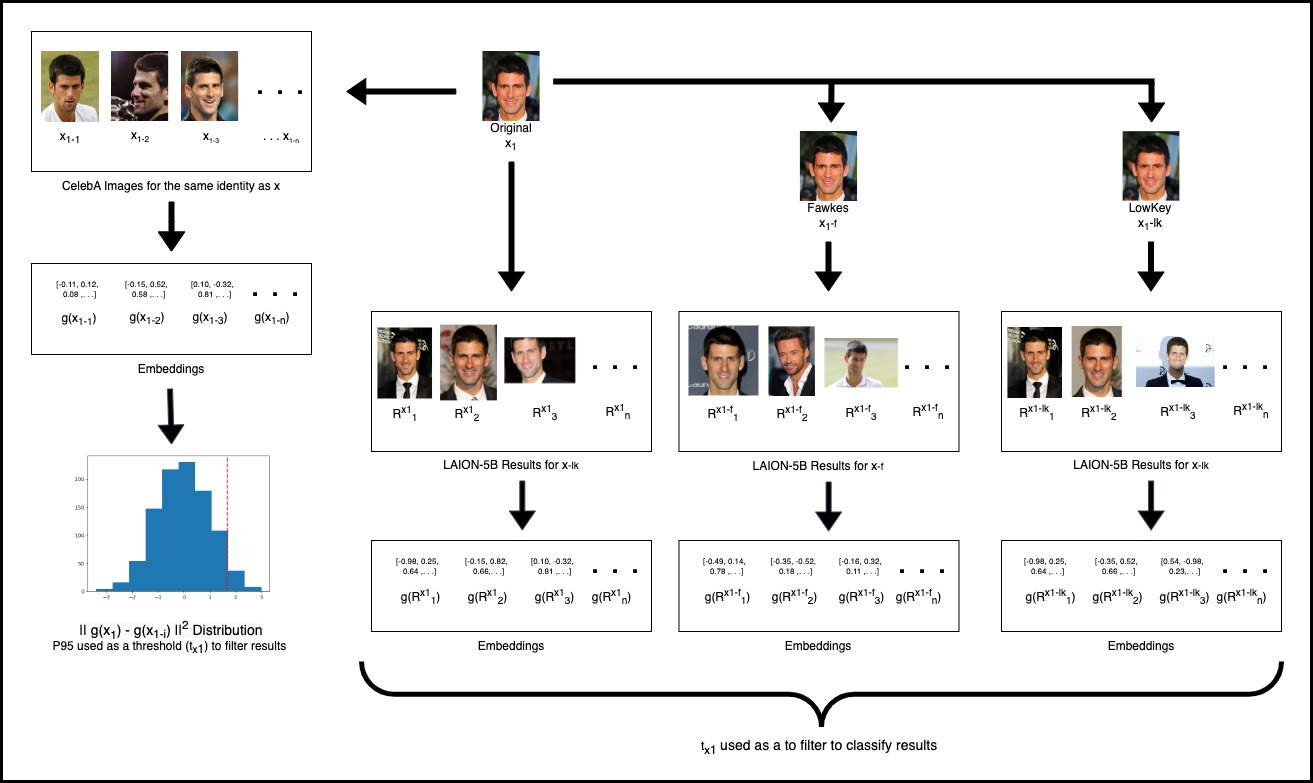
- オリジナル画像、Fawkes摂動画像、LowKey摂動画像を用いて、LAION-5BのKNNインデックスを用いて画像検索を実施した。
- 美術的スコア(9)、美術的スコア重み(0.5)、モダリティ(画像)、結果数(50)を検索パラメータとして設定した。
- CLIP埋め込み間のL2距離がしきい値未満であるものをフィルタリングし、アイデンティティの一貫性を保証した。
- オリジナル、Fawkes、LowKeyバージョンの各画像について、有効な結果(≥3)の数を比較し、摂動に対する耐性を評価した。
- 比較のベンチマークとして、顔認識用Pythonライブラリの性能を評価した。
実験結果
リサーチクエスチョン
- RQ1CLIPモデルはCelebAデータセットにおいて、どの程度のゼロショット顔認識性能を示すか?
- RQ2CLIPモデルのサイズを拡大することで顔認識精度が向上するか?
- RQ3FawkesおよびLowKeyの摂動を用いたデータ汚染攻撃に対して、CLIPモデルはどの程度の頑健性を示すか?
- RQ4CLIPベースの検索システムは、どの程度まで意図しない顔認識エンジンとして機能しうるか?
- RQ5BIPAのような法制度下でCLIP埋め込みをバイオメトリクス識別に使用する場合、法的・倫理的含みは何か?
主な発見
- ViT-L/14モデルがCLIPモデルの中で最高のトップ1顔認識精度(80.95%)を達成したが、顔認識用Pythonライブラリの87.61%には及ばなかった。
- ViT-H/14モデルがCLIPモデルの中で最高のトップ5精度(89.88%)を達成したが、顔認識用ライブラリの92.27%には及ばなかった。
- 顔認識精度はモデルサイズの増大に伴い単調に向上するわけではない。性能は初期に向上し、その後、より大きなモデルでは低下した。
- オリジナル画像で≥3件の有効結果が得られた728枚の画像のうち、612枚(84.07%)がFawkes摂動画像に対しても少なくとも1件の有効結果を返した。
- 728枚中566枚(77.75%)がLowKey摂動画像に対しても少なくとも1件の有効結果を返した。これは摂動に対して部分的な耐性があることを示している。
- 543枚(74.59%)がFawkesおよびLowKey両方の摂動画像に対し、少なくとも1件の有効結果を返した。これは摂動が検索を完全に遮断しないことを示している。
この論文を読む
Nubintのビューアで原文を開き、読みながら気になる箇所をすぐに質問できます。
Nubintでこの論文を読むこのレビューはAIが論文の原文をもとに作成しました。引用する前に原文をご確認ください。