
[論文レビュー] Fast Model Debias with Machine Unlearning
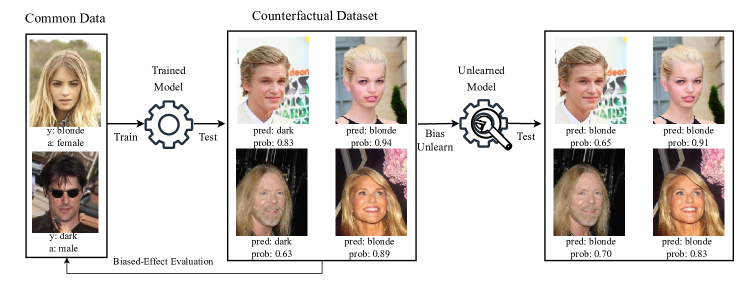
本稿では、対向データと影響関数を用いて、元の学習データにアクセスせずに、事前学習モデル内のバイアスを特定・評価・除去する、Fast Model Debiasing (FMD) という新しいフレームワークを提案する。FMDは、最小限のパラメータ更新で効率的なデバイアス化を実現し、元の学習データが不要である。FMDは、再訓練が困難な大規模モデルに対しても、顕著に低い計算コストとバイアスで最先端の公平性を達成しており、モデルの上位層のみをアンラーニングする場合でも有効である。
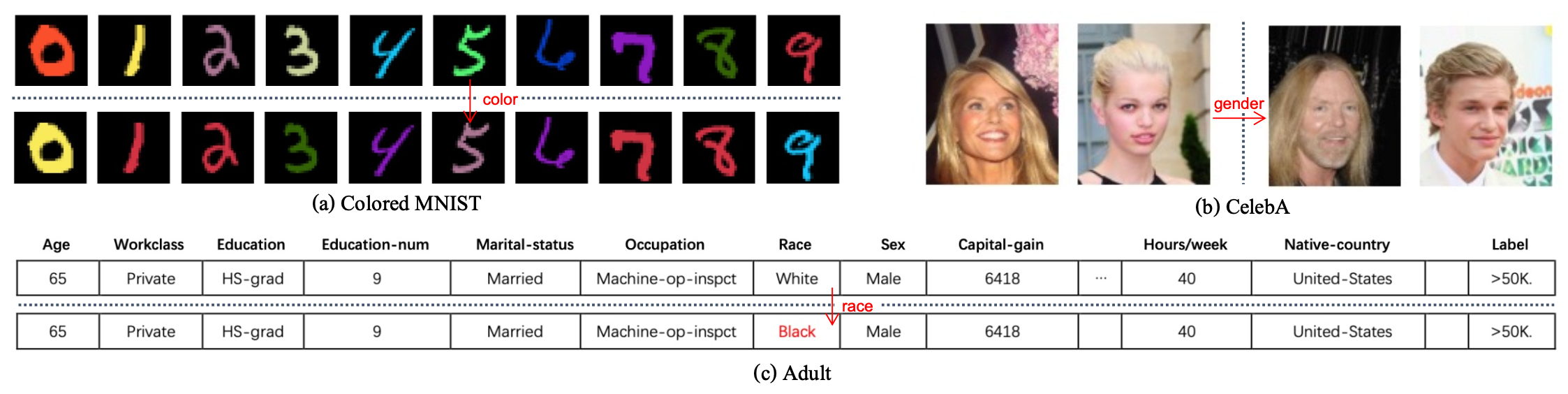
Recent discoveries have revealed that deep neural networks might behave in a biased manner in many real-world scenarios. For instance, deep networks trained on a large-scale face recognition dataset CelebA tend to predict blonde hair for females and black hair for males. Such biases not only jeopardize the robustness of models but also perpetuate and amplify social biases, which is especially concerning for automated decision-making processes in healthcare, recruitment, etc., as they could exacerbate unfair economic and social inequalities among different groups. Existing debiasing methods suffer from high costs in bias labeling or model re-training, while also exhibiting a deficiency in terms of elucidating the origins of biases within the model. To this respect, we propose a fast model debiasing framework (FMD) which offers an efficient approach to identify, evaluate and remove biases inherent in trained models. The FMD identifies biased attributes through an explicit counterfactual concept and quantifies the influence of data samples with influence functions. Moreover, we design a machine unlearning-based strategy to efficiently and effectively remove the bias in a trained model with a small counterfactual dataset. Experiments on the Colored MNIST, CelebA, and Adult Income datasets along with experiments with large language models demonstrate that our method achieves superior or competing accuracies compared with state-of-the-art methods while attaining significantly fewer biases and requiring much less debiasing cost. Notably, our method requires only a small external dataset and updating a minimal amount of model parameters, without the requirement of access to training data that may be too large or unavailable in practice.
研究の動機と目的
- 大規模モデルにおける再訓練やバイアスのラベル付けの高コストと現実的でない点に対処すること。
- 元の学習データにアクセスせずに、事前学習モデル内のバイアスを特定・定量化すること。
- 最小限のパフォーマンス低下と低コストで優れた公平性を達成する、後処理型のデバイアス化手法を開発すること。
- 外部の対向サンプルの小さなデータセットのみを用いて、効果的なデバイアス化を可能にすること。
提案手法
- FMDは、属性の変化に伴う予測の変化を観察することで、事実と対向のサンプルペアを構築し、バイアスのある属性を明示的に特定する。
- 影響関数を拡張して、個々の学習サンプルがモデルバイアスに与える影響を定量化し、有害な学習例を正確に同定する。
- ニュートンステップに基づくアンラーニング機構を用いて、少数のモデルパラメータの更新のみでバイアスの相関を除去する。
- 元の学習データに依存しない外部対向ペアを用いる代替アンラーニング戦略を導入し、実用性を向上させる。
- 事前学習モデルの上位MLP層のみをファインチューニングすることに焦点を当て、計算コストを最小限に抑える。
- 機械的アンラーニングを活用して、モデルの正確性を保持したままバイアスを効率的に排除する。
実験結果
リサーチクエスチョン
- RQ1元の学習データや広範なラベル付けにアクセスせずに、事前学習モデル内のバイアスを特定できるか?
- RQ2個々の学習サンプルがモデルバイアスに与える影響をどのように定量化できるか?
- RQ3外部の対向例の小さなデータセットのみを用いて、効果的にバイアスを除去できるか?
- RQ4上位層のパラメータ更新によるアンラーニングは、完全な再訓練や後処理に比べて、公平性と正確性の面で優れているか?
- RQ5このフレームワークは大規模言語モデルや多様な公平性指標に一般化可能か?
主な発見
- バイアス強度が0.99のColored MNISTデータセットにおいて、FMDは83.49%の正確性と0.1438のバイアス(Co)を達成し、EqOdd(82.71%の正確性、0.5991のCo)とCEqOdd(83.22%の正確性、0.4469のCo)を上回った。
- Adult Incomeデータセットでは、FMDが人種属性におけるバイアス(De)を0.0367に低下させたのに対し、Rejectは0.1825、EqOddは0.7288であった。
- 性別属性においてFMDはバイアス(Co)を0.0019に低下させ、CEqOdd(0.0047)とEqOdd(0.0247)を著しく下回った。
- 性別属性のアンラーニングにFMDはわずか0.0389秒を要したが、Rejectは14.42秒を要した。
- アブレーション実験では、最後の2つのMLP層の更新がColored MNISTで最高の正確性(83.49%)を達成したのに対し、3層のファインチューニングでは性能が低下した。
- 5,000個の対向サンプルで性能が安定したため、この閾値を超えると利得が減少することが示された。
より良い研究を、今すぐ始めましょう
論文の読解から最終レビューまで、研究時間を劇的に削減しましょう。
クレジットカード登録不要
このレビューはAIが作成し、人間の編集者が確認しました。