
[論文レビュー] Hyperparameters in Reinforcement Learning and How To Tune Them
この論文は、RLのハイパーパラメータが性能と再現性に強く影響することを主張し、自動ハイパーパラメータ最適化(HPO)が手動調整よりも計算資源を抑えつつ勝ることを示している。RLの研究者向けにベストプラクティスガイドラインとオープンソースのチューニングツールを提供する。
In order to improve reproducibility, deep reinforcement learning (RL) has been adopting better scientific practices such as standardized evaluation metrics and reporting. However, the process of hyperparameter optimization still varies widely across papers, which makes it challenging to compare RL algorithms fairly. In this paper, we show that hyperparameter choices in RL can significantly affect the agent's final performance and sample efficiency, and that the hyperparameter landscape can strongly depend on the tuning seed which may lead to overfitting. We therefore propose adopting established best practices from AutoML, such as the separation of tuning and testing seeds, as well as principled hyperparameter optimization (HPO) across a broad search space. We support this by comparing multiple state-of-the-art HPO tools on a range of RL algorithms and environments to their hand-tuned counterparts, demonstrating that HPO approaches often have higher performance and lower compute overhead. As a result of our findings, we recommend a set of best practices for the RL community, which should result in stronger empirical results with fewer computational costs, better reproducibility, and thus faster progress. In order to encourage the adoption of these practices, we provide plug-and-play implementations of the tuning algorithms used in this paper at https://github.com/facebookresearch/how-to-autorl.
研究の動機と目的
- RLのハイパーパラメータが最終的な性能とサンプル効率に与える影響を多様な環境で示す。
- 最先端のRLアルゴリズムに対して、手動チューニングのベースラインと比較して複数のHPO手法を評価する。
- オープンソースでプラグアンドプレイ可能なチューニングツールとRLコミュニティ向けの実用的なベストプラクティスの推奨を提供する。
- 過適合を避け再現性を高めるためにチューニングシードとテストシードを分離する重要性を強調する。
提案手法
- RLにおけるハイパーパラメータ最適化をAlgorithm Configuration (AC) および Dynamic Algorithm Configuration (DAC)として形式的に定義する。
- PPO、DQN、SACのハイパーパラメータの分布を、複数のシードを用いたさまざまなGym風およびBrax/Procgen環境で実証的に研究する。
- RS(ランダム探索)、マルチフィデリティ法(DEHB)、集団ベースのチューニング(PB2、BGT)を手動チューニングのベースラインと比較する。
- チューニングシードとテストシードの影響を再現性と推定性能に与える影響を評価する。
- どんなRLアルゴリズムや環境にも適合するオープンソースのHydraベースのチューニング実装を提供する。
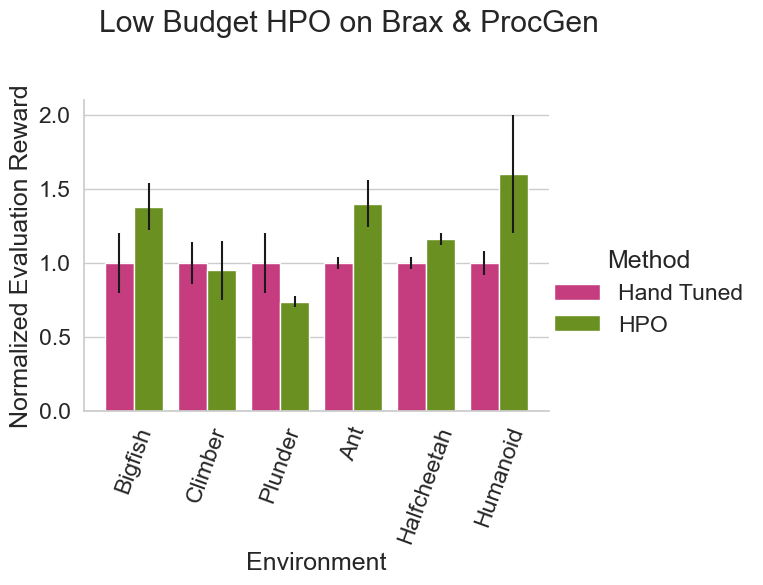
実験結果
リサーチクエスチョン
- RQ1RLのハイパーパラメータは、さまざまな環境とアルゴリズムにおいて最終的な性能と安定性にどれだけ影響を与えるのか?
- RQ2RLにおける自動ハイパーパラメータ最適化は従来の手動チューニングより不適切か?
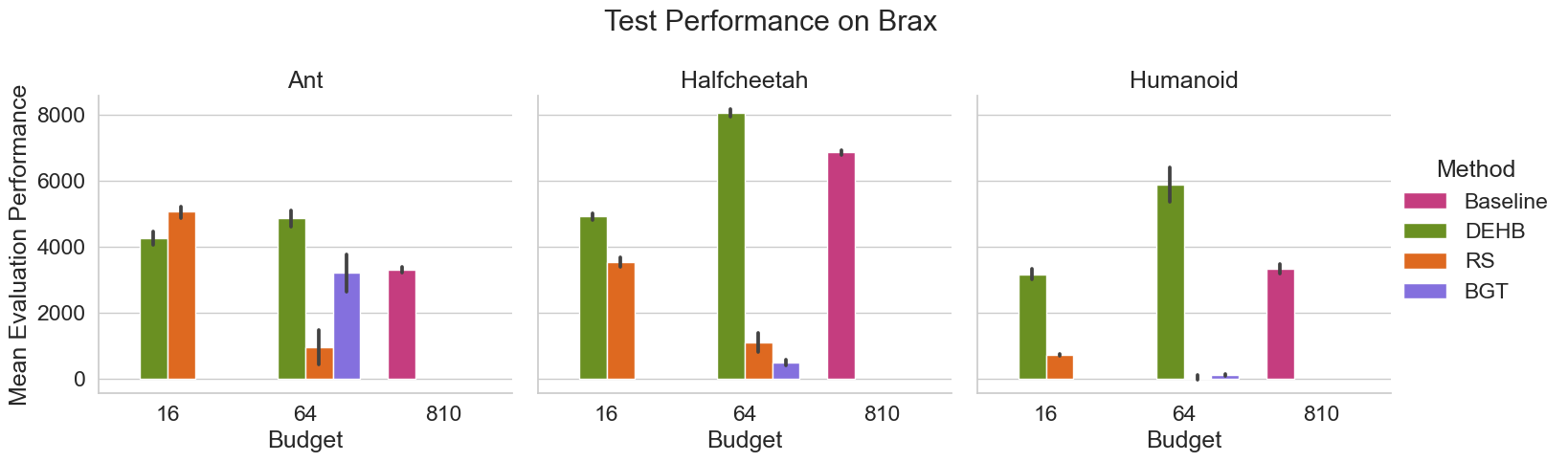
- RQ3制限された予算の中で、異なるHPOパラダイム(RS、マルチフィデリティ、PBT)はRL設定でどのように機能するのか?
- RQ4シード分離、報告、パイプライン統合など、再現性と比較可能性を高めるベストプラクティスは何か?
主な発見
- ハイパーパラメータは環境とアルゴリズム全体で性能に大きな影響を与える。めったに調整されないパラメータでさえ決定的となりうる。
- RLのハイパーパラメータの landscapeは通常滑らかであり、控えめな予算で単純な手法で効果的に最適化できる。
- ランダム探索は一部のタスクでより複雑な設定に匹敵または上回ることがあるが、マルチフィデリティとPBT手法は通常、予算全体で安定性と最終性能を向上させる。
- チューニングシードとテストシードを分離することは過適合を避け、一般化性能の信頼性の高い推定を得るために重要である。
- 自動HPO手法は、網羅的な手動チューニングやグリッド探索よりも計算資源を要件とせず、より堅牢で比較可能なベースラインを提供することが多い。
この論文を読む
Nubintのビューアで原文を開き、読みながら気になる箇所をすぐに質問できます。
Nubintでこの論文を読むこのレビューはAIが論文の原文をもとに作成しました。引用する前に原文をご確認ください。