
[論文レビュー] ImageDream: Image-Prompt Multi-view Diffusion for 3D Generation
ImageDream は、正準カメラ協調と多層コントローラを備えた画像プロンプト・多視差拡散フレームワークを提案し、単一画像からの3D生成における幾何学品質と画像-テキスト整合性を向上させ、従来のSO TA手法を上回る。
We introduce "ImageDream," an innovative image-prompt, multi-view diffusion model for 3D object generation. ImageDream stands out for its ability to produce 3D models of higher quality compared to existing state-of-the-art, image-conditioned methods. Our approach utilizes a canonical camera coordination for the objects in images, improving visual geometry accuracy. The model is designed with various levels of control at each block inside the diffusion model based on the input image, where global control shapes the overall object layout and local control fine-tunes the image details. The effectiveness of ImageDream is demonstrated through extensive evaluations using a standard prompt list. For more information, visit our project page at https://Image-Dream.github.io.
研究の動機と目的
- テキストのみまたは画像のみのベースラインより、単一画像からの3Dオブジェクト生成における幾何学的精度を改善する。
- 入力画像から3Dビューへのマッピングを簡素化し、多視点の一貫性を高めるために正準カメラ協調を活用する。
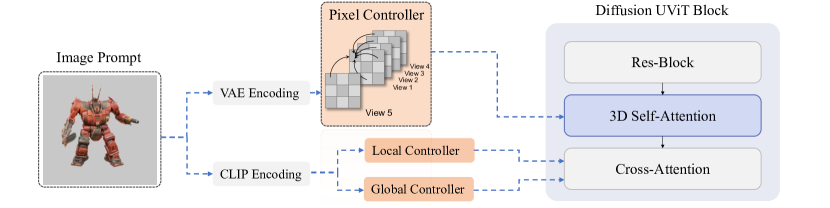
- 拡散を指示するための多層の画像プロンプト・コントローラ(グローバル、ローカル、ピクセル)を導入し、建築ブロック全体にわたるガイドを提供する。
- NeRFベースのSDSパイプラインへ画像プロンプト拡散を統合し、洗練された質感と一貫性のある3Dアセットを生成する。
提案手法
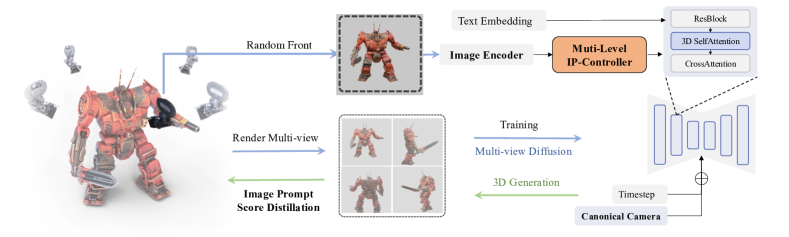
- デフォルトのビューをオブジェクトの正面ビューとする正準ワールド座標系を採用し、画像プロンプトを多視差拡散と整列させる。
- MV損失とMV-SDSを用いて4つの直交ビューで訓練する多視差拡散ネットワーク(MVDiffusion)をNeRFベースの3Dモデルに最適化する。
- グローバル画像プロンプト・アダプタ(MLP)とクロスアテンションを導入し、分離した注意機構を用いて画像特徴とテキスト条件付き拡散を融合する。
- CLIPの隠れ特徴を用いたローカル画像プロンプト・コントローラを導入し、過露出と不安定性を防ぐリサンプリングステップを追加する。
- 3Dセルフアテンションに入力画像を5番目のフレームとして連結するピクセル・コントローラを追加し、ビュー間での画像駆動の質感ディテールを強制する。
- 背景とカメラパラメータの整合を伴う画像プロンプト・スコア蒸留を適用し、NeRF最適化時の幾何学的忠実度を向上させる。
実験結果
リサーチクエスチョン
- RQ1画像プロンプトは既存の画像条件付き3D拡散法を超える幾何と質感の品質を向上させるか。
- RQ2正準カメラ協調は単一画像から3D生成における多視点の一貦性と幾何学的精度を改善するか。
- RQ3グローバル、ローカル、ピクセルの多層画像プロンプト・コントローラは拡散ガイダンスと最終的な3D品質にどのような影響を与えるか。
- RQ4画像プロンプトSDSはNeRF最適化とどのように相互作用して一貫した3Dアセットを生成するか。
主な発見
- ImageDreamは、Magic123やZero123といった従来のSO TA手法と比べ、ゼロショット単一画像3D生成におけるオブジェクト幾何学の精度を大幅に向上させた。
- ピクセル・コントローラはビュー間の質感とCLIPベースの画像整合を強化し、融合後の画像プロンプト類似度を改善した。
- グローバルおよびローカルのコントローラは意味的整合と視覚的ディテールのバランスに寄与し、ピクセル制御と組み合わせると最も高い性能を発揮する。
- 定量的指標は、ImageDreamの変種が拡散段階および3D融合後の品質指標(改良版QIS)とCLIPスコアの向上を示した。ベースラインと比較して高い数値を示す。
- ユーザ評価では、特にピクセルコントローラを用いたImageDreamが、幾何学的品質とIP類似度の点でSD-XL、MVDream、Zero123、Magic123、SyncDreamerより好ましいとされる。
- アブレーションにより、画像プロンプトが細かな顔のディテールを過度に制約すると限界が生じることが示され、訓練プロンプトの intrinsic/extrinsic 特性推定やランダム性の向上が今後の課題と示唆された。
この論文を読む
Nubintのビューアで原文を開き、読みながら気になる箇所をすぐに質問できます。
Nubintでこの論文を読むこのレビューはAIが論文の原文をもとに作成しました。引用する前に原文をご確認ください。