
[論文レビュー] LDM3D: Latent Diffusion Model for 3D
LDM3Dは潜在拡散を拡張して、テキストプロンプトからRGBと深度マップを共同生成し、DepthFusionとTouchDesignerを介してRGBD出力と没入型の360°体験を可能にする。
This research paper proposes a Latent Diffusion Model for 3D (LDM3D) that generates both image and depth map data from a given text prompt, allowing users to generate RGBD images from text prompts. The LDM3D model is fine-tuned on a dataset of tuples containing an RGB image, depth map and caption, and validated through extensive experiments. We also develop an application called DepthFusion, which uses the generated RGB images and depth maps to create immersive and interactive 360-degree-view experiences using TouchDesigner. This technology has the potential to transform a wide range of industries, from entertainment and gaming to architecture and design. Overall, this paper presents a significant contribution to the field of generative AI and computer vision, and showcases the potential of LDM3D and DepthFusion to revolutionize content creation and digital experiences. A short video summarizing the approach can be found at https://t.ly/tdi2.
研究の動機と目的
- テキストプロンプトから一貫したRGBD出力を生成する動機付け。
- Stable Diffusionから適用されたKL正則化潜在拡散フレームワークをRGBD合成に活用する。
- 潜在空間で連結されたRGBと深度入力を扱うようKLオートエンコーダをファインチューニングする。
- 生成されたRGBDデータを活用した没入型の360°パイプライン(DepthFusion)を実証する。
- 確立されたベースラインと比較して画像忠実度と深度精度を評価し、品質を検証する。
提案手法
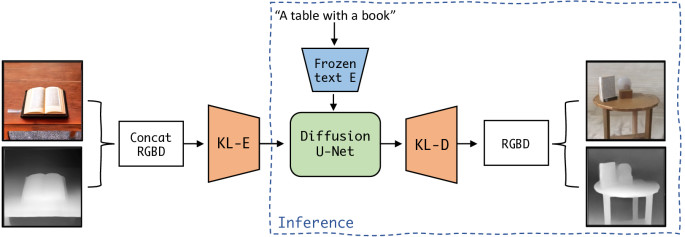
- RGBD出力を生成するように変更を加えた、Stable Diffusion v1.4由来の1.6BパラメータのKL正則化拡散モデルを使用する。
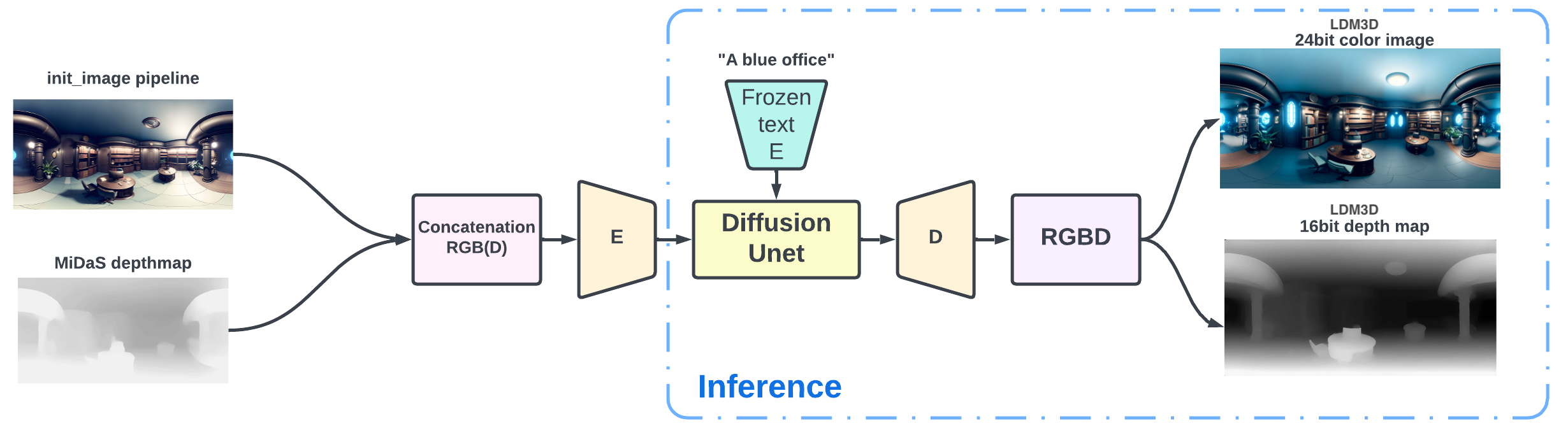
- データを前処理し、16 bit深度マップを3チャンネルのRGB風配列に変換してRGB画像と結合し6チャンネル入力(512x512x6)を形成する。
- ダウンサンプリング因子8と共同知覚/敵対損失を用いて、RGBDタプル(画像、深度、キャプション)上でKLオートエンコーダをファインチューニングする。
- 凍結したオートエンコーダ表現(64x64x4)と予測ノイズを用いた拡散損失L_LDM3Dで潜在空間の拡散モデルをファインチューニングし、Stable Diffusion v1.4の重みから開始する。
- 凍結したCLIP-textエンコーダでテキストを条件づけ、クロスアテンションを適用してプロンプトをU-Net層へマッピングする。
- MS-COCOのFID、IS、CLIP、ZoeDepthに合わせた深度指標で評価し、SD系ベースラインおよびDPT-Large深度推定と比較する。
実験結果
リサーチクエスチョン
- RQ11つのテキストプロンプトから高品質なRGB画像と正確な深度マップを生成するRGBD拡散モデルは作れるか。
- RQ2RGBのみの拡散モデルと比較して、RGBD結合学習が深度品質と画像忠実度にどう影響するか。
- RQ3条件付け強度(ガイダンススケール)、DDIMステップ、および学習の進行がRGBD出力に及ぼす影響は何か。
- RQ4生成されたRGBD出力をTouchDesignerの没入型360°体験(DepthFusion)を作成するのに効果的に使用できるか。
- RQ5標準データセットでの画像と深度評価指標において、LDM3Dはベースラインとどう比較されるか。
主な発見
- LDM3DはMS-COCO (512x512) で50 DDIMステップを使用し、同一パラメータ数のStable Diffusionベースラインと比較して競争力のあるFIDとCLIPスコアを達成。
- Depth評価はZoeDepthに合わせて行われ、LDM3DはAbsRel 0.0911とRMSE 0.334メートルを達成し、DPT-Largeの0.0779 AbsRelおよび0.297 RMSEに近い。
- RGBD入力でのオートエンコーダファインチューニングは相対的なFIDの劣化を小さくする(事前学習済みKL-AE、RGB rFID 0.763 対してファインチューニング済みKL-AE、RGBD rFID 1.966)が、効果的なRGBD生成を可能にする。
- LDM3Dは入力プロンプトと一致する高品質な深度マップを出力し、CLIP類似度の改善と定性的な深度可視化から示される。
- DepthFusionパイプラインは生成されたRGBD出力をTouchDesignerを用いて没入型の360°ビューへと実証的に変換し、インタラクティブな体験を可能にする。
この論文を読む
Nubintのビューアで原文を開き、読みながら気になる箇所をすぐに質問できます。
Nubintでこの論文を読むこのレビューはAIが論文の原文をもとに作成しました。引用する前に原文をご確認ください。