
[論文レビュー] Markerless Multi-view 3D Human Pose Estimation: a survey
本サーベイは、マーカーレスなマルチビュー3次元人体ポーズ推定に関する包括的な分析を提供し、手法、オクルージョンやデータ不足といった課題、およびマルチモーダル学習や時間的整合性といった戦略をレビューする。現在の手法では、すべての課題を完全に解決できていないことが明らかであり、低監視、アクティブラーニング、効率的な推論技術へのさらなる研究の必要性が強調されている。
3D human pose estimation involves reconstructing the human skeleton by detecting the body joints. Accurate and efficient solutions are required for several real-world applications including animation, human-robot interaction, surveillance, and sports. However, challenges such as occlusions, 2D pose mismatches, random camera perspectives, and limited 3D labelled data have been hampering the models' performance and limiting their deployment in real-world scenarios. The higher availability of cameras has led researchers to explore multi-view solutions to take advantage of the different perspectives to reconstruct the pose. Most existing reviews have mainly focused on monocular 3D human pose estimation, so a comprehensive survey on multi-view approaches has been missing since 2012. According to the reviewed articles, the majority of the existing methods are fully-supervised approaches based on geometric constraints, which are often limited by 2D pose mismatches. To mitigate this, researchers have proposed incorporating temporal consistency or depth information. Alternatively, working directly with 3D features has been shown to completely overcome this issue, albeit at the cost of increased computational complexity. Additionally, models with lower levels of supervision have been identified to help address challenges such as annotated data scarcity and generalisation to new setups. Therefore, no method currently addresses all challenges associated with 3D pose reconstruction, and a trade-off between complexity and performance exists. Further research is needed to develop approaches capable of quickly inferring a highly accurate 3D pose with bearable computation cost. Techniques such as active learning, low-supervision methods, temporal consistency, view selection, depth information estimation, and multi-modal approaches are strategies to consider when developing a new method for this task.
研究の動機と目的
- マーカーレスなマルチビュー3次元人体ポーズ推定における最先端手法の体系的概要を提供すること。
- オクルージョン、ビューの関連付け、限られた3次元アノテーション付きデータといった主な課題に対処するための戦略を分析すること。
- さまざまな応用シナリオにおけるモデルの複雑さ、性能、計算コストのトレードオフを評価すること。
- 未解決の研究ギャップを特定し、自己教師付き学習やマルチモーダル統合といった有望な今後の研究方向性を提案すること。
- ベンチマークデータセット間でのパフォーマンスを比較し、レアポーズや混雑したシーンに対する一般化性や耐性の制限を強調すること。
提案手法
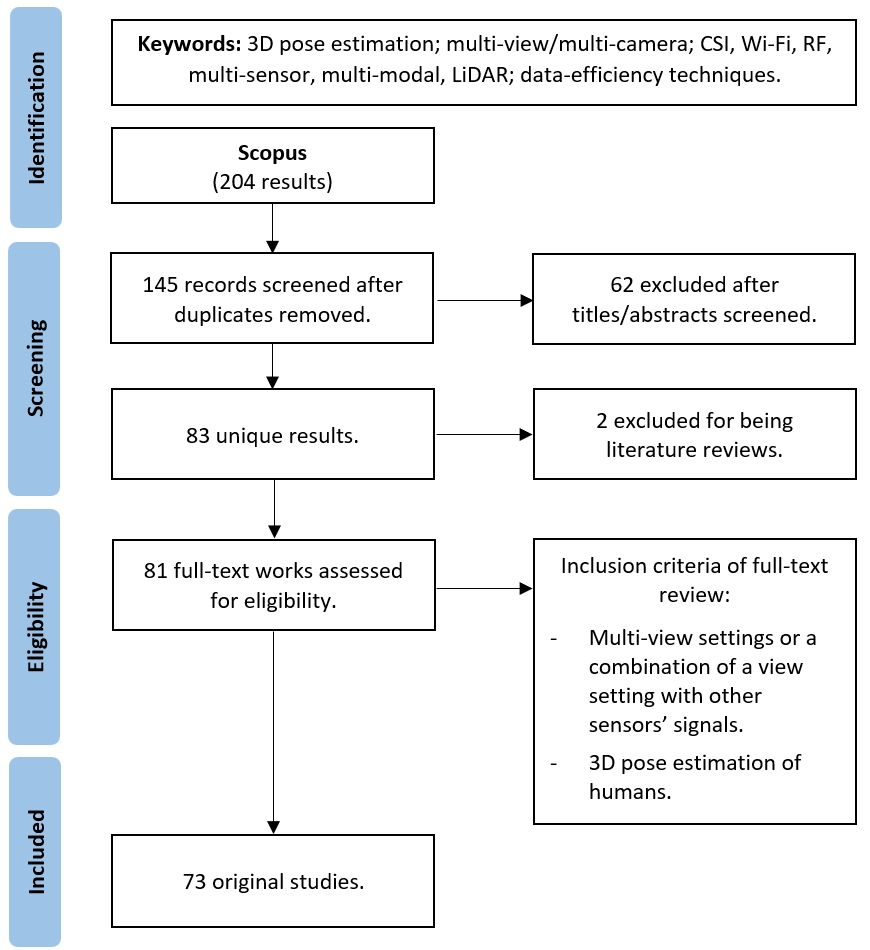
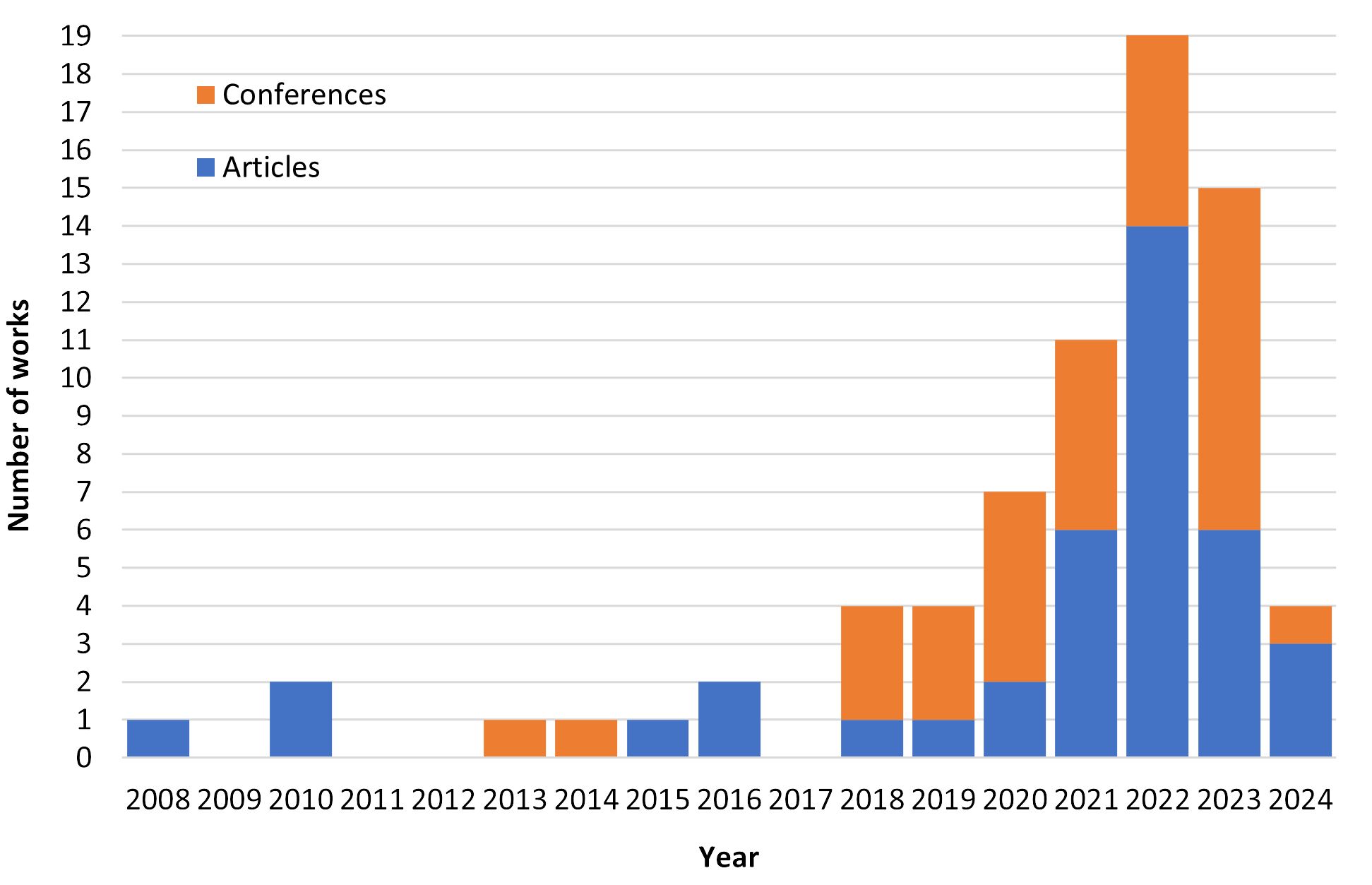
- 2010年から2024年までの100篇以上の論文を対象とした系統的文献レビュー。単眼RGBカメラを用いたマルチビュー3次元ポーズ推定に焦点を当てる。
- 監視レベル(完全監視、弱い監視、自己教師付き)、時間的モデリング、ビュー選択戦略に基づいて手法を分類する。
- 幾何的手法とディープラーニングベースの手法の分析。具体的には、マルチビュートリアングレーション、3次元キーポイント回帰、グラフニューラルネットワークを含む。
- CMU Panoptic、UMPm、Human3.6Mといった標準ベンチマークを用いてパフォーマンスを評価し、MPJPE(mm)およびPCKh(%)といった指標を用いる。
- 動画シーケンスにおける耐性を高めるために、時間的整合性モデリングを統合する。
- 深度推定とマルチモーダルデータ(例:IMU、音声)の統合を、精度向上と監視の低減を目的とした新たな戦略として統合する。
実験結果
リサーチクエスチョン
- RQ1マルチビュー3次元人体ポーズ推定で用いられる主な手法とアーキテクチャは何か。また、監視レベルや設計においてそれらはどのように異なるか。
- RQ2既存の手法は、現実のマルチビュー設定におけるオクルージョン、ビューの曖昧さ、不良なカメラキャリブレーションに対し、どのように対処しているか。
- RQ3現在のアプローチにおける主なパフォーマンスのボトル neck は何か。特に、データ不足と制約のない環境への一般化性に関して。
- RQ4時間的モデリングとマルチモーダル統合は、推定の正確性と耐性をどの程度向上させるか。
- RQ5実用的応用において、リアルタイムで正確かつ低監視の3次元ポーズ推定を達成するための、最も有望な今後の研究方向性は何か。
主な発見
- 現在の手法では、オクルージョン、複雑な相互作用、限られた3次元監視の下でも、すべての課題を完全に解決できていない。
- 5視点以上の手法では、CMU PanopticでMPJPEが最小(例:Reddyら [64] で7.30 mm)かつmAPが最大(Zhuら [103] で92.35%)を記録しており、視点数の増加による性能向上が明らかである。
- 自己教師付きおよび弱い監視付き手法は、高価な3次元アノテーションへの依存を低減する可能性を示しているが、完全監視モデルに比べて性能は依然として劣る。
- 時間的整合性モデリングは性能を顕著に向上させ、LinとLee [50] の手法はCMU Panopticで25mmの閾値で92.12%のAPを達成した。
- RGBとIMUや深度データを統合するマルチモーダルアプローチは、困難な状況下でも耐性が向上しているが、統合手法の研究はまだ十分に進んでいない。
- UMPmで最高のパフォーマンスを示した手法は、平均で96%以上のPCKhを達成しており、Ershadi-Nasabら [26] はp3-chair-11で96.65%を記録した。これは、制御されたシーケンスにおいて優れた性能を示している。
この論文を読む
Nubintのビューアで原文を開き、読みながら気になる箇所をすぐに質問できます。
Nubintでこの論文を読むこのレビューはAIが論文の原文をもとに作成しました。引用する前に原文をご確認ください。