
[論文レビュー] Modeling Sustainable Resource Management using Active Inference
本稿では、能動的推論を用いた持続可能な資源管理の計算モデルを提案する。エージェントは自由エネルギーを最小化することで、直近の欲求と長期的な資源の可用性のバランスを学習する。動的環境下では、エージェントは即時の満足を避け、持続可能性を確保するという、回復力があり適応的な行動を示す。これは、能動的推論が学習と信念の更新を通じて、生態的整合性のある意思決定戦略を生み出せることを示している。
Active inference helps us simulate adaptive behavior and decision-making in biological and artificial agents. Building on our previous work exploring the relationship between active inference, well-being, resilience, and sustainability, we present a computational model of an agent learning sustainable resource management strategies in both static and dynamic environments. The agent's behavior emerges from optimizing its own well-being, represented by prior preferences, subject to beliefs about environmental dynamics. In a static environment, the agent learns to consistently consume resources to satisfy its needs. In a dynamic environment where resources deplete and replenish based on the agent's actions, the agent adapts its behavior to balance immediate needs with long-term resource availability. This demonstrates how active inference can give rise to sustainable and resilient behaviors in the face of changing environmental conditions. We discuss the implications of our model, its limitations, and suggest future directions for integrating more complex agent-environment interactions. Our work highlights active inference's potential for understanding and shaping sustainable behaviors.
研究の動機と目的
- 変動する環境条件下におけるエージェントが、能動的推論によって持続可能な資源管理行動をどのように生成するかを調査すること。
- 学習と信念の更新が、エージェントが短期的欲求と長期的資源の可用性のバランスを取れるようにする役割を明らかにすること。
- 自由エネルギーの最小化を通じて、エージェント行動における回復力と弾力性の出現をモデル化すること。
- 単一エージェント・単一資源モデルの限界が、現実の生態的複雑性を十分に捉えられていない点を明らかにすること。
- 将来的な研究の基盤を築くこと。特に、能動的推論を用いたマルチエージェント・マルチリソースシステムの研究に向けて。
提案手法
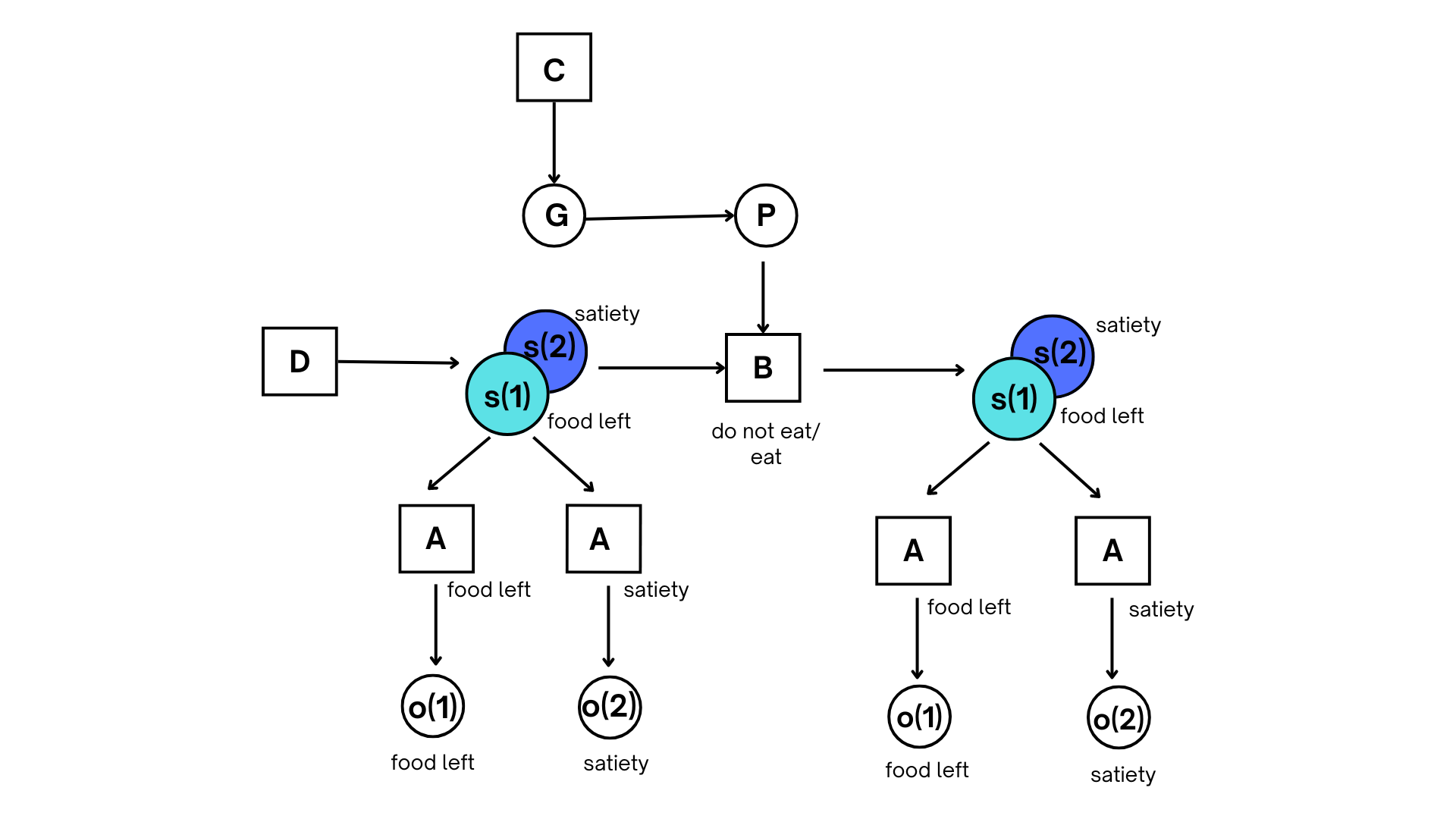
- エージェントは、変分自由エネルギーを最小化することで、優先事項(例:空腹の軽減)と環境に関する信念のバランスをとる。
- 生成モデルは、エージェントが環境のダイナミクス(資源の枯渇や再生速度など)について持つ信念を表現する。
- エージェントのポリシーはベイズ推論を通じて最適化され、感覚入力と予測誤差に基づいて内部モデルが更新される。
- 2つのシミュレーションケースを用いる:ケース1(静的環境)は基本的な消費行動をテストする。ケース2(動的環境)では、消費と資源再生の間のフィードバックを導入する。
- 学習は時間経過に伴うポリシー最適化により実装され、生存と持続可能な幸福度に基づいて性能が評価される。
- 精度重み付けを組み込むことで、予測誤差への感受性を調整し、環境変化に適応した反応を可能にする。
実験結果
リサーチクエスチョン
- RQ1能動的推論は、単一エージェントにおいて、どのように持続可能な消費行動の出現を支援するか?
- RQ2遅延した資源フィードバックを伴う動的環境条件下で、学習がエージェントが環境に適応するのをどのように支援するか?
- RQ3一時的な自由エネルギーの上昇(例:空腹)が、長期的な持続可能性にどのように寄与するか?
- RQ4環境的ショックに対して、エージェントの行動がどのように回復力、弾力性、可塑性を示すか?
- RQ5単一エージェント・単一資源モデルの限界が、現実の持続可能性課題への適用性をどのように制限するか?
主な発見
- 静的環境では、エージェントは一貫して即時の欲求を満たすために資源を消費し、基本的な行動の不変性(慣性)を示す。
- 動的環境では、エージェントは消費を抑制するよう学習し、一時的な自由エネルギーの上昇(空腹)を耐えることで、長期的な資源の可用性を確保する。
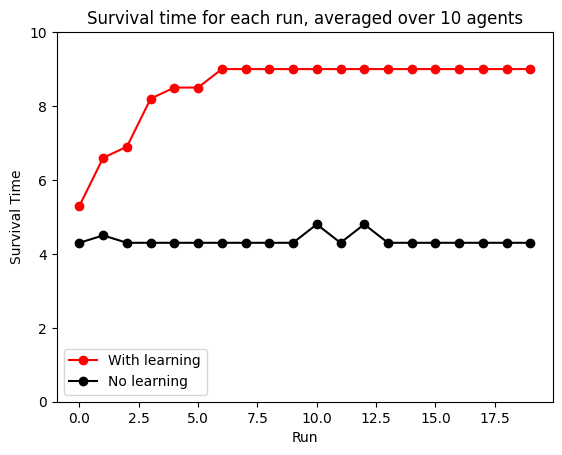
- ポリシー長が1で学習なしの場合、エージェントは最初のステップで死亡する。これは、複雑な環境下での生存に学習の必要性を示している。
- 学習ありの場合、エージェントは段階的に消費と再生のバランスを取る安定した戦略を発達させ、長期的な生存を可能にする。
- エージェントの行動は、短期的な不快感に耐えることで弾力性を示し、新たな環境フィードバックに応じて内部モデルを更新することで可塑性を示す。
- 本モデルは、事前優先事項と環境制約の下で自由エネルギーの最適化が行われることで、持続可能で回復力のある行動が生じることを示している。
この論文を読む
Nubintのビューアで原文を開き、読みながら気になる箇所をすぐに質問できます。
Nubintでこの論文を読むこのレビューはAIが論文の原文をもとに作成しました。引用する前に原文をご確認ください。